Online Reporter
Peter Matika, [email protected]
A TOTAL of 180 military personnel graduated yesterday from the Zimbabwe National Army’s (ZNA) Ordnance and Transport Training School (OTTS), based at Headquarters One Infantry Brigade (Khumalo Barracks) in Bulawayo.
The graduates were drawn from both the ZNA and the Zimbabwe Prisons and Correctional Services (ZPCS), which had two representatives among the cohort.
The group completed five logistics-related courses: the Basic Stores Course, Senior Stores Management Course, Basic Learner Drivers’ Course, Mechanical Transport Administration Course, and the Driving and Maintenance Instructors’ Course.
ZNA Director of Ordinance, Colonel Godfrey Wapemha, who officiated as guest of honour, expressed his satisfaction with the increasing participation of female soldiers in the training programmes.
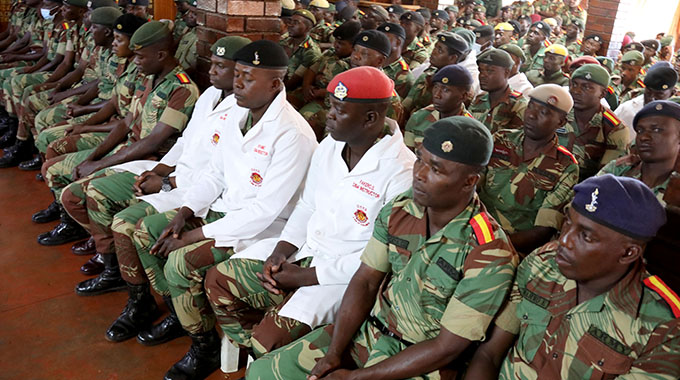
“I am delighted to recognise the presence of several female students. I urge the school to continue enrolling female service members, in line with the Zimbabwe Gender Commission policy, which promotes equality and equity and calls for equal representation of women in all spheres of public life. The total number of female students is 23,” said Col Wapemha.
He noted that the graduating courses fulfilled the objectives of the 2025 Zimbabwe National Army Training Directive, aligned with the QS Br Performance Management Directive for 2025, which identifies training as a key result area.
Among the ordnance courses, Col Wapemha explained that the Basic Stores Course is designed to train selected candidates in the core functions of stores management — demanding, receiving, storing, accounting, maintaining, and issuing army stores and equipment at the first-line level.
“The course had a capacity of 41 students and was conducted over 15 weeks — 11 weeks of theory and four weeks of practical attachments at various Quartermaster Stores within HQ Bulawayo District and HQ 1 Infantry Brigade,” he said.
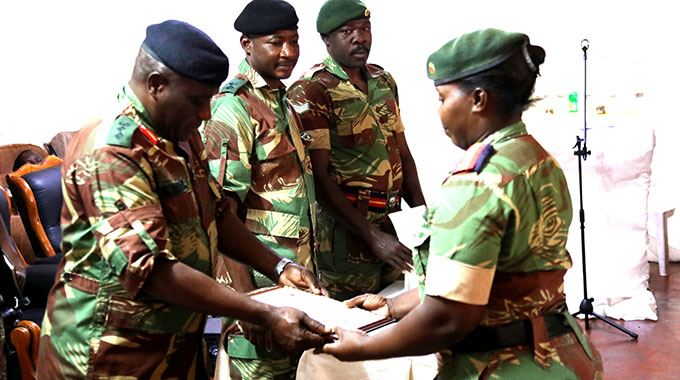
The Senior Stores Management Course, which enrolled 27 students, lasted six weeks and aimed to equip non-commissioned officers with skills in planning, co-ordination, control, evaluation, and training in stores management at unit and formation levels.
Under the transport-sponsored courses, the Basic Learner Driver’s Course, conducted over 15 weeks, enrolled 65 students.
The Mechanical Transport Administration Course lasted six weeks and had 23 participants, while the Driving and Maintenance Instructors’ Course ran for 13 weeks with 14 students drawn from various ZNA formations and units.
This course was designed to train experienced drivers to instruct military personnel in the operation and maintenance of military vehicles.
Col Wapemha said all graduates had been equipped with advanced skills and knowledge to enhance competence and resource management within their respective departments.

“The graduands are now ready to take up appointments in various capacities. With the knowledge acquired, they will be able to provide clear and well-informed advice to their superiors in logistics departments,” he said.
He said that the expectation is for the graduates to uphold quality, deliver results, and ensure excellent service within both the ZNA and ZPCS.
Col Wapemha also highlighted that the courses included modules on civil-military relations, security awareness, crime prevention, first aid, and emerging threats such as asymmetric and cyber warfare.
He concluded by urging the graduates to maintain discipline and integrity.
“Do not engage in criminal or rogue activities such as fuel and ration theft, or substance abuse. Those who indulge in such unscrupulous behaviour will find no sanctuary in this organisation. I urge you to desist from such conduct henceforth,” he warned.