Online Reporter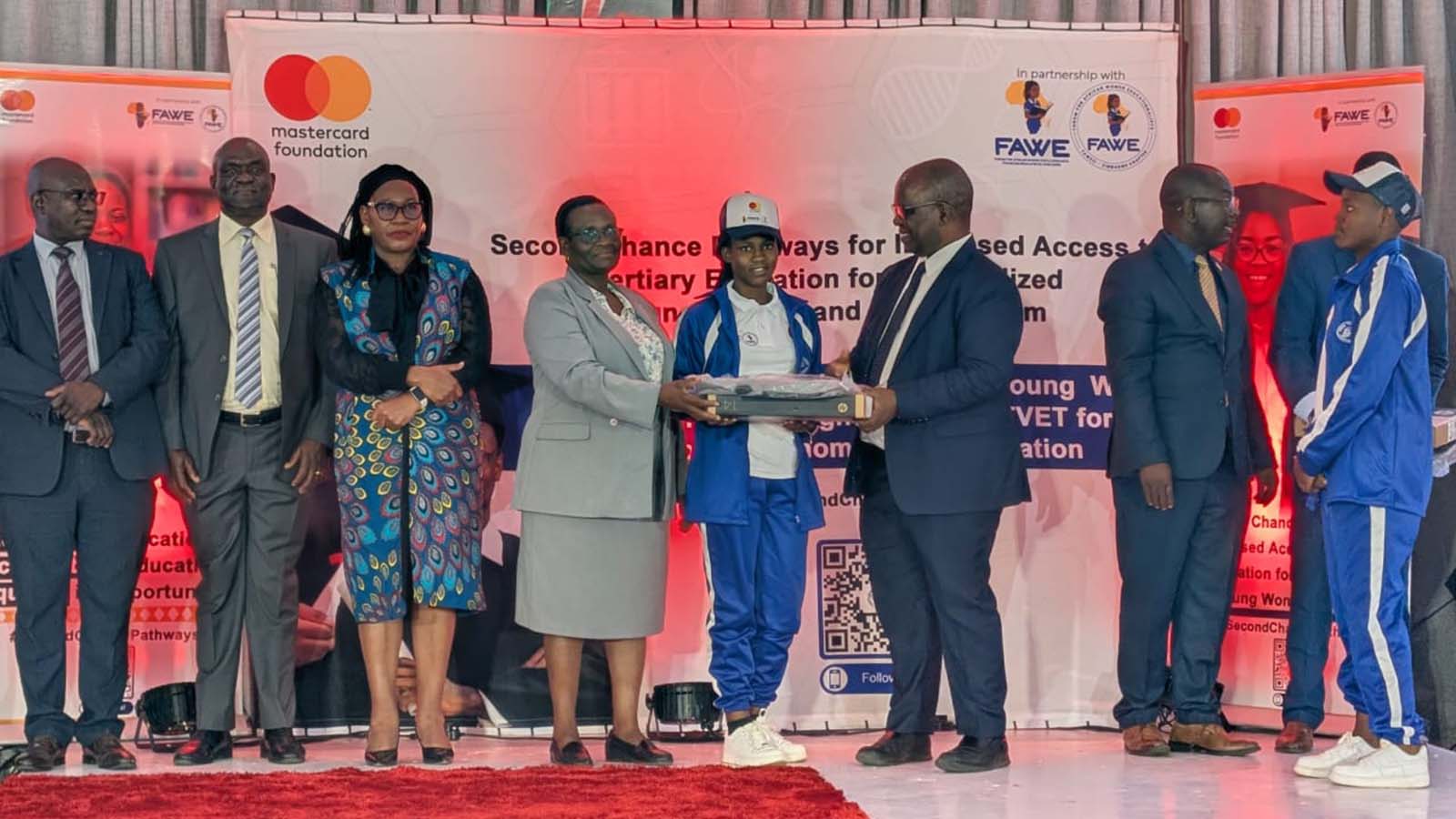
Ivan Zhakata
Herald Correspondent
THE Forum for African Women Educationalists Zimbabwe (FAWEZI), in partnership with the Government and development partners, has handed over laptops to 192 Technical and Vocational Education and Training (TVET) bursary beneficiaries under the FAWE/Mastercard Foundation Phase II Programme, in a major drive to strengthen digital learning and skills development.
The handover ceremony, held in collaboration with the Ministry of Higher and Tertiary Education, Innovation, Science and Technology Development and the Mastercard Foundation, also incorporated a belated commemoration of International Girls in ICT Day 2026, held under the theme “AI for Development: Girls Shaping the Digital Future.”
The programme is part of ongoing efforts to enhance access to inclusive, technology-enabled education, particularly for marginalised young people, while also promoting the participation of girls and young women in science, technology, engineering and mathematics (STEM) fields.
Speaking at the handover ceremony, Permanent Secretary in the Ministry of Higher and Tertiary Education, Innovation, Science and Technology Development, Professor Fanuel Tagwira, said the initiative demonstrated the Government’s commitment to inclusive and digital transformation in education.
“This is more than a ceremonial event, it is a practical demonstration of our shared commitment to expanding access to quality, inclusive and technology-enabled education for Zimbabwe’s young people, particularly those from marginalised backgrounds,” he said.
Prof Tagwira said access to digital devices has become essential in the modern learning environment.
“In this era driven by artificial intelligence and rapid technological advancement, access to tools such as laptops is no longer a luxury but a necessity,” he said.
“These devices are gateways to knowledge, innovation and opportunity.”
Prof Tagwira said it was important to empower girls in ICT as they remain underrepresented in STEM fields.
“Girls and young women constitute only about 33 percent in these fields in our universities. By placing digital tools in their hands, we are actively bridging the digital divide,” he said.
FAWEZI executive committee chairperson, Professor Ruth Gora, said the initiative marked a shift from commitment to tangible impact in the lives of young people.
“The laptops symbolise more than access to technology. They represent opportunity, connectivity and empowerment. They will support academic journeys and enhance digital skills,” she said.
Prof Gora said the programme was aimed at eliminating gender disparities in education while equipping young people with skills and confidence to thrive in a fast-changing digital economy.
“We are not only expanding access to tertiary education, but also equipping young people with tools, skills and confidence to succeed in a rapidly changing world,” she said.
Deputy Minister of Public Service, Labour and Social Welfare Mercy Dinha said the initiative demonstrated the power of partnerships in addressing inequality and expanding opportunities.
“The distribution of these devices is the opening of doors to knowledge, innovation and opportunity. By prioritising marginalised young women and men, this programme is addressing barriers that have historically excluded them from tertiary education,” she said.
Director of Secondary Education in the Ministry of Primary and Secondary Education, Mr Innocent Chishupa said the programme was a strategic investment in human capital development.
“Access to laptops will enhance research, improve learning experiences and equip students with critical digital competencies required in the 21st century,” he said.
The laptops are expected to facilitate access to digital learning resources, strengthen research and academic work, support blended and technology-enabled education and equip beneficiaries with essential digital literacy skills.
Participants are also undergoing orientation on the use, care and responsible handling of the devices to ensure effective utilisation and sustainability of the initiative.
The programme forms part of the Second Chance Pathways initiative, which seeks to empower disadvantaged youths and advance inclusive education in line with national development priorities of leaving no one and no place behind.