Online Reporter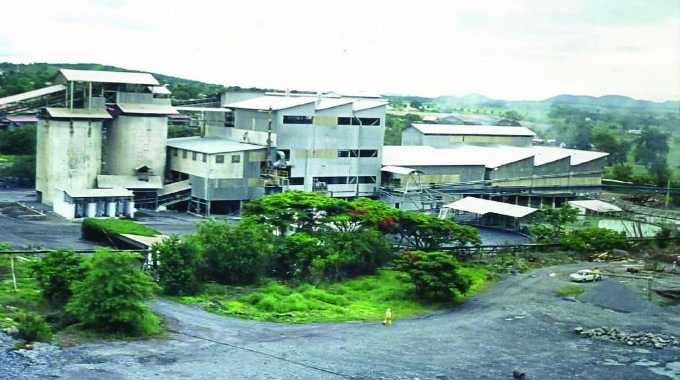
Conrad Mupesa
Words fail to capture the intensity of the harrowing events that unfolded from August 14 to 16, 1978, during a strike by Mhangura Mine workers demanding better wages.
It was a moment that would forever change the fabric of the now-defunct Mhangura Copper Mines, then known as Mangula.
The atmosphere was thick with tension as sorrow descended over the mining settlement following a tragic shoot-out that claimed the lives of four individuals.
What began as a peaceful demonstration quickly morphed into chaos, casting a dark shadow over the community.
One resident, Mrs Angela Nkata, who once called house number A4 in Damba Village her home, vividly recalls those fateful hours.
Shaking her head in disbelief, she recounted, “I rushed back after hearing the gunfire, terrified for the lives of my aunt’s children who were studying at Mhangura Secondary School.”
The scene that greeted her was horrifying: blood stains splattered across her home and a shattered entrance door.
Tears filled her eyes upon discovering that among the deceased was a Form Two student, a heart-breaking realisation that struck deep within her.
Mr Michael Kuzanga, a former electrician at the mine, shared a haunting recollection of children joining their parents in the strike, standing united against the oppressive regime.
“We were sent to the Mangula Mine Primary School to bring back our headmaster, Mr Hector Chieza, urging him to join us. He was paid by the mine too!”
As Mr Kuzanga recalled events of the day, the passion was still palpable in his voice.
On that gloomy morning of August 14, 1978, panic erupted as an untrained special constable, Aaron Mungofa, allegedly opened fire with a machine gun, attempting to instil fear among the demonstrators.
“Mungofa was simply a rigger in the Rigging department, yet somehow he was entrusted with a machine gun under such volatile circumstances,” lamented Mr Francesco Mariano, another former mine worker.
Fast-forward nearly 47 years on, and while many who witnessed that fateful day can still recount the chaos, for some, the details have faded — names and dates slipping through their fingers like sand.
“I remember the terror of those moments, but the names of the deceased remain elusive,” confessed Mr Kasichi.
A few like Mr Misheck Chabaya who had just begun working at the mine before the strike could still name some of the victims: Samson Sauke from house F14 and Douglas Mwale, a Form Two student with a father who also worked at the mine.
The community’s grief was palpable, and anger simmered beneath the surface, directed squarely at Mr H C Iversen, as nobody was in the mood for sympathy from the Personnel Manager in the aftermath of the shooting.
Mr James Mbonda, a legend of the Mhangura Football Club and a former mine worker himself, added another layer to the tragedy, noting that one of the deceased was an outsider, brought in for a contract job, making his memory less prominent to locals.
In the wake of the strike, the Rhodesian police and army conducted frantic door-to-door searches in a desperate hunt for ZPRA or Zanla operatives, convinced that ordinary citizens could not orchestrate such a revolt.
Their search, however, yielded nothing — an embarrassing twist for the regime.
But was this strike merely the result of local frustration, or were there deeper, insidious influences at play?
Mr Mariano posited that outside forces may have catalysed the events, uniting the ordinary workers and their families, leading to a complete halt of vital facilities for over two days.
“Before the strike, a series of chilling incidents unfolded, including a bombing during a movie night at the Amphitheatre, sending the audience into a panicked stampede,” Mr Mariano recounted, his voice laced with urgency.
The tension was intense, and this was only a glimpse into the turmoil that would ignite a movement, reshaping the course of history in Mhangura.
In a dramatic turn of events leading up to the strike, chaos erupted at the Mhangura Rhodesian Police camp when a rocket was fired, supposedly by comrades.
Tension thickened as police officers engaged in a fierce firefight that raged for nearly 20 nail-biting minutes against their unknown adversaries.
Fast forward to July 19 of that same tumultuous year, fear gripped the white minority in Mangula as tragedy struck.
In a shocking encounter at Kanenje farm, Pieter Jacobus Stefanus Potgeieter — a prominent farm owner — and his friend, Beltazer Johannes Riekert, a worker from Mangula Copper Mines, met their untimely fate in a harrowing gun battle with forces thought to be ZPRA or Zanla operatives.
The Rhodesian forces, desperate to hunt down the so-called terrorists, found themselves thwarted at every turn.
The aftermath of the strike left a chilling air of dread hovering over the once-quiet mining town of Mangula.
The white regime, reeling from the unrest, unleashed a brutal crackdown on anyone they deemed responsible for the upheaval.
Among the missing was Mr Manjongwe, the manager of the Seven Million Beer Hall, who was abducted under mysterious circumstances, presumably by covert operatives linked to Ian Smith’s government.
His family was forced to flee to the rural areas, stripped of their father, who vanished without a trace back in 1978.
The echoes of tension and fear reverberated through the community, forever altering the landscape of Mangula.