Online Reporter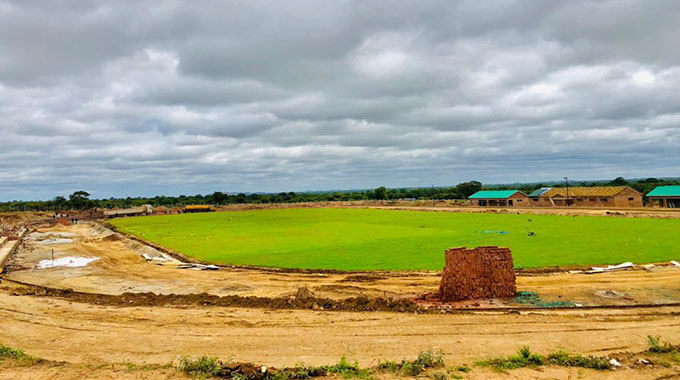
Bruce Ndlovu, [email protected]
For months, Matabeleland South Province has been alive with construction activity as more than 1,000 workers, 80 percent of them local, push through heavy rains and strong winds to revive the region’s major projects and meet Independence Day deadlines.
Stakeholders across the province have expressed deep appreciation for how the upcoming Independence Day celebrations have catalysed the completion of these stalled projects. This development momentum reflects what has become a hallmark of President Mnangagwa’s leadership since assuming office: a proven knack for breathing new life into long-neglected infrastructure.
At the heart of this transformation is the fast-rising Maphisa Stadium, the venue for the main commemorations. Yet, equally significant progress is unfolding across the province, where long-abandoned projects — some neglected for over two decades — are being revived, restoring hope and optimism among communities that had nearly given up.
Under the Second Republic, Maphisa has been transformed from a modest rural outpost into a burgeoning development hub, exemplifying the President’s commitment to seeing previously abandoned projects through to completion, fulfilling promises that had gathered dust for more than twenty years.
For Sijabuliso Ncube, the provincial director in the Ministry of Local Government and Public Works, the Independence Day celebrations have provided an opportunity to clear a nagging backlog.
“This is an opportunity that we have been waiting for a long time. There are projects, apart from the new ones, that have been stalled for a long time. What we are seeing here is a manifestation of the Second Republic’s mantra of leaving no one and no place behind. For example, the Filabusi Registry Office was started in 2004, and we will definitely complete it in 2026. Joshua Mqabuko Nkomo Polytechnic was also started in 2006 and this year we are completing it. We have a backlog of projects, and as a nation, this Independence Day celebration has already gone a long way in helping us complete them,” he said.
Progress at the main venue has been steady, with construction teams pushing to complete critical stages of the arena.
“The main issue now is the terracing. We are at level three right now, but we want to reach up to level nine.
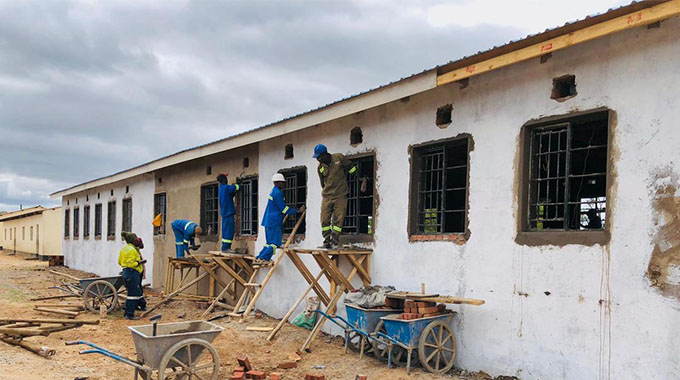
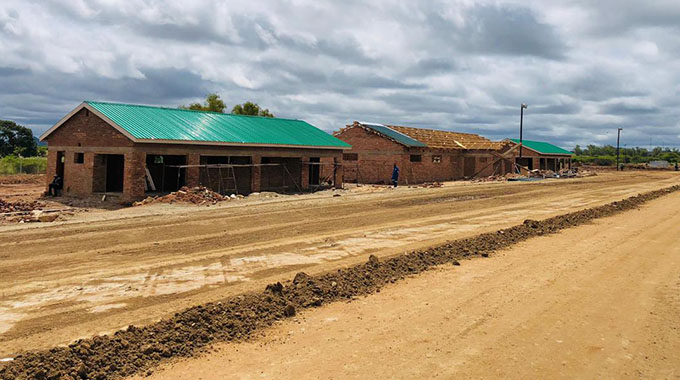
Generally, barring any unforeseen circumstances, we should be done with the arena. Beyond that, we have the schools, where we’ll be having the children’s party. Construction is underway there, and we are generally happy with the progress. We had a bit of a problem with material trickling in slowly, but as of March, we have been running very smoothly,” he said.
l To Page 5
Ncube said preparations for the children’s gala had also seen adjustments, with the venue shifted to Minda High School, where refurbishment works were underway to accommodate children travelling from across the country.
“We had initially earmarked the gala for Mahetshe Secondary School, but we have since moved it to Minda. Some work is being done there as well because we are going to spruce up the school. That is where the 500 children from around the country will be accommodated.
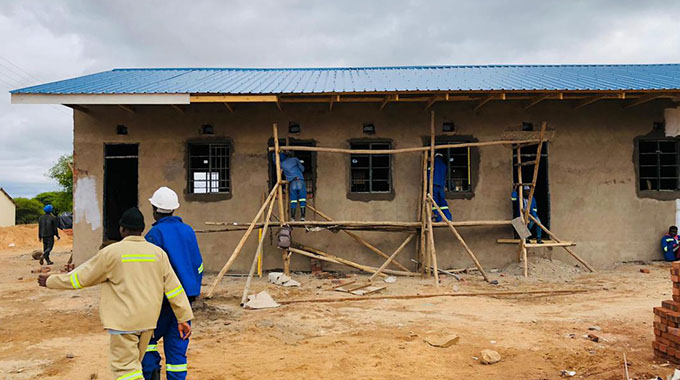
“Construction on the 40 science laboratories for schools is at different stages, and we expect to be close to completion by the end of the month. The same goes for the Filabusi Registry office; we should also be close to completion. As for Joshua Mqabuko Nkomo Polytechnic, most of the construction is complete, and we hope it will be done by mid-March, as we are only fitting the required equipment. We also hope that the Joshua Mqabuko Vocational Training Centre, a massive project that will accommodate over 5,000 people, will be 50 percent ready by Independence Day.
We have numerous projects that are all tracking towards completion,” he said.
Beyond infrastructure, the projects have also brought much-needed employment to the area.
Matobo district development coordinator, Obey Chaputsira, said hundreds of locals had found jobs across the various construction sites.
“This has all come as a benefit to locals, not only in terms of infrastructure but also in the form of employment. Combined, in all the sites where we are working, I think we have employed as many as 1,000 people, and 80 percent of them are locals. One of the key infrastructural developments is the access roads, which are going to be surfaced in the next two weeks or so. We are working on the Gwanda-Maphisa and Bulawayo-Maphisa roads, where contractors, I believe, are already on the ground. We are also going to do 6km of tarred road from Maphisa to Mahetshe. So far, we are happy with the progress we have seen so far,” he said.
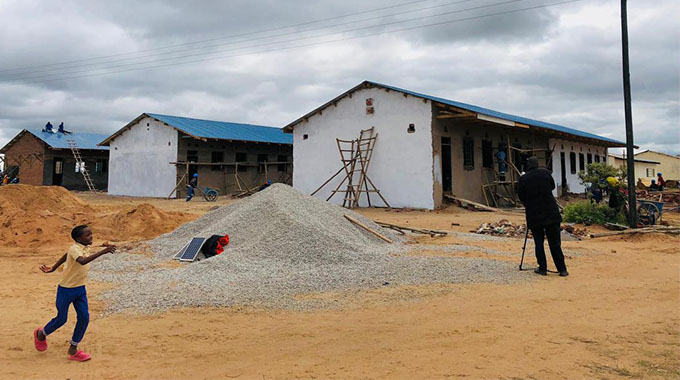
Chaputsira added that although heavy rains initially slowed work, the wet weather had eventually turned into an advantage for stadium construction work.
“Initially, we had a difficult week with the rain, but that has all changed because in the New Year, the rains that we have received have worked in our favour. The lawn in the stadium needed a lot of water and so the rains worked in our favour,” he said.
For the provincial leadership, the developments represent a long-awaited breakthrough for communities that had endured years of underdevelopment.
Matabeleland South Minister of State for Provincial Affairs and Devolution, Albert Nguluvhe, said the projects would leave a lasting legacy for the province.
“These are huge blessings to the people of Matabeleland South. The road, for example, has been a pain in the flesh of many people, but now it is finally under construction and this is huge. The laboratories are going to change the lives of our children because they cannot do science subjects. Now they are under construction and we are positive that by independence all of them will be complete. We believe that this will finally go a long way in addressing the low pass rates in the science subjects that we have been seeing over the years in Matabeleland South,” he said.
For villagers in the area, the improvements have already begun to change daily life in ways both big and small.
Brilliant Moyo, a villager at Mahetshe, said while the scale of development had impressed many residents, some of the most meaningful changes were the smaller improvements taking place at local schools.
“As villagers in Mahetshe, we are grateful for the construction work that we see currently. We are grateful for the roads and the buildings, but most of all, we are happy for the construction within the school. We didn’t have an administration block and when you had issues that needed to be addressed, you had to do it in front of the clerk.
Such small things matter as much as the big things that we are witnessing being done,” he said.