

 admin
admin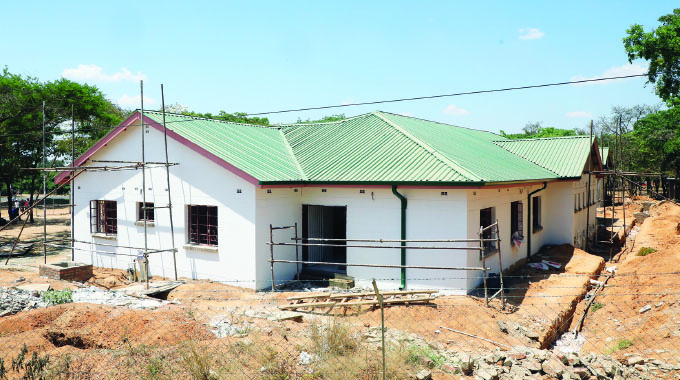
Fidelis Munyoro Chief Court Reporter
Courts, being arbiters of disputes that depend on parties with complaints to initiate legal process, saw their focus on innovations bearing fruit in advancing their primary goal of efficient access to justice and ease of doing business.
During the year under review, the courts installed new technologies to computerise the filing, acceptance, and retrieval of the vast inflow of litigation documents that reach the courts every day through electronic case filing and case management.
Known within the judiciary as the Integrated Electronic Case Management Systems (IECM), the new high-tech is indispensably central to the cause of justice because it can make the courts more accessible, and more affordable, to a diverse body of litigants, drawn from every corner of society, who often enter the courthouse in trepidation and only as a last resort.
But with the new electronic system all filings at the court — petitions and responses to petitions, merits briefs, and all other types of motions and applications — are available to the legal community and the public without cost on the Judicial Service Commission’s website.
The eventful legal year which came to an end last month began in January with Chief Justice Luke Malaba setting the tone for the 2022 Legal Year.
He gave an overview of the flagship activity that the Judiciary had taken to enhance efficiency and the rule of law through the introduction of the IECMS, after the JSC had concluded the contract for the implementation of the IECMS with an Armenian company — Synergy International Systems and that the first phase of the system, which would involve the Constitutional Court, the Supreme Court and the Commercial Court, would be ready for implementation in the same month of January with the date for the launch of the system having rescheduled to May 1.
The message was that the JSC was taking concrete action to implement the IECMS as the solution to the problems arising from features of the justice delivery system which have hindered the realisation of its maximum benefits by the public it is intended to serve.
The new system would have allowed the public to measure the efficiency of the system by the experiences of the reality of the results of the actions taken.
Chief Justice Malaba also emphasized that the adoption and use of appropriate technology in the delivery of justice did not mean that the system would lose the fundamental attributes of transparency, independence, impartiality, accountability, openness and ability to present one’s case on which it is anchored.
It is a fundamental principle of the Constitution that there should be at any given time a system for the delivery of justice which incorporates procedures and processes that guarantee the promotion of these values.
However, less than a month, on the occasion of the official opening ceremony for the 2022 Legal Year, after the Chief Justice adverted to the efforts that the JSC had undertaken to adapt and transform the administration of justice through the IECMS, virtual courts were installed at Chinhoyi Court Complex, Bindura Magistrates’ Court and Marondera Magistrates’ Court as well as in respective prisons in those provinces.
The exercise continued throughout the year which saw the installation of equipment across the 10 provinces. The ultimate goal was to have every court in Zimbabwe installed with virtual court equipment.
The digitisation of courts, particularly carrying out virtual hearings has many advantages both to the courts and the litigating public because matters are finalised expeditiously and there is added advantage of participating in the court proceedings in the comfort of your home or office.
The first institution to benefit on the virtual court hearing platform was the Zimbabwe Prisons and Correctional Services.
Thousands of inmates are housed in prisons throughout the Country. These inmates appear before the courts regularly for routine remands and trials.
The Covid-19 pandemic had at times caused inmates not to appear before the courts as required because of the restrictions imposed to combat the spread of the lethal virus.
Through the virtual hearing platform, it was no longer necessary for them to appear physically in court. They could interact with the court virtually while they are at prison.
They can even make an application for bail virtually. The costs associated with transporting prisoners to and from courts are also done away with.
Later in May, one of its kind that will be entrenched in the annals of history as a paradigm shift in the justice delivery system, the judiciary commemorated a milestone achievement in its legal calendar, a metamorphosis of the justice delivery system from paper-based systems to modern electronic systems.
The commissioning of the Commercial Division of the High Court by President Mnangagwa was a significant event in the strategic trajectory as a nation, particularly as it related to the drive and commitment to improving the ease of doing business in the country.
In his speech President Mnangagwa said the historic occasion was the apogee of a lot of industry, dedication and commitment that has been going on in the background, involving a lot of input from an array of stakeholders.
“The Chief Justice and the Judicial Service Commission have demonstrated an appreciation of the trajectory that the Second Republic has embarked on to have an upper middle class economy by the year 2030 and they have also taken heed of the obligations imposed upon them as the Judiciary which are clearly laid out in the National Development Strategy 1; that is to enhance access to justice and improve justice delivery in the Country,” he said.
“This aligns with regional and international standards and goals, as envisaged by Agenda 2063, the African Union’s fifty (50) year Vision and the United Nations’ Sustainable Development Goals spanning from 2016 to 2030. It is my fervent hope that this step will surely build the trust and confidence of the public in the justice delivery system.”
Later in September this year, Chief Justice Malaba commissioned the newly constructed Lupane magistrates court in the provincial capital of Matabeleland North Province, part of the implementation matrix of the JSC’s Strategic Plan, in which it undertook, consistent with its constitutional obligation, to enhance access to justice by ensuring that courts are as close to the people as possible and that justice is dispensed in courthouses equipped with modern facilities.
Previously, the magistrates’ court was housed in three offices belonging to the District Administrator’s Office.
The resident magistrate had a small office which could hardly accommodate a desk; the rest of the support staff used one office; while court proceedings were conducted in a room that was not suitable for the purpose of dispensing justice in an environment that inspired public confidence in the justice delivery system.
The JSC had to provide a court that met the expectations of the public as a symbol of the fountain of justice located in the provincial capital of Matabeleland North.
The JSC began the construction of the new courthouse two years ago, but a number of challenges were encountered but were overcome by the resolve and determination to succeed.
The construction of Chiredzi, Gwanda, Mutawatawa and Epworth magistrates’ courts is still a work in progress that has reached various stages of completion.
The milestone achievement during the year under review attests to the realisation of the constitutional value and principle of devolution.
In compliance with the constitutional principle of devolution of essential services and infrastructural development provided by the State, the JSC has adopted a policy of ensuring that courts are fairly distributed in all provinces and that there is a courthouse where the consideration of factors such as data, distance and devolution justify the decision to construct such a courthouse.
The objective is to ensure easy access to justice for the people where they live. They must be symbols of peace in the community which are easily accessible for the resolution of disputes.
A community without an accessible court within reasonable distance denies the protection of a fundamental human right.



 Online Reporter