admin
admin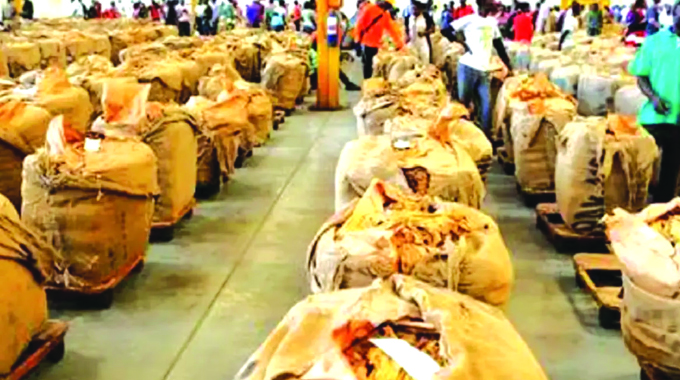
Precious Manomano
Herald Reporter
Smallholder farmers, who contribute 60 percent of beneficiaries of the land reform continue defying the odds after harvesting approximately 80 percent of the record tobacco crop of 294 million kilogrammes achieved during the 2023 marketing season.
The land reform, which gave indigenous farmers access to land, has been supported by the Agriculture and Food Systems Transformation Strategy which ensures they can use that land effectively to increase production.
The strategy is a composite plan of action drawn from the agriculture recovery and livestock growth plans.
The land reform programme together with the policies by the Second Republic have been a game changer in Zimbabwe’s economy that has resulted in the positive transformation of people’s livelihoods.
Most households who were previously deprived of their birth right by a minority white regime were empowered by the land reform.
The new farmers are now creating vast employment opportunities for youths and making significant contributions to national development.
In 2000, the country embarked on the successful land reform programme to redistribute the natural resource, whose skewed ownership that was in favour of the white colonial regime, was one of the major causes of the liberation struggle that saw Zimbabwe’s gallant heroes and heroines taking up arms to liberate the country and brought independence and economic emancipation.
And because of the protracted liberation war that brought independence and economic emancipation as reflected by the successful land reform programme, the country next week will be celebrating Heroes and Defence Forces Days.
It is because of the sacrifices made by the liberation fighters that many now have access to fertile land, which was formally owned by a white minority.
Because of many freedom fighters who shed their blood for independence, farmers can produce former elite crops such as tobacco.
Tobacco Farmers Union Trust president, Mr Victor Mariranyika, said before the land reform programme, many white commercial farmers did not have formal training in agriculture, but made Zimbabwe the bread basket for the region.
He said it was in this context that the indigenous farmers who benefited from the land though without formal training on agriculture have the capacity to boost production.
“Our farmers have now acquired knowledge and skills required to use the land productively and restore Zimbabwe to its former glory in the SADC region.
“Government has also supported farming especially to farmers resettled under the land reform by ensuring that in every ward across the country has two extension officers to impart knowledge to the new farmer,” he said.
Mr Mariranyika said there were favourable rainfall patterns in some tobacco-farming areas in the country.
”The rainfall patterns contributed well to the development and growth of tobacco. Next year we are looking forward to another favourable marketing season. Side marketing is the other issue which needs to be addressed,” he said.
“Farmers prefer to sell where they get high returns. The 85 percent foreign currency retention increase is surely appreciated. From the projections, at the beginning of the season, the crop was projected to be around 230 million kg, but now we are almost at 294 million kg, which is well appreciated.”
Mr Mariranyika said the 2023 marketing season had demonstrated that smallholder farmers can upscale the economy and contribute positively.
He said it was critical to incorporate the production costs when setting up the prices to ensure that farmers remain viable in the business.
Zimbabwe Commercial Farmers Union president, Dr Shadreck Makombe said this season was different from the previous ones as there was an increase in tobacco production.
”The marketing season was good because we grew more tobacco. Moreover, contractual agreements with farmers were fulfilled by the contractors,” he said. “The regulatory board TIMB also played a critical role in curbing corruption. Farmers this season grew tobacco as a business. Next year we expect to further increase production.”
Mrs Moud Muzondo of Goromonzi said the marketing season was good as recorded in the increase in production.
“I earned US$6 000 from 27 bales that I obtained from my two-hectare plot. I can testify that this crop has positively changed my life and I am sure I will continue to benefit from this crop,” she said.
Mrs Tecla Mhlanga of Maheu Farm of Banket indicated that there were high hopes of achieving a good harvest if contractors support farmers fully.
”As we start the season we appeal for the contractors to give all the necessary support so that we fully embark on the new season. We are geared for work but we want inputs on time and the payments as well,” she said.
Zimbabwe produces six percent of the world’s tobacco.
Government has also set a target of increasing production to 300 million kg per year and transforming the tobacco sector into a US$5 billion industry by 2025 and an additional US$10 billion by 2030.
Zimbabwe is moving ahead on several fronts to ensure that the land reform programme becomes a resounding success by making sure farmers have the inputs and backing to push production to new heights, far higher than what was produced before the exercise.
This season 294 million kg of tobacco valued at US$890 million was sold compared to 203 million kgs valued at US$621 million sold last year.
This is the major milestone in the history of Zimbabwe since tobacco production started.
In 2020, about 122 367 tobacco farmers produced 184 million kg of tobacco under 117 537ha.
During this year, the country has so far exported 187 994 tonnes of tobacco worth US$763 million.
In 2021, about 120 467 tobacco growers produced 211 million kg of tobacco and exported 183 685 tonnes worth US$819 million.
Last season in 2022, 103 572 tobacco growers produced 213 million kg on 110 770ha and exported 199 847 tonnes worth US$990 million.
Recently, Lands, Agriculture, Fisheries, Water and Rural Development permanent secretary Dr John Basera indicated that there was need to consolidate the gains of the land reform programme.
Tobacco Industry and Marketing Board (TIMB) public relations officer Mrs Chelesani Tsarwe described the marketing season as a success, adding that the same will likely be achieved in next season.
”Looking ahead as we prepare for the 2023/2024 season, we are expecting an increase in hectarage planted due to new players in industry and those who have been in the industry desiring to increase production. We are encouraging growers to adopt Good Agricultural Practices during the 2023/24 production season to achieve good yields,” she said.
Mrs Tsarwe said efforts were being made to increase value addition and beneficiation of tobacco from the current 3 percent to 30 percent by 2025.
“Currently, seven cigarette manufacturers operate in Zimbabwe, with a combined production capacity of around 5 billion cigarette sticks per annum,” she said. “For example, Cutrag Processors Pvt Ltd, is in the process of constructing a new manufacturing facility in Lochinvar, Harare and when it is completed it is expected to increase its processing capacity from the current 1.6 billion sticks per year.
“Haltrade Pvt Ltd, the manufacturer of ZARK cigarettes, is also expanding its brand portfolio by introducing tobacco one can roll on their own.
“We also licensed Cavendish Lloyd Tobacco to support the production of shisha and process it locally. As the regulator, we encourage more players to value add tobacco and we are here to ensure licensing and rally the needed support.”
Mrs Tsarwe said plans to keep the auction system running would be to ensure farmers have access to more funds adding that an increase in free growers will automatically increase the viability of auction tobacco sales.
The intention of diversification, therefore, is not to outrightly substitute the tobacco enterprise, but to complement it while sustaining and improving farmers’ livelihoods and promoting sustainability.
Zimbabwe produces six percent of the world’s tobacco and getting US$1,65 billion at most.
The country has enough tobacco seed to cater for the next eight years, which is encouraging for a nation that wants to increase production.



 Online Reporter