Online Reporter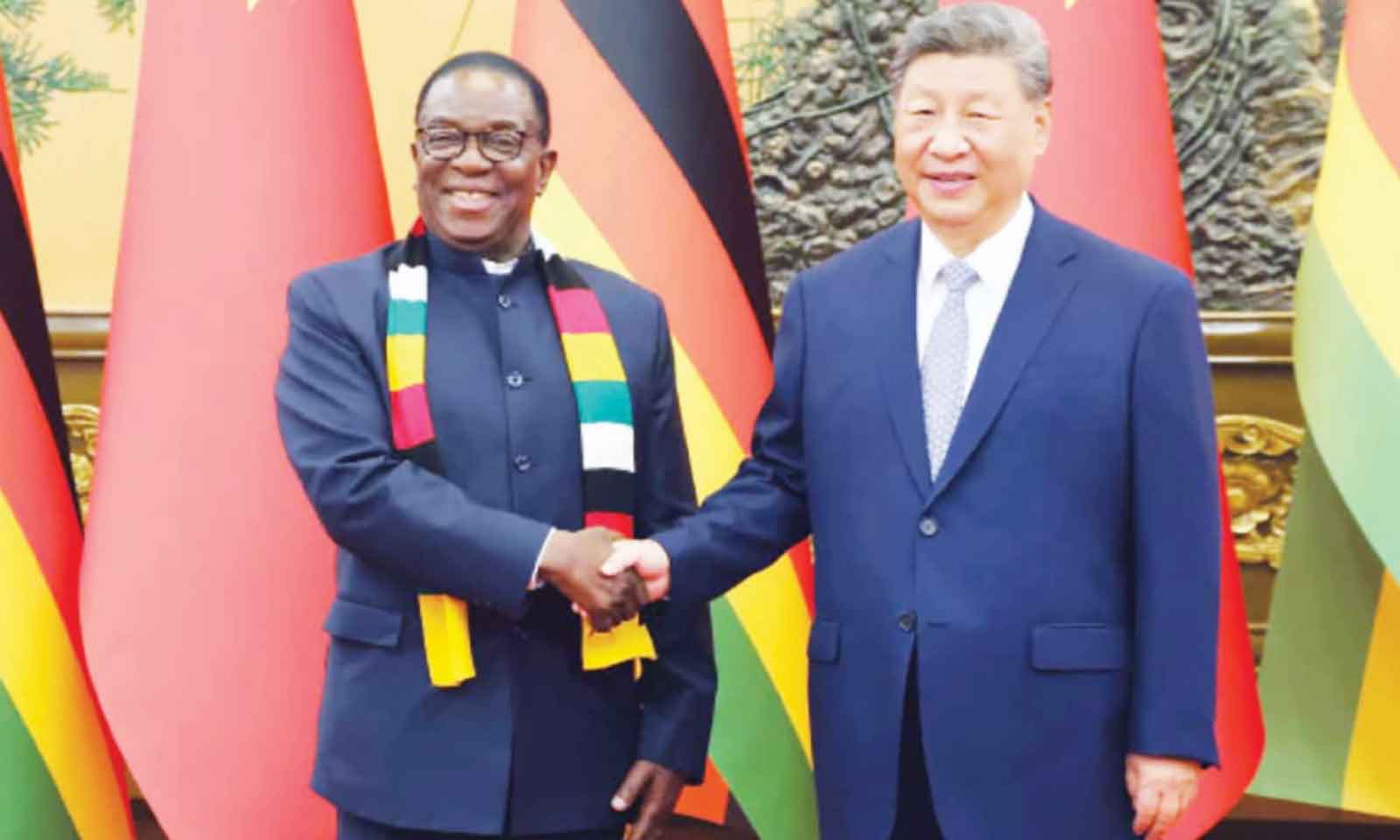
Kuda Bwititi
Politics, Foreign Affairs and Opinions Editor
THE year 2025 was a year of noteworthy achievements for bilateral relations between Zimbabwe and China.
It was a year that marked the 45th anniversary of China-Zimbabwe diplomatic relations and the elevation of our bilateral ties to an All-weather Community with a Shared Future.
This was an opportune moment to reflect on shared achievements between the two countries and the renewed opportunities ahead.
The highlight of the high-level exchanges between Harare and Beijing was President Mnangagwa’s visit to China in September.
During the visit, the President attended China’s 80th anniversary celebrations to mark the victory in the War Against Japanese Aggression and the World’s Anti-Fascist War.
President Mnangagwa was one of only two Heads of State from Africa who attended the event that was also graced by global titans such as Russia’s President Vladimir Putin. The special invitation to President Mnangagwa to mark the end of World War II underlined the importance that China places on its relations with the Zimbabwean Government.
In his meeting with President Mnangagwa, Chinese President Xi Jinping stressed that the ever-deepening “five-star ironclad” friendship of the two countries has set an example for solidarity and collaboration between China and Africa, as well as among the Global South.
He said China would continue to firmly support Zimbabwe in independently exploring a development path suited to its national conditions and in opposing external interference and illegal sanctions.
During the visit, President Mnangagwa met investors from the China Railway International Group, holding discussions about a US$533 million investment into the National Railways of Zimbabwe to transform the railway industry.
Foreign Affairs and International Trade Minister Prof Amon Murwira visited China on three different occasions. One of the visits was to sign the International Organisation for Mediation, which saw Zimbabwe becoming a founding member of the organisation that is expected to enhance the resolution of international disputes through mediation, not coercion.
The ZANU PF National Chairperson, Cde Oppah Muchinguri, who is also the Defence Minister and several other Ministers, Government delegations and ruling party delegations also visited China.
Towards the end of the year, China and Zimbabwe formulated respective development blueprints: China’s 15th Five-Year Plan (2026-2030) and Zimbabwe’s National Development Strategy (NDS) 2. The strong alignment between these visions will present enormous opportunities for Zimbabwe and greater economic cooperation with China.
Investment projects
In 2025, Chinese assistance and investment projects continued to benefit communities across Zimbabwe. China remains Zimbabwe’s largest source of foreign investment. According to the Zimbabwe Investment and Development Agency (ZIDA), close to 500 new Chinese businesses registered in Zimbabwe from January to date, with projected investments totalling US$2,5 billion. Notably, over one-third of these investments are in manufacturing — a clear testament to China’s commitment to supporting Zimbabwe’s value addition, beneficiation, and industrialisation efforts.
Major investments powered by Chinese capital, including the Dinson Iron and Steel Company in Manhize and Prospect Lithium Zimbabwe in Mashonaland East, continued to flourish in 2025, contributing immensely to the country’s economy and directly improving the lives of thousands of people.
Large cement and fertiliser factories, among other key facilities, were established nationwide, delivering quality products, creating jobs, and generating tax revenue.
As a global leader in renewable energy, China is actively supporting Zimbabwe’s green transition. Multiple solar power projects under construction are expected to add over 1,000 MW of installed capacity by 2028.
On the trade front, tobacco contract farming and exports to China—nearly US$800 million—sustain the livelihoods of approximately half a million Zimbabweans. Also, Zimbabwe’s citrus, blueberries, and avocados are exploring the vast Chinese market.
One key event for the year was China’s announcement of zero-tariff treatment for all exports from 53 African countries, including Zimbabwe. This policy is a game-changer, as it will substantially expand the access of Zimbabwean products to the Chinese market, promote local industrial growth, and further stimulate job creation. Both sides are now working diligently to implement the initiative.
In December Zimbabwe’s Finance and Economic Development and Investment Promotion Minister Professor Mthuli Ncube, and Chinese Ambassador Zhou Ding signed letters of exchange for a China-Aid programme to upgrade and maintain nine key irrigation schemes across six provinces.
This grant-based cooperation will improve water management, boost agricultural productivity, and establish demonstration villages with modern technology and training. It includes borehole drilling, provision of equipment, and technical expertise. Integrated with climate resilience efforts, such as solar-powered systems, the programme aims to enhance food security, rural livelihoods, and water access, especially in drought-prone areas, continuing the strong bilateral cooperation between Zimbabwe and China.
People-to-people Exchanges
People-to-people exchanges between the two countries evolved and prospered.
In November, China’s Ambassador to Zimbabwe Zhou Ding revealed that over the past five years, more than 3 000 Zimbabwean students have pursued academic studies in China, while over 2 000 Government and ZANU PF officials and professionals have honed their skills through specialised seminars, workshops, and capacity-building programmes in China.
With the support of the Chinese Embassy in Zimbabwe, the local Chinese community and various sectors of society, the “Dreamstar Zimbabwe” has become an important platform for discovering local artistic talents and helping Zimbabwean youth fulfil their artistic dreams.
While protecting and promoting Zimbabwean local art, it has also effectively promoted cultural exchanges between China and Zimbabwe.
The Chinese Embassy in Harare also invited Zimbabwean war veterans who trained in China during the liberation struggle. The event allowed them to share their experiences, highlighting the long-standing bond between the two nations.
Challenges
The year 2025 was not without challenges for Zim-China relations. Some Chinese investors were accused of labour abuse and environmental damage. Ambassador Zhou acknowledged that there had been environmental and labour issues related to Chinese mining companies.
He, however, noted that according to the data from the Ministry of Public Service, Labour and Social Welfare, labour disputes involving Chinese firms accounted for 7,5% of total cases last year, and the vast majority were resolved through dialogue.
He said those individual cases do not reflect the broader picture of Chinese investment in the mining sector and the whole of Chinese business operations.
The Ambassador firmly stated that compliance with Zimbabwean laws is non-negotiable.
Ambassador Zhou implored Chinese nationals in Zimbabwe to strictly uphold fair labor practices, demonstrate high standards of environmental stewardship, engage with local communities, and reject corruption in any form.
A promising 2026
China and Zimbabwe will remain unwavering partners because the two countries share a common vision: a multipolar world where every nation has a voice, and every people can thrive.
China’s 15th Five-Year Plan and NDS2 will unlock fresh opportunities for win-win cooperation. As NDS2 identifies 10 national priorities, including accelerating economic growth, enhancing resilience in food security, advancing digital transformation and human capital development, Zimbabwe will learn a lot from China to enhance its economic development.
Interestingly, 2026 has been designated as the “China-Africa Year of People-to-People Exchanges”, and the Chinese embassy in Harare has said it is looking forward to working together with all sectors of the Zimbabwean community to further promote cultural exchanges between China and Zimbabwe and enhance mutual understanding between the two peoples.
Indeed, exciting times lie ahead.