


 Online Reporter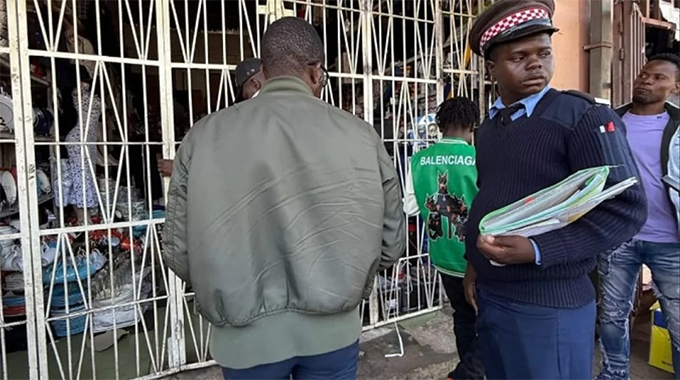
Veronica Gwaze
LAST Wednesday, the curtain fell on 2025, with the calendar ushering in a New Year.
Stories published by The Sunday Mail Society did more than just define 2025, they brought out issues affecting communities.
From the disappearing hills of Harare to the sinking wetlands of Chitungwiza, the perilous school runs to the unresolved terror in Guruve, stories published in 2025 moved beyond headlines to become shared experiences.
Below are excerpts from our reporting.
Shops fight to survive council shutdowns, fires
Last year, traders in Harare and various other towns battled various challenges, including devastation from fires that destroyed their stock.
In October, the area around Chinhoyi Street and Speke Avenue in the capital suffered the aftermath of these destructions, with burnt buildings and desolation replacing the previously vibrant shops.
The disaster followed a month of intensified City Council enforcement against unlicensed businesses and unpaid rates, further harming small traders in Harare.
The fire at the intersection of Chinhoyi Street and Speke Avenue on September 9 left businessman Takunda Chokoda devastated after losing goods worth over US$20 000.
“Years of work went up in smoke within hours,” he lamented, standing beside the charred skeleton of his shop.
On September 23, another fire broke out at the corner of Leopold Takawira Street and Bute Street, razing shops, destroying livelihoods in the process.
Harare’s disappearing hills: A cliffside catastrophe
From afar, the rugged escarpments punctuating certain Harare suburbs might be mistaken for natural geological formations, remnants of the city’s ancient landscape.
However, a closer examination revealed something else: residential properties now lie perilously on once-stable hillsides, the consequence of sustained gravel extraction.
Areas such as Warren Park, Kambuzuma, Aspindale and Mabvuku exemplify this precarious situation, where dwellings are now below eroding slopes, susceptible to structural failure triggered by heavy rainfall or other anthropogenic activities.
The inhabitants of these areas endure a constant state of apprehension, fearing displacement due to the instability of their living environments.
This situation underscores the urgent need for effective urban planning and environmental regulation to mitigate the risks associated with unsustainable resource extraction and protect vulnerable populations.
Every day, heavy trucks traverse the roads of these suburbs, making their way uphill to transport gravel.
“You hear the trucks, the ground shakes and all you can do is hope it holds for one more night,” said a troubled Chiedza Mavheneka, resident of Kambuzuma, whose house is one of those located at the foot of such disappearing hills.
Chitungwiza is sinking — Literally
For most learners, the end of the school term often brings relief from studies.
But 15-year-old Felix Masenda, from Unit M, Chitungwiza, was happy that schools closed for a different reason.
The journey to and from the college where he learns always filled him with trepidation, especially during the rainy season.
“I am always scared the rain will sweep me away,” he said.
On his way to Riverbank College in Manyame Park (Murisi area), he always passed through Duri River, a deceptively small waterway that menacingly swells whenever it rains.
His daily commute, however, depended on a small, exposed footbridge — a fragile link that thousands of families now fear could one day give in.
Incessant rains are a nightmare in Chitungwiza, particularly in areas that do not have proper, well-maintained drainage systems.
A snap survey conducted by this publication across Chitungwiza and Manyame Park revealed a troubling pattern: Flash floods becoming the norm.
This man-made crisis was worsened by the conversion of vital wetlands into residential areas, cutting off natural drainage routes to nearby tributaries.
When Duri River bursts its banks, the footbridge is the first casualty.
“Whenever it rains, we cannot go to school. Riverbank and B and P College are the closest schools. “The footbridge gets swallowed by floodwater, leaving children stranded on the Chitungwiza side,” revealed Felix in an interview.
The impact of the flash floods extends far beyond the missed lessons as concerned residents described the heart-breaking adjustments families are forced to make.
When school runs become accidents waiting to happen
What was once considered a safe daily trip (school run) for learners recently transformed to become potential death traps.
Many of the vehicles transporting the minors were increasingly becoming dangerously overloaded.
This often occurs without the knowledge of parents and school authorities.
Tracking the incidents of recklessness, our story revealed how at the intersection of Lorraine Drive and Harare Drive, an overloaded Nissan Elgrand approached from the Westgate direction.
As it pulled up to drop off a learner, The Sunday Mail Society observed that the passengers were packed tightly like sardines.
Some children were even sitting on others’ laps.
To avoid prying eyes, the learners had been instructed to take turns holding pieces of cloth that were used as improvised vehicle curtains, raising serious concerns about their safety and rights.
This was a microcosm of the various cases across the country.
Sadly, some parents were fully aware of the risks their kids faced daily, but they still opted for the same transporters, who lured them with affordable fares ranging between US$20 and 25 per month.
But many of these arrangements, between parents and vehicle owners or drivers, were reportedly informal.
Many transporters were spotted speeding, driving recklessly, overloading their vehicles and even operating while intoxicated.
The very vehicles entrusted with children’s safety had become potential death traps, prompting a desperate call for urgent intervention from both parents and the authorities.
Even more troubling, some operators were allegedly linked to school authorities who received a percentage of the fares — raising serious ethical and safety concerns.
Public transport operators’ turf wars turn nasty . . . travellers caught in the crossfire
A disturbing video of a bus that was tailgating another, as they literally jostled for a loading bay at a terminus, surfaced earlier in the year.
The eerie visuals rekindled painful memories of the Rimbi and Zebra Kiss fatal bus crash along the Harare-Nyamapanda Road in 2023.
The tragedy was an unfortunate culmination of needless and reckless competition for passengers that began at a bus rank.
Yet it appeared that bus crews learned nothing from this unfortunate incident.
And commuters are also not spared.
Cases of clashes between rival bus companies and rank marshals harassing commuters appear to be on the rise, likely due to a sudden increase in the number of buses operating in the country.
In 2022, through Statutory Instrument 138 of 2022, under the Customs and Excise Act (Chapter 23:02), the Government lifted customs duty on the importation of new public service buses for approved operators.
This measure, which was effective from July 1, 2022, allowed registered public bus operators to import up to 20 buses per year duty-free, provided they met specific registration and tax compliance requirements.
The policy, extended until the end of April 2025, was aimed at transforming the transport sector by promoting a conventional, affordable and reliable public transportation system.
Wheels of misfortune
Kuwadzana Extension residents carry on with life into 2026 with heavy hearts.
The community lost three minors in October, in a situation that continues to haunt them to this day.
The trio, aged one and three, were reported missing on October 1 after vanishing while playing in the hood, triggering panic and desperate searches.
Two days later, an alert resident detected a heavy odour from a rundown Mercedes parked at a nearby carpark.
Residents were alerted, and after opening the boot they made a grim discovery of the three minors dead, allegedly from suffocation.
When The Sunday Mail crew drove into the community, a week later, a grave silence engulfed the densely populated and often lively community.
On this particular day, the trio were being buried – one in Uzumba, Mashonaland East, and the other two in Masvingo.
Yet back in Kuwadzana Extension, those who did not travel for the last rites fought a silent battle as they visibly shared the grief.
What haunted them was how the familiar run down vehicle, one that perhaps many even admired from the carpark for three years had suddenly turned into a death trap.
“I was off from work on that particular day and I only got the news of the shocking deaths from the media; I felt chills down my spine because I knew these children,” said Ganizani Tebu, one of the guards at the carpark.
The deaths left the Kuwadzana community with fears for their safety and plenty unanswered questions.
Guruve serial killer still on the run
It is a new year, communities are excited for turning a new leaf, yet it is a different story for Guruve.
Police and other security service members are still hunting down the Guruve serial killer, Anymore Zvitsva (32) who has so far killed 12 people in separate incidents in the area since the start of last December.
An intensified manhunt supported by drone surveillance, canine units, horse patrols and specialised tactical teams are on the ground to hunt him down.
In a bid to accelerate the suspect’s capture, police have announced a substantial monetary reward for information leading to Zvitsva’s arrest.
Precisely, fear now dictates the rhythm of life in Guruve where by 6pm, villages fall silent as families abandon their homesteads and converge at designated “bases.”
The bases are selected houses where more than seven families huddle together for the night.
In-laws, children and the elderly gather under one roof, seeking safety in numbers.
No one wants to sleep alone anymore.
While women and children crowd inside, men patrol the darkened paths outside, armed with sharpened axes and knives, standing guard until dawn.
It is a haunting routine that has become normal following the wave of brutal murders.
During the day, fear still lingers.
Residents move cautiously, limiting trips to fields, rivers and forests. Firewood remains uncollected, fields unattended while life has generally shrunk to mere survival.
As the calendar turns, some of these issues have not disappeared. They carry forward, unresolved, into the new year.



