Online Reporter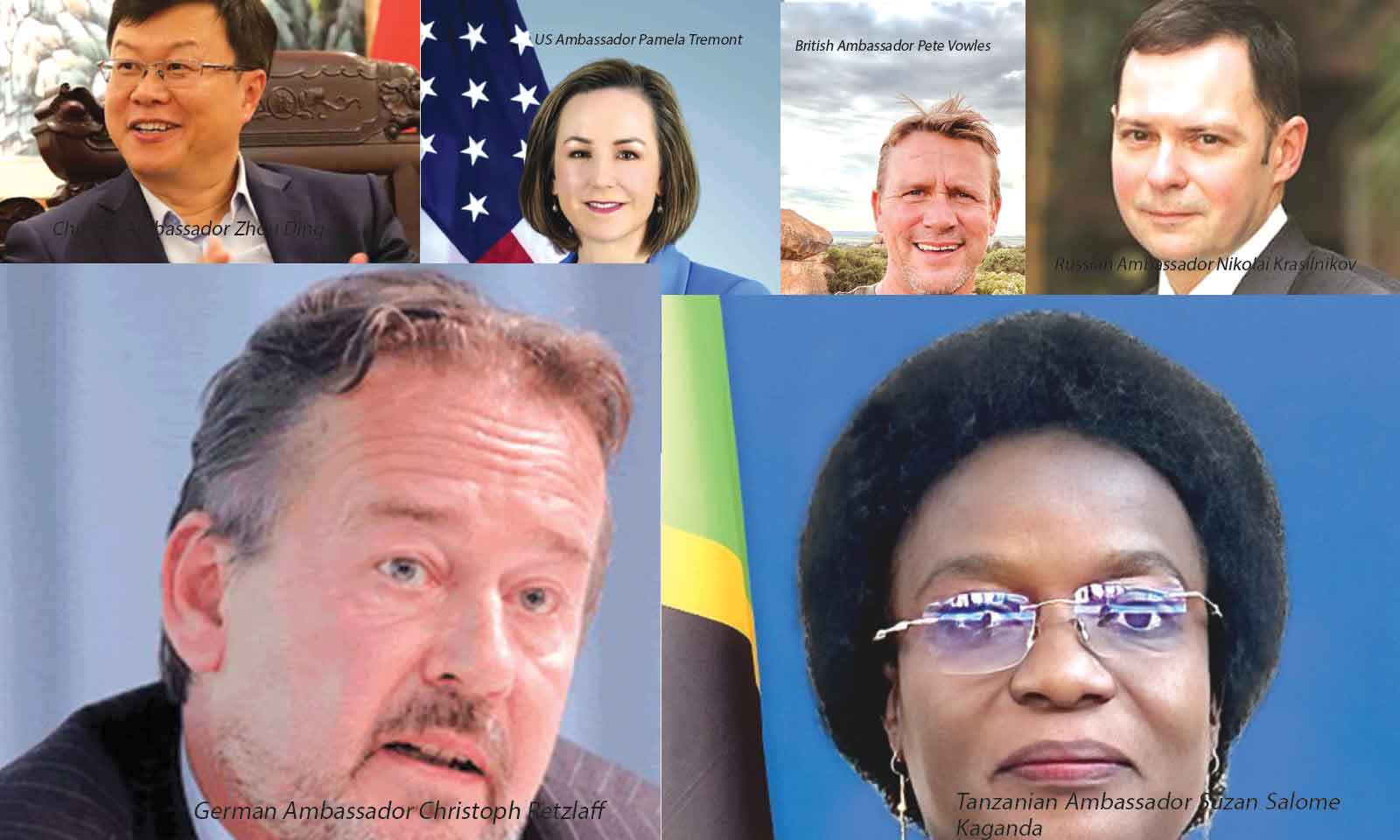
Gibson Nyikadzino
Zimpapers Politics Hub
What diplomatic memory will 2025 ring for Zimbabwe? Here might be the brief reflections.
In February, the European Union (EU) delisted the Zimbabwe Defence Industries (ZDI) from its sanctions regime after the US also removed several designations in March 2024.
From May 22-25, the Zimbabwe men’s national cricket team, the Chevrons, played a four-day Test match against England at Trent Bridge in Nottingham, the first match between the two teams since 2003. In the same month, President Mnangagwa took part in celebrations marking Russia’s 80th anniversary of Victory in the Great Patriotic War in Moscow.
In June, the United Kingdom (UK) government dispatched its Minister of State for Africa, Lord Ray Collins, the first visit by a senior official from that country to Zimbabwe in close to eight years.
Again, President Mnangagwa was in Beijing, China, sharing the stage with Russia’s Vladimir Putin and North Korea’s Kim Jong Un, for a major military parade of the host’s 80th anniversary victory celebrations over fascist Japan.
While Zimbabwe is not a permanent member of the G20, it participated at the 2025 G20 Leaders Summit in South Africa as a guest. There is one answer to these developments. Diplomacy was at play! There is no denying something is happening, peacefully.
One thing that governments and statesmen always grapple with is diplomacy. Because in diplomacy, just like in chess, every move is a statement, every pause is a risk, and every sacrifice carries meaning. In both scenarios, there is involvement of strategy, calculated moves and foresight. In the end, it is all about making the right moves using the unique strengths of all pieces for citizens and for hard and soft power.
For Zimbabwe, since the inception of the Second Republic in November 2017, there was a marked departure from the way the First Republic made its moves on the diplomatic chessboard. The existing differences and approaches deployed by the two administrations in diplomatic conduct point to the changing times and circumstances they operate.
Zimbabwe, over the years, was negatively portrayed in both African and global quarters because of the combative nature of diplomatic engagement, in particular with the West in the First Republic.
Along the way, diplomacy became inflammatory. At times, it created flames that were difficult to douse. But under the Second Republic, the script has been changed. The approach has been applied in an “as soft as wool” fashion, with a correct timing and calculated strategy.
All these developments could not let the West and other nations, through their diplomats, turn a blind eye to Zimbabwe’s movement from the periphery to the core of global attention, relevance and importance. This has pivoted Zimbabwe’s relations with other countries towards economic, trade and investment diplomacy
In 2025, diplomats had a story to tell about Zimbabwe and the trajectory of new relations it is charting. Below are their views, in their own words:
“I think there is room to improve our relations. There is much potential, especially in economic relations here. Germany has the strongest economy in the European union and one of the strongest economies in the world. It certainly has a lot to offer for mutually beneficial cooperation in economic relations here.” – German Ambassador to Zimbabwe Christoph Retzlaff after presenting his credentials
“That’s something that we have been working hard to strengthen the investment corporation, which means bringing British companies to Zimbabwe and also bringing Zimbabwean companies to the UK. And particularly making sure that Zimbabwean companies make the most of our duty-free access to British markets so that they can export at minimum cost, so that they can bring back foreign currency to Zimbabwe.” – British Ambassador Pete Vowles after paying a courtesy call on Foreign Affairs Minister Professor Amon Murwira
“Our cooperation will be cemented to see that we care for the development of our people with emphasis on economic diplomacy. We are looking forward to strengthening our cooperation in areas that will benefit our people. They include agriculture, mining, tourism and adding value to our products, especially those from agriculture and mining so that we can make our people enjoy the benefits of the natural resources that are in their land.” – Tanzania’s Ambassador Suzan Salome Kaganda on economic relations
“China and Zimbabwe have always been sincere friends. As Zimbabwe strives to build a modern, industrialised, upper-middle-income economy under President Mnangagwa’s mantra of ‘Nyika inovakwa nevene vayo/Ilizwe lakhiwa ngabanikazi balo”, China will always stand with Zimbabwe and provide our unwavering support.” – China’s Ambassador Zhou Ding on support to Zimbabwe
“Russia strongly supports Zimbabwe’s keen interest in engaging with BRICS . . . there are several levels of involvement, and it’s up to Zimbabwe to choose its path — whether as an observer, an invited participant at the next summit in India or by focusing on joining the New Development Bank. Decisions in BRICS are made by consensus, but as far as Russia is concerned, we welcome Zimbabwe’s integration into the BRICS family.” – Russia’s Ambassador Nikolai Krasilnikov on his country’s support for Zimbabwe in joining BRICS
“We are looking to partner with the Zimbabwean government on policy and trade issues across the board. And we think Zimbabwe could make a great partner in many of those things. The US has been a reliable and dependable partner for Zimbabwe for 45 years, and we were the largest bilateral donor, including now, even after our significant cuts in aid to Zimbabwe, we are still the largest bilateral donor. But we are transitioning that relationship to one based on assistance, to one based on true partnership.” – US Ambassador Pamela Tremont announcing new approach on engaging Zimbabwe.
For Zimbabwe, 2025 is one of the years in which diplomacy stood out as a peaceful means by which the country had to conduct its foreign policy in the international system while pursuing its interests. Diplomats played their role, if correctly seen or put.
Their primary responsibility is to maintain strong and effective relationships with numerous foreign governments and to resolve interstate conflicts without the use of force. Zimbabwe has made some progress on this front.
Furthermore, Zimbabwean diplomats stationed abroad also served as the critical “eyes and ears” of the Second Republic, delivering timely contacts to leaders back home about significant developments to improve relations in host countries.