
Takemore Mazuruse
As Zimbabwe prepares for the 2026/2027 agricultural season amid forecasts of an El Niño-induced threat to rainfall, the launch of the National Pfumvudza/Intwasa programme in Chivi North has put the spotlight on the country’s efforts to protect household food supplies, strengthen climate resilience and prevent drought from reversing gains made in rural development.
The launch, held alongside the distribution of agricultural inputs under the Presidential Input Scheme, marks the beginning of a season in which the success of smallholder farmers will be critical to national food security.
With rainfall increasingly unpredictable, the Government is intensifying efforts to ensure farmers plant on time, adopt conservation agriculture, grow drought-tolerant crops and make better use of available water.
The choice of Chivi North for the national launch carries particular significance.
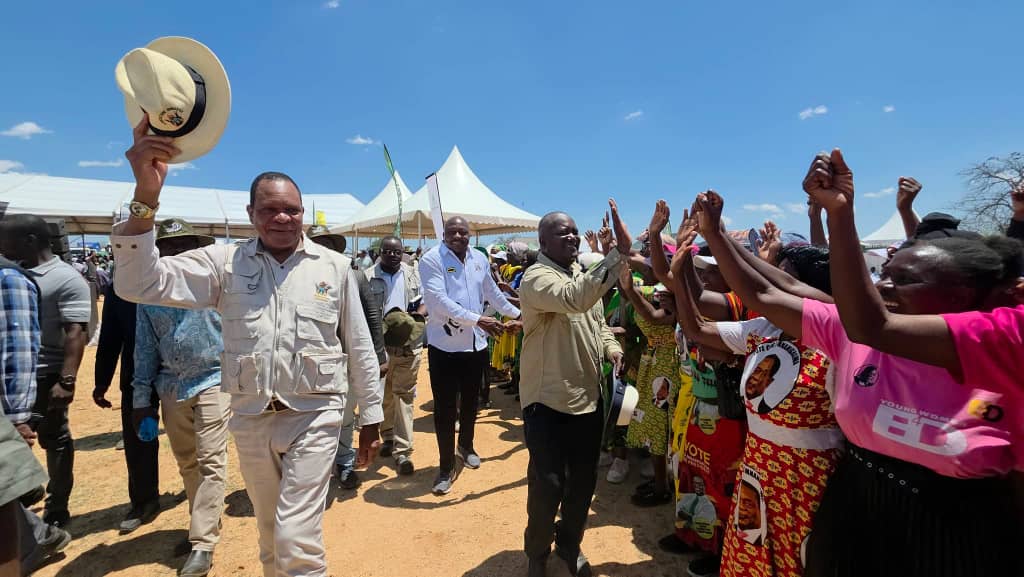
Located in Masvingo Province, where farmers in the drier agro-ecological regions face persistent rainfall challenges, the district illustrates why climate-smart agriculture, irrigation development and access to farming inputs are essential to protecting rural livelihoods.
For communities that depend heavily on rain-fed agriculture, a poor season can mean more than reduced harvests.
It can undermine household incomes, deplete grain reserves, increase dependence on food assistance and threaten livestock production.
The Pfumvudza/Intwasa programme is, therefore, central to efforts to help rural households produce enough food for their own consumption while contributing to national grain supplies.
The launch also reinforces the Government’s broader ambition of achieving Vision 2030, with agricultural productivity and rural industrialisation expected to play a significant role in transforming Zimbabwe into an upper-middle-income economy.
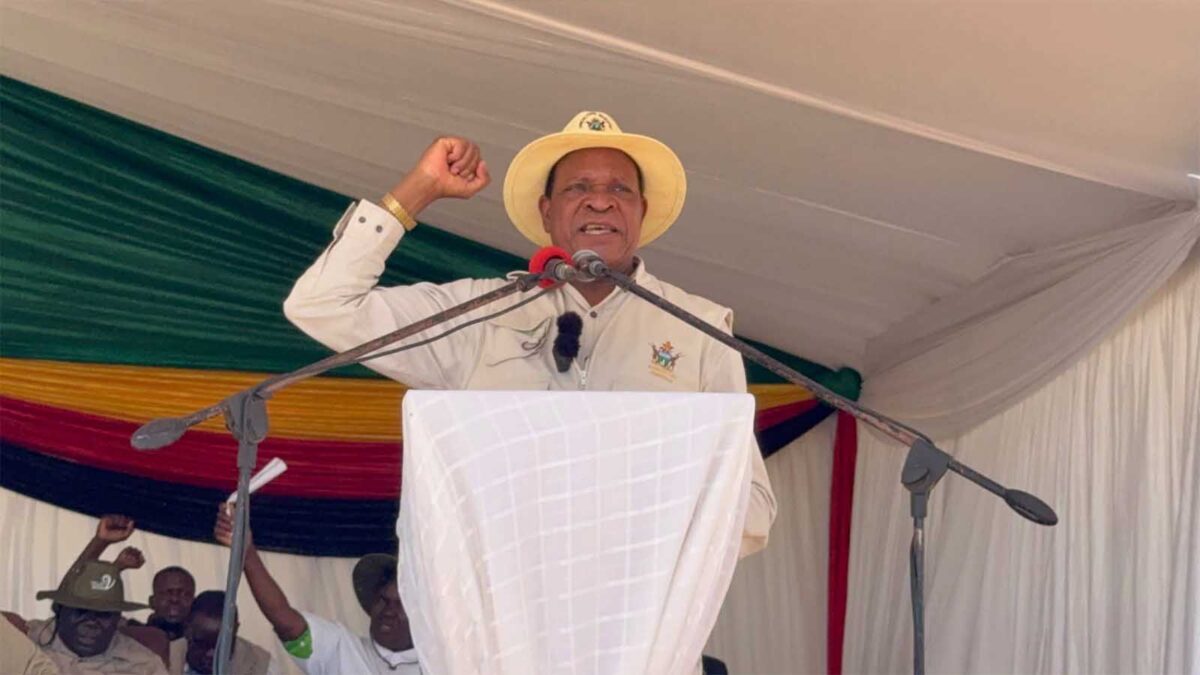
Representing President Mnangagwa, the Minister of Agriculture, Mechanisation and Water Resources Development, Dr Anxious Masuka, delivered the President’s message, emphasising the need for collective action in safeguarding food security.
The President called for unity and a collective shoulder-to-the-wheel approach, stressing that the country’s response to changing weather patterns must involve all stakeholders, including traditional leaders who are strategically positioned to mobilise communities and promote locally appropriate interventions.
The national philosophy, “Nyika inorimirwa, kuvakwa, kutongwa nekunamatirwa nevene vayo” (A nation is farmed, built, governed and prayed for by its own people), underlines the importance of national participation in agricultural production and development.
Addressing traditional leaders, including the 52 chiefs, headmen and village heads in the area, the President urged them to draw inspiration from the industriousness and visionary leadership associated with the Munhumutapa Kingdom.
The emphasis on traditional leadership is particularly important in rural communities, where chiefs and village heads can help coordinate farming activities, encourage timely planting, support the fair distribution of inputs and ensure that climate-smart agricultural practices are adopted at household level.
While Masvingo experienced good, above-average rainfall during the 2025/2026 agricultural season, Dr Masuka warned that preparations for the coming season must take account of the projected El Niño phenomenon.
The Government has consequently identified six strategic pillars to protect national and household food security: strengthening strategic grain reserves, expanding climate-smart production through Pfumvudza/Intwasa, improving soils through lime distribution, protecting livestock, establishing ward drought mitigation centres through Village Business Units, and accelerating irrigation development.
The first pillar involves strengthening strategic grain reserves through the Grain Marketing Board (GMB), with grain secured across provinces using modern storage infrastructure, including artificial intelligence-powered grain storage silos.
Households are also being encouraged to preserve their own grain using appropriate storage and preservation chemicals.
GMB chief executive officer Dr Edson Badarai has since indicated that the country currently holds 290 000 metric tonnes of maize in storage.
The second pillar focuses on expanding conservation agriculture, encouraging smallholder farmers to prepare Pfumvudza plots and grow drought-resistant crops suited to the conditions in Natural Regions IV and V.
The approach is intended to help farmers make better use of limited rainfall while improving the prospects of harvesting enough food even when the season is unfavourable.
The other measures include distributing lime to improve soil conditions and fertiliser efficiency, safeguarding the national herd through water provision, fodder banking and disease control, and establishing ward drought mitigation centres through Village Business Units.
The final pillar is accelerated irrigation development, which is expected to reduce dependence on rainfall and enable communities to sustain agricultural production during dry spells.
These interventions are especially relevant to Chivi and surrounding communities, where limited and unreliable rainfall makes the protection of every farming season a development priority.
The presence and support of local legislators, including Chivi Central Member of Parliament Exevia Maoneke, highlighted the importance of constituency-level leadership in translating national agricultural policies into practical results for rural communities.
As the programme moves from a national launch to implementation in individual wards and villages, legislators such as Hon. Maoneke have an important role to play in mobilising farmers, engaging traditional leaders and local authorities, and ensuring that communities understand the requirements of Pfumvudza/Intwasa.
For the programme to achieve its intended impact, the distribution of seed and fertiliser must be matched by effective community mobilisation, timely land preparation and planting, and the adoption of recommended farming practices.
Local leadership is also important in identifying implementation challenges and ensuring that vulnerable households are not left behind.
Hon. Maoneke joined fellow legislators, Felix Saul Maburutse, Faith Makaza and Godfrey Mukungunungwa, as well as Chivi District Coordinating Committee chairman Samuel Magonde, in pledging continued support for the programme and the transparent distribution of agricultural inputs to all local wards.
Their involvement reflects the importance of cooperation between Government departments, elected representatives, traditional leaders and farming communities in ensuring that national food security policies produce tangible benefits at household level.
For Chivi Central, the stakes are particularly high because the success of the programme will be measured not simply by the number of farmers receiving inputs, but by the number of households that successfully establish their plots, harvest grain and build resilience against future droughts.
The involvement of constituency leaders is, therefore, critical to bridging the gap between policy formulation and implementation, particularly in areas where climate risks and rural development challenges intersect.
Minister of State for Masvingo Provincial Affairs and Devolution, Ezra Chadzamira, commended the Government’s interventions, saying the province was working to consolidate its performance in agricultural production and development.
Minister Chadzamira said Masvingo, which has led the national provincial development ratings for the past two years, was targeting a substantial expansion of Pfumvudza/Intwasa production this season.
He revealed that the province aims to increase the number of plots to more than 2,5 million, up from the current 800 000, a target that would require extensive farmer mobilisation, adequate input supplies and close monitoring of implementation.
The target is significant for a province where the performance of the agricultural sector has direct implications for household food supplies, livestock survival and rural incomes.
Expanding the number of plots could help more families produce their own food and reduce their vulnerability to drought, provided farmers receive the necessary inputs and follow the recommended practices.
Minister Chadzamira also highlighted the contribution of the Presidential Borehole Drilling Scheme, which has helped establish 365 active Village Business Units across the province.
The combination of Pfumvudza, irrigation and Village Business Units is particularly important because it links household food production to broader rural economic development.
While Pfumvudza helps households maximise production from small plots, irrigation and village-based business initiatives can support more sustained production, livestock projects and income-generating activities.
The province’s ambitions also demonstrate how agricultural development can contribute to the national goal of transforming rural areas into productive economic centres rather than leaving them dependent on external supplies and assistance.
ZANU PF Masvingo provincial chairman Robson Mavhenyengwa also praised the Pfumvudza/Intwasa programme, saying the initiative had helped empower rural households and strengthen self-reliance.
He said the programme demonstrated the potential of planned agricultural interventions to help communities respond to climate challenges and improve their livelihoods.
The launch was supported by agricultural stakeholders and Government departments that provided seed, fertiliser and other farming inputs for distribution to farmers.
SeedCo contributed five tonnes of crop seed and five tonnes of sunflower seed, while Valley Seeds supplied 90 tonnes of specialised seed and 10 metric tonnes of sunflower seed.
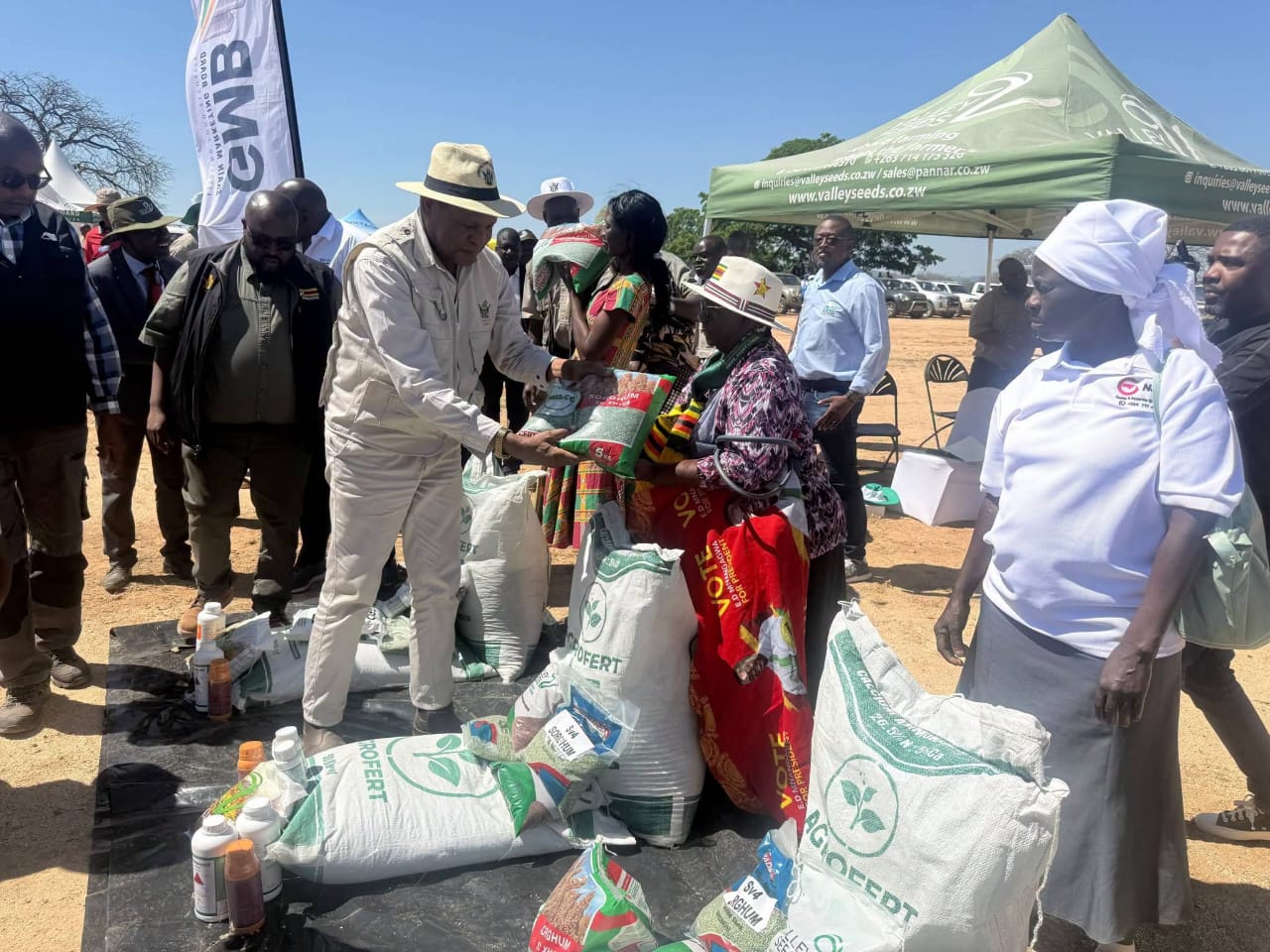
Additional inputs included half a tonne each of red and white Mapfunde sorghum and millet seed, 30 metric tonnes of Compound D fertiliser, 30 metric tonnes of top-dressing fertiliser, and chemical packs for weed and pest management.
The inputs were made available at the launch venue and positioned in local GMB depots to support distribution to farmers.
Ultimately, the Chivi North launch is about more than the opening of another agricultural season.
It is a test of Zimbabwe’s preparedness to confront climate uncertainty through coordinated planning, improved farming methods, strategic grain reserves and investment in water infrastructure.