Farirai Machivenyika
Senior Reporter
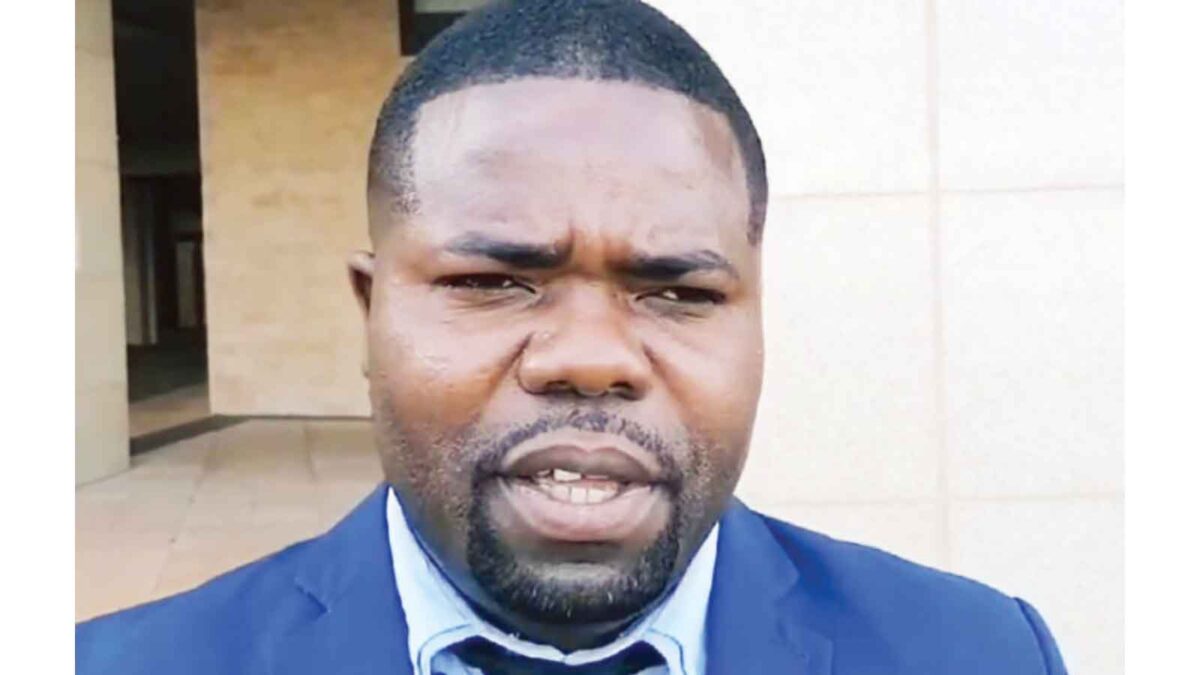
As the Government moves towards presentation of the 2027 national budget on November 19, 2026, our senior reporter Farirai Machivenyika (FM) interviewed the chairperson of the Parliamentary Portfolio Committee on Budget, Finance and Investment Promotion Honourable Lincoln Dhliwayo (LD).
FM: Can you give us your take on the pre-budget seminar that was recently held in Bulawayo.
LD: The seminar was a productive and constructive engagement between Parliament and the Executive. It gave Committees the opportunity to bring the voices of citizens directly into the formulation of the 2027 National Budget, as required by Section 28(5) of the Public Finance Management Act and Section 141 of the Constitution.
The Budget Committee alone reported consultations in 28 venues, reaching 2 694 citizens, more than half of them women.
We welcome the macroeconomic picture presented by the Minister of Finance. Inflation is in single digits (3.7% in September 2026), the ZiG has been stable and the economy grew by 8.3% in 2025 and is projected to grow by 5% in 2026. The tone of the seminar was, therefore, cautiously optimistic, but also realistic .
Growth is projected to slow down to 3.5% in 2027, mainly because of the expected El Niño induced drought.
FM: What are the main issues that came out during the seminar?
LD: Five issues came up across almost every Committee presentation:
- Late and partial cash releases.
- Parliamentarians were candid about the gap between what has been allocated and what has actually reached the people. While they appreciated the important role that Treasury plays, Parliamentarians noted with concern the late and partial cash disbursements to Ministries, Departments and Agencies (MDAs). For instance by September 30, the Ministry of health had only received about 53% of its budget allocation, whereas the Ministry of Primary and Secondary Education had received 55% of its budget allocation. The cash released to MDAs has since been fully utilised. Parliamentarians called for the timeous disbursement of the votes allocations.
- Ceilings well below bids: Whilst bids were way above the ceilings that had been proposed by Treasury, Parliamentarians appreciated the ceilings were informed by the country’s potential to generate revenue, which is about 18 percent of the GDP.
- Service delivery priorities from the public. Citizens consistently asked for better-funded health and education, clean water, roads, timely BEAM payments, social protection and improved conditions for civil servants. Many also raised issues to do with tax relief, including a higher tax-free threshold and a lower IMTT.
- Devolution. Councils raised concerns about delayed or non-disbursements of devolution funds, a development which limit local authority service delivery. Parliamentarians felt that service delivery will improve if Treasury makes more effort to meet the five percent Constitutional requirement.
- Climate and food security. The expected El Niño induced drought dominated the agriculture discussion, with emphasis on the Strategic Grain Reserve, irrigation, livestock and enhanced early warning systems.
- Infrastructure development: The construction of major roads which includes Bulawayo-Vic Falls, Harare Chirundu, Harare-Kanyemba roads, as well as the construction of the Gwayi-Shangani and Kunzwi dams dominated the infrastructure development discussions. Parliamentarians also called for budgetary support towards irrigation infrastructure development.
FM: Any suggestions that you have on how some of these issues can be addressed?
LD: Timeous budget and cash releases. Treasury could adopt a quarterly release flow for priority service-delivery lines (medicines, BEAM, school feeding, devolution funds and drought programmes), aligned to the school calendar and agricultural season, of course subject to availability of funds (revenue).
Protect non-wage spending. Non-wage allocations for service delivery should be protected from cuts and virements.
Ring-fence earmarked revenue. There was a call by Parliamentarians to ring-fence earmarked revenue such as the sugar tax.
Broaden the revenue base rather than raise rates. Parliamentarians proposed stronger royalty audits, digital border posts to curb smuggling, formalisation of the informal sector and capturing gaming revenue for sport. These measures increase revenue without adding to the burden on existing taxpayers.
Sequence priorities. Not everything can be funded at once. Parliamentarians supported the Minister’s call for Parliament to help sequence priorities, and suggest that projects nearing completion and services with the greatest impact on vulnerable citizens must come first.
FM: The country faces an El Niño-induced drought next year. From a budgetary perspective, how do you think this impending disaster should be addressed to ameliorate its effects?
LD: We commend the Government for adopting a proactive rather than a reactive approach through the Cabinet-approved six-pillar drought mitigation plan. From a budgetary perspective, Parliamentarians recommended the following:
- Early Funding of the Strategic Grain Reserve. The reserve stood at about 340 749 tonnes against a target of 600 000 tonnes by October 2027, and the projected cereal deficit ranges from about 267 000 to 542 000 tonnes. Parliamentarians called on Treasury to make efforts to avail funds for grain purchases early, and also ensure farmers are paid in time.
- Create and pre-release a drought contingency plan. A clearly identified, ring-fenced contingency plan in the 2027 Budget, supported by sovereign drought insurance, would allow a rapid response without disrupting other votes.
- Prioritise irrigation and water harvesting in the capital budget. Investment in dams, solar-powered irrigation and boreholes is the most durable defence against recurring droughts.
- Protect livestock. About 2.3 million cattle are said to be at risk, so provision is needed for stock feed, water points, dipping and the completion of ward drought mitigation centres (771 of 1,527 developed).
- Scale up social protection and school feeding. Food deficit mitigation, cash transfers and school meals should be adequately funded and released on time, targeting the most affected districts.
- Ensure accountability. Drought funds attract risks of leakage. Transparent targeting, regular reporting to Parliament and audit by the Auditor-General will be essential.
FM: The budget will be presented on November 19, what is your message to Zimbabweans on how you will debate issues to address their concerns, raised during the public hearings you conducted last month?
LD: My message to the citizenry is that the views they shared during the public hearings did not end with the pre-budget seminar. Parliamentarians recorded them in their reports and we will use those reports as the reference point when the 2027 Budget is presented and debated. In particular, we will:
- test each Vote against the priorities raised by the public, especially health, education, water, roads, devolution and social protection;
- look beyond the size of allocations to whether funds will be released on time and reach communities and ask Ministers to account for 2026 performance;
- engage the Minister of Finance constructively on priority areas where the gap between bids and ceilings is most acute; and
- continue with the oversight role after the budget is passed, through quarterly reviews of budget performance and follow-up on audit findings.
We will debate in the national interest, constructively and on the basis of evidence.
FM: Any parting message?
LD: Zimbabwe has achieved hard-won macroeconomic stability and the 2027 Budget is an opportunity to turn that stability into better services for ordinary people. Our appeal to Treasury is for a budget that is realistic, predictable and people-centred: allocations that reflect citizens’ priorities, releases that are processed when they are needed, and spending that delivers measurable results. To citizens, we say thank you for participating in the consultations. Your contributions will shape the 2027 national budget debate in the August house. I encourage you to stay engaged and to hold all of us, as public office bearers, accountable for how public resources are used.