Martin Kadzere-Business Reporter
FINANCE Minister Professor Mthuli Ncube yesterday presented a ZiG358,3 billion 2027 National Budget, proposing cuts to personal income and electronic transaction taxes alongside targeted industrial incentives to cushion citizens against a projected El Niño-induced drought.
Addressing Parliament at New Parliament Building under the theme “Accelerating Economic Transformation and Building Resilience to Climate and Global Shocks”, Prof Ncube proposed raising the monthly tax-free threshold from US$100 to US$150, or its ZiG equivalent, effective January 1, 2027.
Tax bands, he said, had been adjusted accordingly to increase workers’ disposable income and buying power.
The Intermediated Money Transfer Tax (IMTT) on ZiG transactions will drop from 1,5 percent to 1,25 percent, while the rate on foreign currency-denominated transfers falls from 2 percent to 1,75 percent.
Treasury, which neither introduced new taxes nor raised existing ones, will return US$120 million to economic agents through the IMTT reductions.
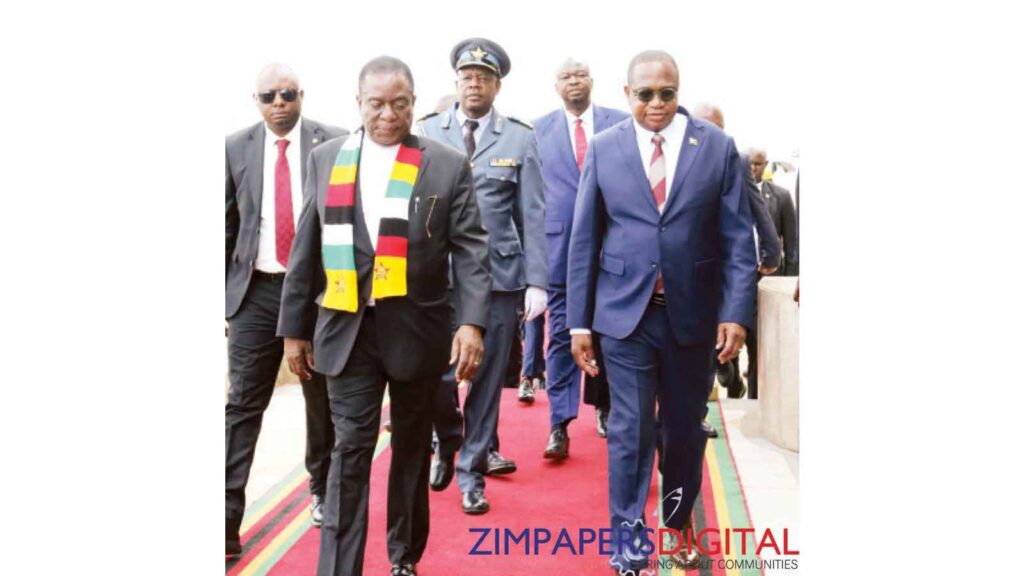
President Mnangagwa is welcomed by Finance Minister Professor Mthuli Ncube on arrival at New Parliament Building ahead of yesterday’s presentation of the 2027 National Budget. — Picture: Memory Mangombe.
Prof Ncube said the forgone revenue was justified as it gave “relief to citizens and companies” and would be offset by increased economic activity and consumer spending.
In pre-Budget consultations, taxpayers complained that the cumulative 4 percent cost of US dollar electronic transfers — comprising 2 percent IMTT and 2 percent bank charges — discouraged formal banking and fuelled cash hoarding. The public had recommended halving IMTT to 1 percent and harmonising charges across currencies to deepen financial inclusion.
The 2027 fiscal plan projects total revenue of ZiG349,5 billion (about US$12,5 billion, or 18,1 percent of gross domestic product) against an expenditure ceiling of 18,6 percent of GDP.
It incorporates a ZiG10,9 billion (about US$400 million) contingency buffer, financed from 2026 fiscal reserves, to mitigate severe shocks.
Ahead of the anticipated drought, Government, through the Grain Marketing Board, had procured 365 000 tonnes of grain by the end of October 2026 toward building the strategic grain reserve to 600 000 tonnes in 2027.
Government also subscribed to the African Risk Capacity (ARC) sovereign parametric drought insurance policy at a US$3,4 million premium, transferring financial risk to a continental risk-pooling mechanism. Following the 2023/24 El Niño-induced drought, Zimbabwe received a US$31,8 million ARC payout that assisted over 508 000 vulnerable households across 27 districts.
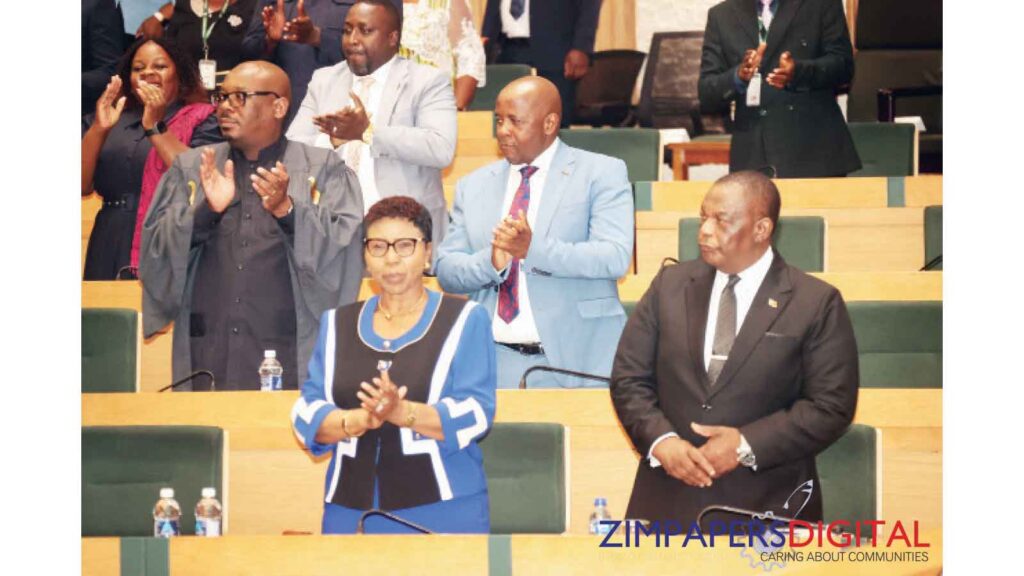
Vice President Dr Constantino Chiwenga and Defence Minister Oppah Muchinguri-Kashiri join other guests in welcoming the President ahead of the Budget presentation.
To stimulate domestic production, export competitiveness, and clean energy adoption, Prof Ncube introduced several customs and procurement measures:
• Fertiliser manufacturing: A duty rebate on raw materials, specialised intermediate inputs, and capital equipment took effect on November 1, 2026. “In the process of ensuring security of supply given geopolitical tensions, I propose to introduce a rebate of duty on raw materials, specialised intermediate inputs and capital equipment used in the fertiliser manufacturing value chain, including primary raw material producers, subject to prescribed conditions,” the minister said.
• Vehicle assembly: Customs duty is wholly suspended on Semi Knocked Down (SKD) kits imported by approved local assemblers of internal combustion engine motorcycles, tricycles, trucks, and electric commercial vehicles from December 1, 2026.
• EVs and mobile phones: Customs duty on electric vehicles drops from 25 percent to 10 percent, while duty on cellular phones is scrapped.
• Tobacco excise: From January 1, 2027, the hybrid excise duty on cigarettes (25 percent ad valorem plus US$5 per 1 000 sticks) will be replaced by a specific excise duty of US$15 per 1 000 sticks.
• Local content: Effective January 1, 2027, Government, mining firms, and large entities must source at least 15 percent of their inputs locally where capacity exists, with the supporting framework due by March 31, 2027.
Ministries, departments, and agencies submitted ZiG974 billion in expenditure bids—nearly triple the ZiG358,3 billion ceiling—underscoring the need for strict fiscal discipline.
Top allocations include ZiG47,7 billion for Primary and Secondary Education, ZiG35,5 billion for Health, ZiG27,6 billion for Agriculture, ZiG23,4 billion for Defence, ZiG21,8 billion for Home Affairs, and ZiG21,5 billion for Social Welfare.
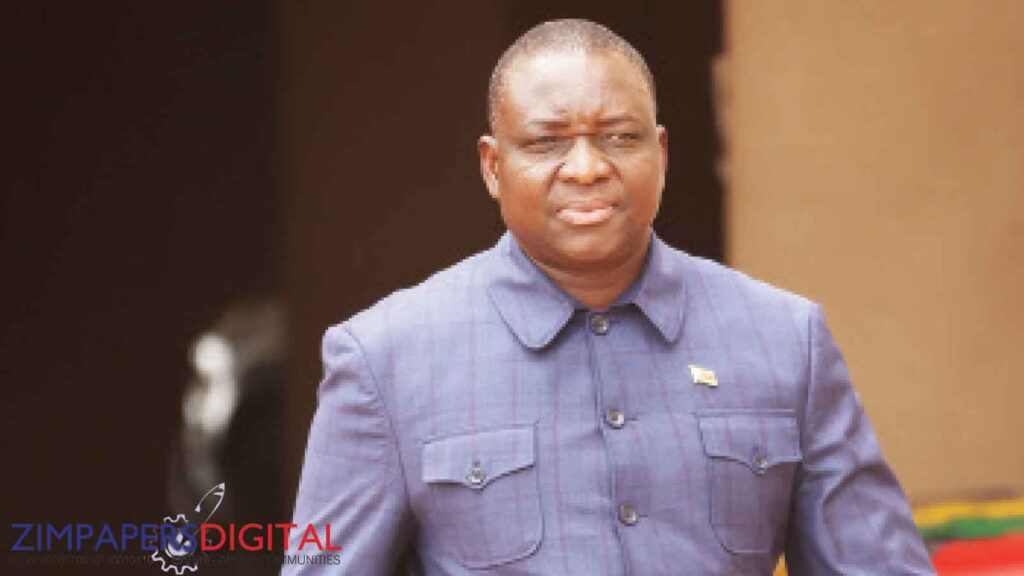
Information, Publicity and Broadcasting Services Minister Dr Zhemu Soda arrives for the event.
To enforce budget credibility, Treasury mandated prior approval for all contracts exceeding US$2 million. “Treasury will not condone the unilateral initiation and implementation of projects and programmes outside the approved budget framework by strictly enforcing the Public Finance Management Act and regulations,” Prof Ncube said.
Total public and publicly guaranteed debt stood at an estimated ZiG594,1 billion (US$22,2 billion, or 33,4 percent of projected GDP) at the end of September 2026, comprising ZiG331,2 billion in external debt and ZiG262,9 billion in domestic debt.
Prof Ncube highlighted three milestones signalling improved international standing and broader financing options:
• World Bank reclassification: Zimbabwe exited the World Bank Group’s list of fragile and conflict-affected states on July 1, 2026, boosting investor and creditor confidence.
• BRICS Bank membership: Admission as a borrowing member of the BRICS New Development Bank diversifies funding beyond traditional lenders such as the IMF and World Bank.
• UN Security Council: Election as a non-permanent member for the 2027–2028 term raises Zimbabwe’s diplomatic profile in global peace and security debates, though without permanent-member veto power.