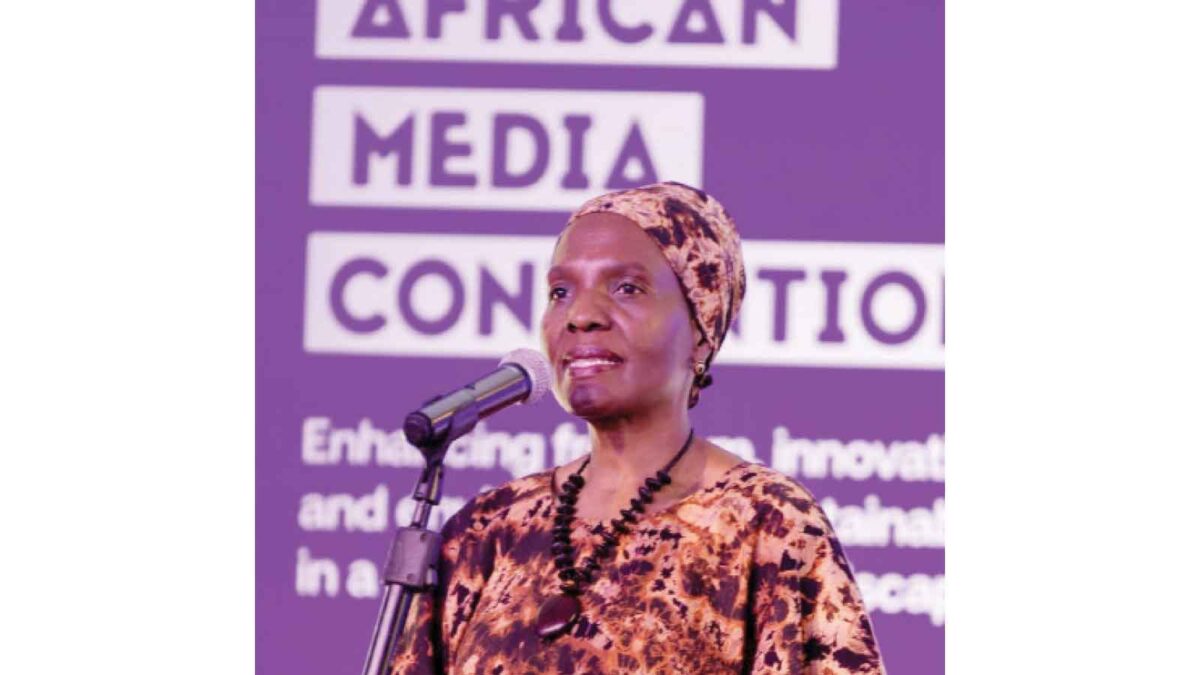
WYNNE MUSABAYANA Former Head of Communication and Knowledge Management: African Union Commission retired from the organisation in May this year after 22 years at the top of the continent’s information dissemination. Our Deputy National Editor Kudakwashe Mugari (KM) caught up with her (WM) in Harare where she has been quietly enjoying a break and catching up with old friends and relatives.
KM: After 22 years at the African Union in Addis Ababa in Ethiopia, you are back home in Zimbabwe. How does it feel?
WM: I am truly happy and thankful to be back home. After so many years away, there is a deep sense of joy in spending time with the people who matter most to me, our family, relatives and friends, and in reconnecting with the familiar things I have missed; the food, the culture, the music, the people and above all, just the feeling of being home. I return with a strong sense of fulfilment from my years at the African Union.
KM: When you joined the AU 22 years ago, what were your plans and did you accomplish them?
WM: I joined the AU in 2004, expecting to make a meaningful contribution to its communication and to grow professionally. I brought experience from national, regional and international organisations, having worked at the Zimbabwe Broadcasting Corporation, the Reserve Bank of Zimbabwe, First Mutual Life, the International Federation of Red Cross and Red Crescent Societies, and within the UN system.
My studies in sociology, public relations and marketing, and journalism gave me a strong foundation.
Local consultancy work in Addis Ababa had also helped me understand the communication and information environment in which I would be working.
So, I arrived ready to contribute, and also ready to learn. The AU offered an opportunity to apply that experience on a continental scale, helping people understand its work and what it meant for their lives. Looking back, I am happy to say that I contributed immensely to strengthening communication at the AU, and the experience broadened my own understanding of Africa enormously.
KM: Take us back to Day 1. How did a Zimbabwean end up as the Head of Communication at the African Union?
WM: My professional journey began at the Zimbabwe Broadcasting Corporation, where I received very thorough training in writing, editing, producing and presenting news, current affairs and public relations programmes. That grounding stayed with me as I moved into corporate communication and international organisations, and it proved invaluable when I joined the AU.
On my very first day, I was tasked with leading the launch of the AU’s first live broadcast of its annual Ordinary Summit of Heads of State and Government, in collaboration with the Ethiopian Broadcasting Corporation. We had just 20 days before the summit began. It was an exciting challenge. I could draw on my broadcasting experience and knowledge of the media, but presidential communication and the diplomatic protocols surrounding Heads of State and Government were a steep learning curve. I had to prepare thoroughly and learn quickly.
We delivered live and recorded coverage throughout the summit. It was a very satisfying beginning, and an early lesson in how much continental communication demands of you in terms of management and technical skills, careful preparation, diplomacy and the ability to bring a team together to get the work done.
For me, three achievements stand out: a shared vision and architecture for Africa’s development, stronger frameworks for inclusion, and a more influential collective voice in the world.
The first is Agenda 2063 – the Africa we Want. Being present during the consultations that shaped the then proposed Agenda 2063, and supporting its launch before Heads of State and Government in 2013 was a particularly significant experience, given the promise it held for
Africa’s transformation. I witnessed the considerable effort that went into bringing different stakeholders together to craft a common continental vision. Its significance is that Africa has a long-term, 50-year development framework, with shared priorities, institutions and mechanisms for measuring progress, as defined under the AU vision of a prosperous, integrated and peaceful continent, driven by its own people and with a strong voice in the global arena.
That vision has practical expression in initiatives such as the African Continental Free Trade Area, AfCFTA, and the Africa Centres for Disease Control and Prevention, AfricaCDC, which derive their mandates from the Agenda. Significant initiatives like Silencing the Guns, the Common Africa Agricultural Development Programme, and the Programme for Infrastructure Development are worth mentioning. The continental response to both the Ebola and COVID-19 pandemics demonstrated the value of African institutions that can bring countries together to address a shared threat. These are important achievements; turning collective ambition into action that sustains and transforms people’s lives.
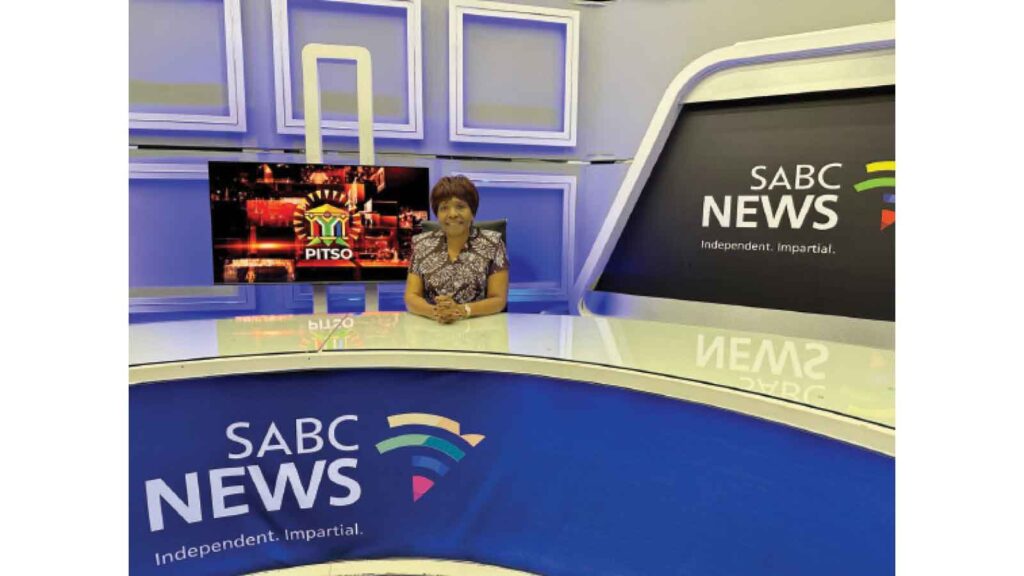
Wynne Musabayana has traversed the African media landscape over the years.
The second is the stronger recognition of women, young people and other historically disadvantaged groups as participants in Africa’s development. Instruments such as the Protocol to the African Charter on Human and People’s Rights on the Rights of Women in Africa (the Maputo Protocol), the African Youth Charter, and protocols on older persons, people with disabilities and rights to a nationality, provide frameworks through which the African union and member states are advancing equal rights and meaningful participation in the continent’s development.
There is still work to do, but these commitments, and more, establish that Africa’s future must be shaped by all its citizens, as per the Union’s vision.
The third is Africa’s stronger collective voice internationally. The AU’s inclusion in the G20 is one important expression of that. The Union’s convening power ensures that Africa has a unified voice in critical areas such as international governance, economic diplomacy and global crisis management, with examples including climate change, health, the reform of the United Nations under the Ezulwini Consensus, peace, governance and development financing, and international financial reform.
Having worked across the institution for many years, I came to appreciate the inclusive approach and effort that goes into building those common positions. KM-The AU has had to deal with coups, conflicts and disease pandemics in its relatively short history.
KM: Which crises tested you the most?
WM: The Ebola outbreak in West Africa and the COVID 19 pandemic tested our communication capacity most profoundly. In both cases, lives were at risk, anxiety was high, and misinformation made an already difficult situation more dangerous.
Our responsibility during the Ebola pandemic went beyond explaining the AU’s response.
The AU had formed a civilian military mechanism called the African union Response to the Ebola Outbreak in West Africa (ASEOWA). Working within this framework, we supported member states with the messaging around the outbreak, gave citizens practical information, reassured communities, supported resource mobilisation and made the work of 900 qualified African health volunteers visible. We worked together with other departments and member states’ representatives to produce a comprehensive communication strategy.
After considerable research, we developed the ARC campaign around three messages: Ebola could be avoided, people could recover from it, and everyone could contribute to stopping the outbreak. We supported its deployment in the affected countries, providing campaign materials ready for use in public spaces and online platforms.
We soon realised that a lot of the reporting by international news channels gave much greater, if not exclusive visibility, to Western news agencies. We secured funding to take 20 African journalists and crew into the three worst affected countries so they could report directly from the theatre of action, ensuring their access to communities, governments, emergency treatment centres, patients and health workers.
That mission demanded much more than media management. We were taking people with legitimate fears into an active epidemic, and part of my responsibility was also to look after their welfare.
At one point, we delayed crossing the Guinea-Sierra Leone border because a member of the team had developed a very high temperature. It proved to be stress induced hyperthermia rather than Ebola, but it brought home the extent of the anxiety surrounding the mission.
While responding to that immediate crisis, we were also contributing to the Concept of Operations for the future Africa CDC, ensuring that communication was embedded in its founding documents as a strategic function. This remains particularly meaningful to me: we were helping address an emergency while strengthening African capacity to respond to future ones.
COVID 19 brought a different scale of pressure, with information changing almost by the hour. The communication environment was transformed overnight: physical meetings stopped, familiar channels of engagement disappeared, and we had to rapidly reinvent how we communicated, connected and maintained public trust in the midst of unprecedented uncertainty.
Both experiences reinforced my belief that successful crisis communication depends not just on strategy, but on relationships, commitment, coordination, collaboration, trust, sound judgement and reliable systems.
KM: Many people think being a communications manager is just about reading statements. What does it really entail behind closed doors when 55 member states disagree?
WM: Reading statements is one visible part of a much larger responsibility. At senior level, you are managing systems, strategies, and resources, and building people and relationships that enable an institution to communicate credibly and consistently.
When Member States discuss, it is important to understand the boundaries of your role. Political negotiations belong to the Member States and the appropriate decision-making organs.
Once decisions were taken, our responsibility was to communicate them accurately and timeously. It also meant advising leadership where communication or an intended action could create reputational risk. So, good judgement is essential.
Behind that public communication is considerable preparation. I was fortunate to work with an excellent team drawn from different countries, cultures, religions and generations. Part of leadership is drawing on that diversity, developing people and keeping everyone focused on shared objectives.
The function also encompasses building the capacity of African media to report accurately and effectively on continental issues, especially Agenda 2063; being a spokesperson, preparing top political leadership for high-stakes media and public engagements; strengthening the professional capabilities of the communication team; maintaining credible channels through which citizens can understand the institution, strategically positioning and advocating the institution’s agreed continental and global positions, safeguarding and strengthening the institutional brand and reputation; and coordinating and facilitating high profile continental initiatives, including the Mjadala Afrika leadership debates, for prospective chairpersons of the AU Commission.
An AU Summit provides a practical demonstration of the scale and complexity of the communication function. A single Summit can bring together up to 700 media professionals from across Africa and the world, each requiring timely access to information, senior level interviews, photography, broadcast facilities and open sessions relevant to their audiences. Delivering this effectively requires a cohesive team, robust systems, infrastructure and relationships across multiple institutions.
We established and managed the operational architecture to support this demand, including the media centre, radio and television studios, briefing rooms and interview facilities, while working closely with host countries on entry clearances, transport, accommodation and other logistical requirements. What audiences ultimately see, hear and read during a Summit is therefore the visible outcome of months of strategic planning, coordination and relationship management behind the scenes.
So, when someone reads a statement, that is often the final, visible moment of a longer process involving careful planning and execution.
KM – How did you balance loyalty to the
institution with the need to tell the truth to African citizens and the international media?
WM – For me, loyalty to an institution means enhancing and protecting its credibility, and credibility rests on the gold standard of our profession, which is the truth. Our responsibility was to explain the AU’s work and positions clearly, while distinguishing between what was known, what remained uncertain and what the institution had decided as a way forward. African citizens who are our primary audience, journalists and other content creators needed information they could trust, particularly during fast-moving or sensitive situations. If we did not have the facts, we would say so rather than speculate or create an answer.
That also required the judgement to advise leadership when something needed further scrutiny. I remember an occasion when someone arranged for an event to present one of our executive political leaders the freedom of a major city in the United States. He presented himself as a senior city official sent by the Mayor, and the documentation appeared legitimate.
But something did not sit comfortably with me. I checked his credentials against the city’s website, and that research helped us stop an event that would have seriously damaged the organisation’s reputation.
That is part of a communication manager’s responsibility: to look beyond how an announcement will sound, and examine whether it is credible in the first place. My loyalty to my employer was expressed through telling the truth responsibly, giving sound advice and protecting the trust that citizens and the media placed in us.
KM – Africa is often portrayed negatively in Western media. How did you fight Afro-pessimism and misinformation?
WM – Africa deserves to be represented in its full complexity; its successes, capacities, resilience, solidarity, challenges, and its commitment to African solutions for African problems, as well as its plans for a better future.
COVID -19 was a clear example. Early predictions about the continent were extremely pessimistic, projecting many millions of deaths and bodies littering the streets. They underestimated Africa’s experience and ability to respond.
Our responsibility was to ensure that reporting could draw on what was actually happening and on people with relevant knowledge of the response.
Working with the Africa CDC, we provided weekly media briefings for approximately two and a half years. Ministers of Health, WHO officials, technical experts and private-sector representatives participated, giving African and international journalists regular access to authoritative, verified information. The briefings delivered timely public health updates and guidance, while actively countering misinformation, debunking false claims and addressing misconceptions about COVID -19 to promote accurate, evidence-based public understanding of the pandemic. Broadcasters carried the briefings live, extending their reach to audiences in member states.
We created dedicated digital platforms aggregating information on outbreaks, travel advisories, response measures and the distribution of essential supplies to member states. We trained communication experts in Member States to make sensitive announcements without causing unnecessary alarm. We co-created and co distributed awareness messages with three of the world’s top broadcasters. The aim was to make accurate information accessible, useful and timely through digital communications. I believe that our work went a long way to dispel a lot of the pessimism and stereotypes about Africa.
But challenging Afro-pessimism requires sustained work beyond a crisis. We need to explain challenges honestly, make planned interventions understandable and give African progress and solutions consistent visibility.
Recentering the African narrative remains a long-term goal for me because negative perceptions and stereotypes have consequences. They influence economic progress, investment, tourism, credit ratings, partnerships and how Africans themselves understand the possibilities available to them. Credible storytelling helps ensure that Africa is accurately represented and that Africans have greater agency in telling their own story.
KM – What did your AU position allow you to do that people may not know about?
WM – Working at the secretariat of the AU, rather than within one of its other organs, gave me a broader institutional perspective, greater strategic reach, and the ability to help shape a coherent communication agenda across the organisation.
It gave me an extraordinary opportunity to understand and appreciate Africa from several perspectives at once. I worked with governments, regional and international institutions, businesses, civil society, journalists and the creative industries. Because communication cuts across an organisation, I was able to work across virtually the whole AU system and see how continental ambitions are translated into programmes, partnerships, decisions and actions.
People may know the public-facing work, but less about what we built behind it. I led the “I Am African, I Am the African Union” campaign, launched the Union’s flagship publication the AU ECHO, and successfully advocated for the establishment of the Union’s first media infrastructure as well as the radio and TV studios. Those were opportunities to create lasting platforms and channels through which people could engage with the AU and understand its work.
The position also brought me into contact with African and global leaders at all levels, whether through conversation or managing communication around their engagements. Those experiences deepened my understanding of leadership, diplomacy and how power is exercised. Extensive travel across Africa and the world also allowed me to appreciate developments in Africa directly.
There was a community dimension too. In Ethiopia, I helped establish the A/MaZimbabweans Association, served on the committee that drafted its constitution and later served as Secretary for several years. I also prioritised helping our journalists navigate AU meetings and gain access to important continental discussions and outcomes.
What I value most is that breadth of understanding, together with the opportunity to build things and support people. It is experience I carry with me beyond the institution.
KM – Why retire now? Was it your
decision or AU term limits?
WM – Retirement at the AU, as elsewhere, is governed by established age requirements, and I reached that point at the end of my service. I was comfortable with the timing.
I left with a strong sense of fulfilment and the satisfaction that I had given my best to the African Union and to the continent over those 22 years. I am grateful for the opportunities, the colleagues and leaders I worked with, and the chance to contribute to an institution whose mandate I believe in.
I see retirement as a transition into a new phase. The experience, knowledge and relationships I have accumulated remain valuable, and there are different ways in which I can apply them.
After 22 years of high-pressure diplomacy, what are some of the important lessons Addis Ababa taught you about Africa and about power?
One of the lessons is that Agenda2063 aims to integrate Africa as a continental system, and that the local no longer stays local. What happens in one country can affect lives and opportunities far beyond its borders. A national transport corridor can open regional markets; instability can disrupt livelihoods thousands of kilometres away; a disease outbreak can very quickly become a continental or international threat. I understood that explaining those connections change how you communicate and how you help your audiences recognise opportunities.
Working closely with leaders and institutions taught me the strategic power of convening the right stakeholders and securing collective commitment. When stakeholders help shape and agree on a common position, they are more invested in the outcome, and more accountable for delivering on the agreed actions.
It takes vision, commitment, sustained effort and a lot of resources to translate shared interests into decisions and action. I saw considerable dedication within the AU, often under difficult resource constraints. That strengthened my belief in Africa’s institutional and human capacity.
Another lesson is that, to be successful, communication must be treated as strategic infrastructure. It should be part of planning, programme design and budgeting from the outset. If people cannot understand a policy, access reliable information or see how an initiative relates to their lives, an institution’s ability to connect with its audiences is weakened. Leaders need to consider those consequences and appreciate the costs of inadequate and missed communication.
Technology has enormously expanded what we can do. We can produce, translate and distribute content at a speed and scale that was previously impossible. But technology does not replace judgement. As tools become more powerful, accuracy, ethics and accountability become even more important.
Who tells Africa’s story matters. We must therefore invest strategically in African media, the broader cultural and creative industries, research, knowledge generation and preservation, and the technologies that enable us to tell our own stories and shape our own narratives. Equally important, we must take greater ownership of the knowledge we produce on and about our continent, ensuring that it informs our understanding of our historical experiences, our present realities, our policy choices and development agendas, and ultimately, our future. It is a contradiction that there are African institutions that hold a wealth of African generated knowledge yet it is accessed and utilised predominantly by external audiences and storytellers.
We must change this dynamic by strengthening our capacity to generate, preserve, disseminate and apply our own knowledge, while significantly increasing the volume of African produced content available online. Despite accounting for approximately 18 to 20 per cent of the global population, Africa’s contribution to global data is reported in some studies to be as low as one percent. This disparity underscores the urgency of investing in our knowledge systems, digital presence and creative capabilities to ensure that Africa is not merely the subject of global narratives, but an active producer of the knowledge, content and ideas that shape how we are understood and how we define our own future.
Perhaps my most important take away is captured in three words: it is possible. Deeper integration and better living conditions are possible. There is significant visible progress on the ground, although many challenges remain.
KM – What did you miss
most about Zimbabwe while you were away?
WM – Everything.
When you live outside your country for a long time, the seemingly ordinary things take on a special significance; the food, our favourite cordial, the music, the culture, people, places, and the birds that wake you up in the morning. I missed our garden, the uplifting singing, drums and hosho (gourd shaker) of our church, and the joy of being around family, friends and colleagues. Together they make up the feeling of home.
KM –You come back with
immense institutional memory, contacts across 55 states and global bodies. What next?
WM – I am taking time to be with family, friends and relatives, and settling back into life at home. What remains clear is my commitment to communication and its contribution to Africa’s development. It is central to progress. Recentering the African narrative is a long-term goal, as is ensuring that communication receives the strategic attention it deserves.
I carry a breadth of experience and expertise in building public communication systems, resources and strategies; advising leadership, serving as a spokesperson, managing crises, leading teams, advancing media development, organising and facilitating high level engagements, and working across diverse institutions and cultures.
These capabilities are transferable across contexts and can be leveraged in different ways.
KM – For young Zimbabweans
who want to work for the AU, UN, SADC – what is your advice? Is it still aclosed club?
WM-I would encourage young
Zimbabweans to see these institutions as places where they can contribute.
Despite the global jobs gap, opportunities do exist, although competition is intense and it takes preparation to position yourself well.
My advice is to build strong foundations in your chosen field, and develop complementary skills.
Communication, digital competence and internationally recognised languages can broaden the opportunities available to you. Keep learning, understand the institution’s mandate and become familiar with its recruitment processes.
For competency based interviews, prepare examples that demonstrate what you can do, how you have solved your employers’ problems before, worked with others or delivered a result. An employer needs to understand how your abilities will help meet its needs.
Use digital platforms thoughtfully too. They can help you find opportunities, access knowledge and make your professional capabilities visible.
In my own career, thorough training and the guidance of experienced colleagues made an enormous difference. Seek out people you can learn from, take their advice seriously and put in the work to develop your craft.
Finally, remain open to different routes. Your first opportunity may be in broadcasting, business, public service or consultancy, and the experience you gain there can prepare you for an international role later. Develop your creative talents as well. There may be possibilities beyond the career path you initially imagined.
Anchor yourself in faith. It provides a steady foundation that fosters resilience, ethical clarity, and stability.
KM – Who is Wynne Musabayana outside the suit – what do you do when you are not being a diplomat?
WM – Outside the suit, I am many things. I am a mother, grandmother, daughter, sister, wife, cousin, niece, friend and neighbour. Those relationships are an important part of who I am. I am also an active member of our church and an aspiring amateur gardening enthusiast.
I am a writer too, having contributed to Township Girls: The Cross-Over Generation, an anthology in which Zimbabwean women reflect on their upbringings. It was an opportunity to revisit my youth and pay tribute to my parents, Moses and Joyce Mukotekwa, who gave me and my siblings a firm foundation in life.
Earlier this year, before my retirement, I was nominated as one of the top 10 women public relations practitioners in Ethiopia by a continental PR organisation.
I embrace opportunities for adventure, and continually challenge myself to pursue new interests and personal milestones.
KM – If you were to write your memoir about your 22 years at the AU, what would you title it?
WM – I would want the title to capture the craft of continental communication and the skill and sensitivity required to navigate diplomatic spaces.
But I would have to find the real nuggets first; the lessons that remain useful long after the meetings have ended and the headlines have faded. What did those years teach me about people, transformation, management, communication, and getting things done? What might someone else find valuable in their own life?
Perhaps you have just given me an idea for my next project. I will leave finding the actual title until then!
KM – Finally – what do you want your legacy to be? How do you want Africa to remember you?
WM – I would like to be remembered as a passionate communicator who championed the power of communication as a strategic enabler of Africa’s transformation.
I hope the systems and platforms I helped build continue to serve African people, and that the colleagues we supported carry the work forward in their own ways. That would be a meaningful legacy.
Above all, despite the enormous challenge of communicating with 1.6 billion people with huge linguistic diversity, I would like my contribution to have helped Africans understand the continent’s possibilities and their own place in shaping its future. I believe, very strongly, that it is possible.