Tinaye Agere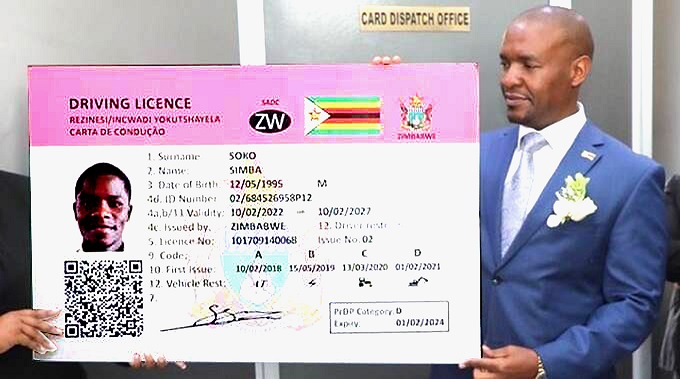
Sunday Mail Reporter
OVER 220 000 plastic driver’s licences were issued to individuals who passed driving competency tests in 2024, marking a significant milestone in the rollout of the initiative aimed at addressing the previous backlog.
Since the introduction of the plastic licences in June 2023, more than 300 000 have been issued, highlighting substantial progress.
The new plastic licences, which replaced metal discs, incorporate advanced security features such as QR codes for instant verification.
The features significantly reduce the risk of forgery and ensure that only qualified drivers are licensed, contributing to enhanced road safety and regulatory compliance.
In an interview with The Sunday Mail, Ministry of Transport and Infrastructural Development communications and advocacy director Ms Judith Nhau said: “As the Ministry of Transport and Infrastructural Development, we are pleased to announce that significant progress has been made in the issuance of plastic driver’s licences since their introduction.
“To date, the Central Vehicle Registry (CVR) department has issued 308 134 plastic licences.
“In 2024 alone, 224 583 plastic driver’s licences were issued, demonstrating the ministry’s commitment to efficient service delivery.”
Efforts to decentralise CVR operations, she said, are underway, with new offices in Bulawayo and Chinhoyi expected to open by the end of March.
These offices will issue the new plastic licences, further easing access to the documents for applicants.
“Notably, the Bulawayo and Chinhoyi offices are expected to be operational by the end of the first quarter of 2025,” added Ms Nhau.
“In the meantime, applicants can collect their licences from various Zimpost outlets nationwide, with the flexibility to choose their preferred collection centre.”
Zimbabwe’s plastic driver’s licences are recognised across the Southern African Development Community (SADC) region, the Common Market for Eastern and Southern Africa (COMESA) and the East African Community (EAC) under a tripartite arrangement.
This eliminates the need for additional licences when driving in regional countries, and enhances mobility and cooperation.



 Online Reporter