

 admin
admin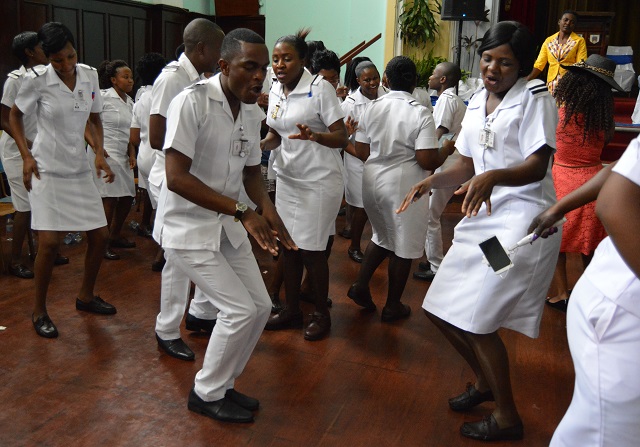
Pamela Shumba, Senior Reporter
SEVENTY-SEVEN nurses from the United Bulawayo Hospitals (UBH) School of Nursing graduated with diplomas yesterday, nine of them being the first group of ophthalmic nurses to be trained at the institution.
Ophthalmic nurses care for patients who are diagnosed with disorders of the eyes.
Speaking at the graduation ceremony, Pharmaceutical and Chemical Distributors chief executive officer Mr Suri Vithal said nurses were the backbone of the health system in the country.
He said they have a great responsibility to improve the health of the population as well as to contribute towards the achievement of the sustainable development goals.
“The training that these graduates have received has prepared them to move on to a new stage in which they are leaders and achievers in the wider world.
“For the general nurses, it’s imperative that they keep up with the latest trends in nursing by continuing with their education. There are many institutions in the country offering endless opportunities for nurses to further their education,” said Mr Vithal.
He added that the success of nurses in the country has a great impact towards improving human resources, which is one of the key areas to meet the vision 20/20 goal.
“Some of the nurses graduating today are now specialists in providing comprehensive eye care services in the country. It is therefore important that they work in the critical departments where they will offer specialised care.
“UBH has equipped the graduates with knowledge and skills under difficult conditions namely lack of expansion of training facilities,” said Mr Vithal.
UBH chief executive officer Mrs Nonhlanhla Ndlovu said despite the challenges the institution is facing, it has consistently achieved the highest standard of training as evidenced by excellent results over the years.
“In 2016, our pass rate was 100 percent. We commend the tutors and the graduates for their hard work.
“UBH is still faced with challenges to do with shortage of resources both financial and non financial. These include shortage of human resources and inadequate funding. The school of nursing continues to operate without the requisite number of tutors,” said Mrs Ndlovu.
She said the Zimbabwe-China Machinery Engineering Co-operation (CMEC) equipment project has, however, gone a long way in providing the hospital with state of the art equipment.
“This equipment includes an ACT scan which has been installed and is awaiting radiation protection authorisation for us to use it.
“It will go a long way in assisting the community to access critical diagnostic services that are only available in the private sector in this region,” said Mrs Ndlovu.
Through funding, she added, from the Government the hospital managed to install two new elevators, employ its own security guards to cut costs and conduct various outreach programmes to assist the vulnerable to access health services.
Mrs Ndlovu said among other achievements, the hospital also managed to rehabilitate its infrastructure, computerise the institution and open the Ophthalmic School at the beginning of this year.
— @pamelashumba1


 Online Reporter