admin
admin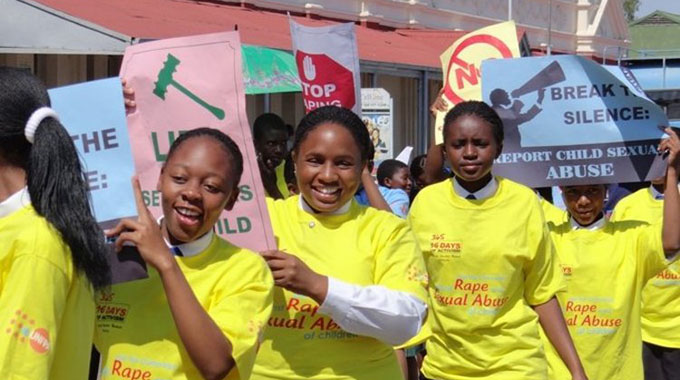
Roselyne Sachiti
Features, Health &
Society Editor
The 16 Days of Activism Against Gender-Based Violence for the year 2020 end today.
Running between November 25, which is the International Day for the Elimination of Violence against Women, until 10 December, Human Rights Day, the 16 days of activism is an annual international campaign observed across the globe.
It was started by activists at the inaugural Women’s Global Leadership Institute in 1991 and continues to be coordinated each year by the Centre for Women’s Global Leadership.
It is used as an organising strategy by individuals and organisations around the world to call for the prevention and elimination of violence against women and girls.
Now in its 29th year of commemorations, the day has helped change the narrative and perception around GBV in many communities around the globe. Governments and policy makers, too, have crafted laws and policies that help end the scourge.
The 16 days of activism against GBV have also given communities a better understanding of the health implications that come as a result of GBV.
These can be overwhelming. It has been estimated that at least one in every three women around the world has been beaten, coerced into sex, or otherwise abused in her lifetime.
Violence is also a more serious cause of death and incapacity among women of reproductive age than cancer, and greater cause of ill-health than traffic accidents and malaria combined.
GBV undermines opportunities for women and denies them the ability to fully utilise their basic human rights.
In finding ways to reduce GBV in Zimbabwe, UN agencies like UNFPA have been working with the Ministry of Women Affairs, Gender and Community Development, sister UN agencies and civil society towards increasing availability and utilisation of GBV services by survivors as well as reducing tolerance for GBV in communities.
The main thrust of the programme is increasing awareness of gender responsive laws and services; the provision of health care, psychosocial support and legal aid to survivors of GBV mobilising men and young people to support gender equality.
It focuses on GBV prevention through community mobilisation; and supporting GBV referral and coordination mechanisms at district and community level.
Organisations like Musasa Project have for over 20 years championed the fight against GBV in order to create a domestic violence free environment in Zimbabwe.
The organisation provides support for survivors of violence through counselling, legal advice and temporary shelter for women who have been chased away from home by their partners or whose lives are in danger.
Other grassroots organisations like Shamwari yeMwanasikana have also been working with young girls to educate them on GBV which is rampant at communal water collection points in Chitungwiza just outside Harare.
Legislation and policies
To curb GBV, Zimbabwe has done quite a lot in terms of legislation and policies.
The Domestic Violence Act (Chapter 5:16) makes provision for the protection and relief of victims of domestic violence.
CEDAW
Zimbabwe is a signatory to the international human rights frameworks for women’s rights. Zimbabwe ratified the Convention on the Elimination of All Forms of Discrimination against Women (CEDAW) in 1991, which is considered as the women’s bill of rights.
“Under this convention, states have the obligation to review their legal systems in order to end discrimination and to establish institutions that protect women. As part of the obligations, CEDAW allows for the monitoring of compliance and receives complaints from the signatory states,” they state.
Beijing Declaration
and SADC Protocol
Zimbabwe is a signatory to the Beijing Declaration of 1995, the Protocol to the African Charter on Women’s Rights of 2003 and the SADC Protocol on Gender and Development of 2008.
The SADC Protocol aims to provide for the empowerment of women to eliminate discrimination and achieve gender equality by encouraging and harmonising the development and implementation of gender responsive legislation, policies and programmes and projects.
Since 1980, apart from entrenching gender rights as constitutional rights, the Government and the courts adopted various criminal law measures to protect and advance the rights of women and protect them against discrimination and gender-based violence.
Victim Friendly Unit (VFU)
In Zimbabwe, the VFU was established in 1996, primarily to pro-actively and reactively police crimes of a sexual nature committed against women and children in a manner sensitive to the victim.
The unit aims to be supportive of victims and to make the environment conducive, private and friendly.
Zimbabwe Gender Commission Act of (Chapter 10:31) paved way for the establishment of the Zimbabwe Gender Commission to perform specified functions, including the investigation of and making of recommendations on the removal of barriers to the attainment of full gender equality and to provide for matters connected with or incidental to the foregoing.
The specific mandate of the commission is derived from Section 246 of the Constitution. The provisions are listed as follows:
To monitor issues concerning gender equality and to ensure gender equality as provided for in the Constitution;
To investigate possible violations of rights relating to gender equality;
To receive and consider complaints from the public and to take such action in regard to the complaints as it considers appropriate;
To conduct research into issues relating to gender and social justice and to recommend changes to laws and practices which lead to discrimination based on gender;
To advise public and private institutions on steps to be taken to ensure gender equality;
To recommend affirmative action programmes to achieve gender equality;
To recommend prosecution for criminal violations of rights relating to gender;
To secure appropriate redress where rights relating to gender have been violated; and
To do everything necessary to promote gender equality.
Spotlight Initiative
In 2019, the Spotlight Initiative, a global UN joint programme supported by the European Union to tackle gender-based violence was launched in Zimbabwe on June 26.
The initiative, a four-year joint programme (2019-2022) aimed at changing the manner of doing business to effectively transform the situations and vulnerabilities of women and girls in Zimbabwe has six inter-connected and mutually reinforcing pillars, aimed at holistically addressing violence against women and girls on: laws and policies; institutions strengthening; prevention and social norms; services; data; and women’s rights movement.
The programme focuses on prevention, protection of survivors, participation of communities and the provision of services to survivors, as well as increased reporting of cases of violence against women and girls.
A lot of work has been done under the Zimbabwe Spotlight initiative country programme which targets 11 million beneficiaries directly and indirectly, particularly rural women and girls, women and girls living with disabilities, and women living with HIV.
To make it more effective and reach the masses, 60 percent of the Spotlight Initiative country programme intervention is being implemented at community level in 23 districts in the five provinces of Mashonaland Central, Mashonaland West, Manicaland, Matabeleland South and Harare.
Furthermore, the Government already has in place mechanisms and multi-sectoral structures, starting from the national level down to the ward level that address GBV.
Alignment of Laws
The country is in the process of reviewing many laws to align them to the 2013 Constitution, which include the labour laws and introducing legislation aimed at ending child and forced marriages.
Education Amendment Act
In 1990, the Zimbabwe Government ratified the United Nations Convention on the Rights of the Child and, becoming a State party to the Convention on September 11, 1990.
As a State party, the country committed itself to respect and continue to observe the rights set forth in the Convention.
With this is mind, early this year, the country adopted the Education Amendment Act, 2020, to align the Education Act with the country’s Constitution.
With provisions that addresses issues pertinent to education, the most critical one is the prohibition of expelling pregnant girls from school.
The amended Act says no child shall be excluded from school on the basis of pregnancy.
The amendment is a welcome move as some girls who fall pregnant while still doing their studies are victims of sexual gender-based violence (SGBV).
Giving them the opportunity to return to school and complete their education will fulfil their right to education.
The Education Act also addresses issues pertinent to education, including free and compulsory education, sexual and reproductive health issues, and the rights of learners with disabilities.
As the curtain falls on this year’s 16 days, it is important to continue ensuring that each day is GBV free.


 Online Reporter