Online Reporter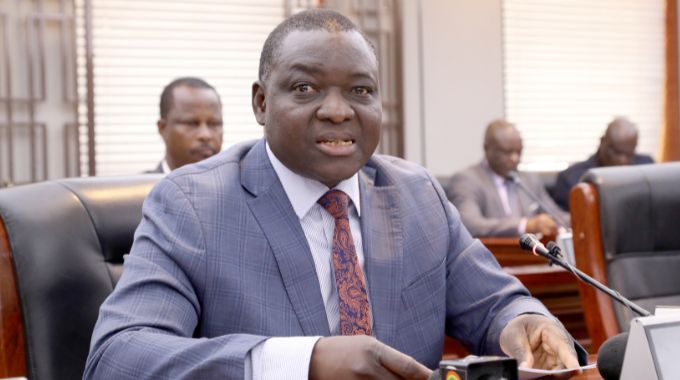
Debra Matabvu and Martin kadzere, Zimpapers Writers
A TOTAL of 291 reviewed licences, permits, levies and fees have been fully implemented across various sectors of the economy as Government accelerates reforms aimed at reducing the cost and complexity of doing business, while Cabinet has also approved a five-month review of e-hailing transport services.
The reforms follow a comprehensive review of licences, permits, levies and fees across 13 priority sectors, together with a mop-up exercise conducted between August last year and August this year.
President Mnangagwa has called for sustained efforts to reduce the cost of doing business, remove regulatory bottlenecks and create a more conducive environment for investment and economic growth. The exercise is intended to enhance economic competitiveness, improve public service delivery and create a more conducive business environment.
The sectors covered under the review include agriculture, manufacturing, tourism, transport, wholesale and retail, energy, broadcasting, telecommunications, construction, banking and financial services, health and mining.
Addressing journalists during yesterday’s post-Cabinet media briefing, Information, Publicity and Broadcasting Services Minister Dr Zhemu Soda said Cabinet had approved an Implementation Progress Report presented by Finance, Economic Development and Investment Promotion Minister Professor Mthuli Ncube.

“The monitoring and evaluation process has revealed that operationalisation of the approved licences, permits, levies and fees by Government ministries, departments and agencies is at various levels of implementation, with a total of 291 having been fully implemented to date,” said Minister Soda.
Notable progress has been recorded in the implementation of the approved fees, with the Zimbabwe Investment and Development Agency (ZIDA) operationalising a range of fees through Statutory Instrument Number 17 of 2026.
The Procurement Regulatory Authority of Zimbabwe (PRAZ) has also implemented various approved fees through Statutory Instrument Number 9 of 2026, while the Ministry of Local Government and Public Works has implemented 62 of its 201 approved fees through Statutory Instruments Number 41 and 107 of 2026.
These instruments provide for the removal of the Livestock Movement Clearance fees, the Fuel Storage Registration Certificate, the Cattle Levy and the Fish Monger licences.
Meanwhile, reviewed bank charges are being implemented at different levels across local banks, while the Reserve Bank of Zimbabwe’s financial surveillance and exchange-control measures are being operationalised.

Minister Soda added that regulatory registration fees administered by the Securities Exchange Commission of Zimbabwe (SECZ) and the Insurance and Pensions Commission of Zimbabwe (IPEC) were also being implemented.
He also said the implementation of approved fees in areas such as investment promotion, procurement and local government was progressing well, while the rollout of reviewed banking charges was underway.
Cabinet also noted that the country’s ease-of-doing-business reforms were receiving international recognition, contributing to the country’s removal from the World Bank’s list of fragile States.
Government expects the remaining approved licences, permits, levies and fees to be implemented within the next three months.
Cabinet has approved interim transitional measures for the e-hailing transport sector, including a five-month moratorium to allow for a comprehensive review of operations and regulations governing the industry.
The review will cover platforms such as Bolt, In-Drive, Tap and Go, GoFaster, KOSE and others, while facilitating the registration of operators with the Zimbabwe Revenue Authority (ZIMRA).
“Regarding the review of e-hailing transport services comprising platforms such as Bolt, In-Drive, Tap and Go, GoFaster, KOSE and others, Cabinet notes that they are providing convenient, affordable and more dignified services to the public as well as employment opportunities, especially for the youths.

“However, the sub-sector has faced regulatory challenges that are undermining the ease of doing business.
“Accordingly, and following consultations with players and regulatory authorities, Cabinet has approved interim transitional measures, entailing observance of a five-month moratorium to enable a thorough review of the e-hailing transport services pending, among other measures, the development of a self-regulating framework guiding drivers and ensuring passenger safety by the e-hailing providers, operators and drivers; and initiation of registering the e-hailing transport businesses with the Zimbabwe Revenue Authority while already-registered operators apply for tax registration,” said Minister Soda.
In addition, Cabinet directed the Ministry of Transport and Infrastructural Development to develop regulations for the e-hailing transport sector through stakeholder consultations and benchmarking against international best practice.
The regulations are expected to provide a framework that promotes safe, secure, convenient and affordable transport services while supporting the continued growth of the sector and addressing existing regulatory gaps.
Meanwhile, the Government has revised down import levies on key agricultural commodities and introduced new duties, effective September 8, 2026, to promote local production and strengthen domestic value chains. Under the revised tax framework by the Agricultural Marketing Authority (AMA), the import levy for maize has been reduced to US$15 per tonne from US$40 for companies complying with the policy requirement to source at least 40 percent of their raw materials locally.

Non-compliant companies face a higher penalty rate of US$25 per tonne through March 31, 2027, at which point the overall implementation and levy structure will be subject to review. A new standard levy of US$10 per tonne has been introduced for maize bran imports, while the duty on soyabeans has been halved from US$20 down to US$10 per tonne, according to AMA.
The new levies of US$20 per tonne take effect across several oilseed derivatives and animal feed inputs, specifically targeting crude oil, sunflower cake and cotton cake, while the import levy for soya meal has been reduced to US$20 per tonne from US$35. AMA chief executive Ms Alice Mapfiza said the new levy on crude oil, a critical component in cooking oil manufacturing, is designed to drive private investment into domestic crop production and irrigation infrastructure.
“This is being done within the framework of supporting local production and strengthening the value chains, and this should incentivise the industry to support local production so that we cut the import bill and support the creation of jobs,” Ms Mapfiza said in an interview.
The Government has also adjusted grain tariffs to protect the domestic harvest, after putting a US$89,25 per tonne levy on soft wheat imports to ensure milling companies exhaust local stocks following the recent harvesting season. For hard wheat, imports attract a zero percent duty within a 30 percent import threshold, but any imported volumes exceeding that limit trigger a tax of US$89,25 per tonne.
Ms Mapfiza added that the authority would work with stakeholders to monitor consumer feedback regarding the quality of bread and related products, addressing concerns that millers’ requests for hard wheat imports may serve as a pretext to avoid using domestic supplies when actual blending ratios in manufacturing are significantly lower.
The policy adjustments stem from Statutory Instrument (SI) 87 of 2025—issued under the Agricultural Marketing Authority (Grains, Oilseeds and Products) Regulations—which restricts the importation of grain, oilseeds and related products without imposing a total import ban.
Under SI 87, imports are permitted only for contractors who establish a genuine supply deficit. The regulations legally obligate local agro-processors to procure at least 40 percent of their raw materials locally starting April 1, 2026, scaling up progressively to 100 percent by April 1, 2028.
Enacted under the Agricultural Marketing Authority Act to curb Zimbabwe’s growing food import bill, SI 87 directs generated levy revenues into a dedicated Ministry of Agriculture fund to finance smallholder irrigation schemes, climate-resilient infrastructure, and farmer productivity programmes.