Online Reporter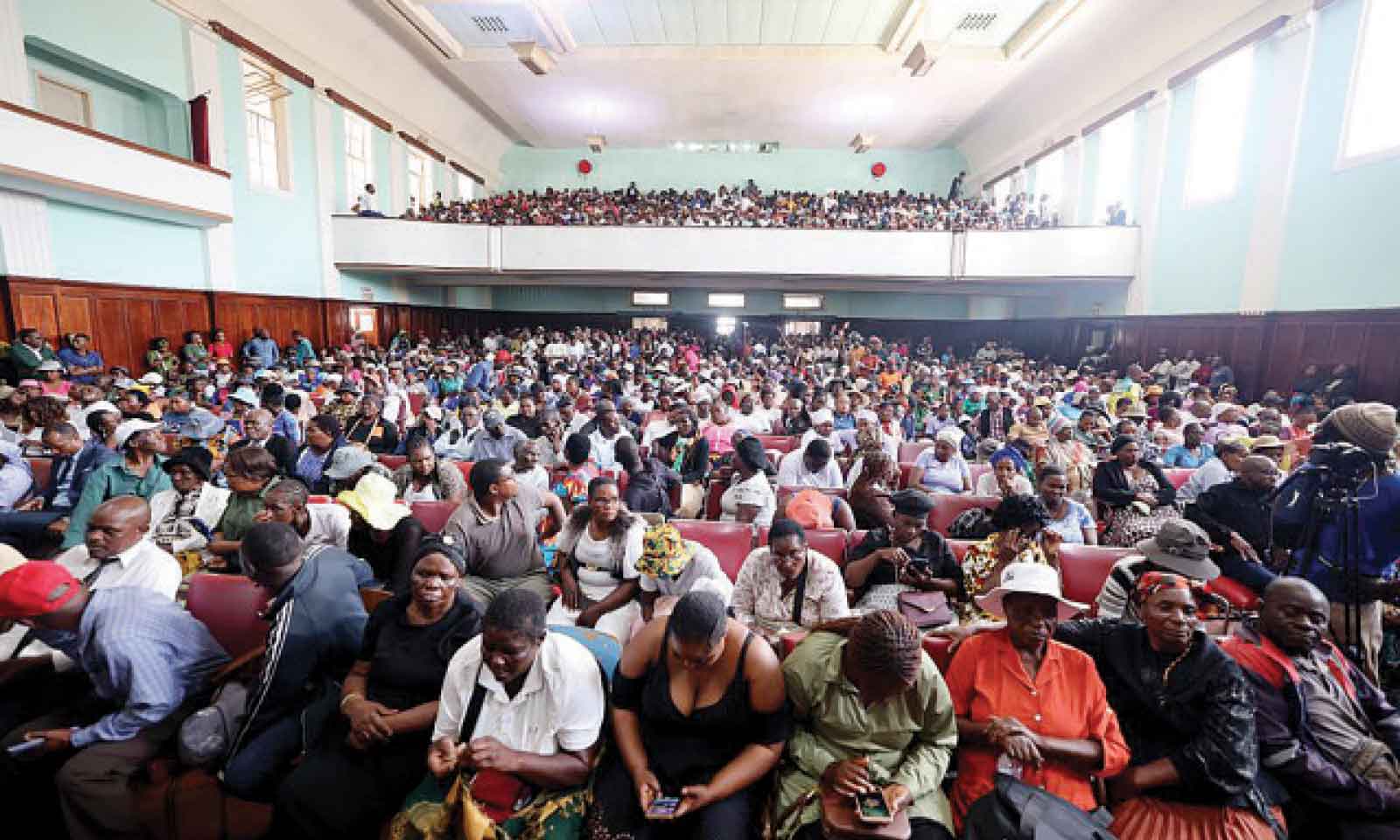
Samuel Kadungure
News Editor
IN a resounding show of civic engagement, thousands of Manicaland citizens voiced their full support for Constitutional Amendment Bill Number 3 — urging lawmakers to extend Presidential and Parliamentary election cycles, and introduce a parliamentary system for electing future presidents.
The citizens’ endorsement was predicated on the Second Republic’s development track record, which progress they need to continue until 2030.
Over four days, public hearings in Nyanga, Mutasa, Makoni, Mutare, Chipinge, Chimanimani, and Buhera drew large crowds, including war veterans, traditional and religious leaders, farmers, businesspeople, professionals, and ordinary citizens, to voice support for the proposed changes.
The hearings, conducted in a peaceful environment, concluded in Buhera yesterday (Thursday) — with the citizens citing stability, development, resource savings, effective governance, and avoiding election-related toxicity as key reasons for backing the proposed changes.
They further argued that lengthening the electoral cycle will stabilise governance, reduce electoral violence, and allow long-term policies to yield results.
In an interview, the parliamentary team chairman, Honourable Supa Mandiwanzira, hailed the level of commitment, tolerance, maturity and discipline expressed by thousands of citizens who attended the public hearings in the province.
He said citizens also recognised enormous work by the Second Republic in terms of infrastructure development and attracting investors into the country, and wish that the trajectory will continue so that they could enjoy more growth and development within their communities.
Honourable Mandiwanzira said their parliamentary team will compile a report on the public hearings, incorporating views from across the province, before presenting it to Parliament.
“It is very clear that Zimbabweans, especially here in Manicaland, are seriously committed to being part of law-making, and on this particular Constitutional Amendment Bill Number 3, they have participated overwhelmingly. We have had public hearings in all the seven districts, concluding with Buhera, and the turnout was tremendous, with contributions being lively around their support for the proposed provisions. One clear thing that came out is that people are recognising that certain of our processes have been costly to the Government, and those resources could be directed towards more pressing needs, especially around our infrastructure development. The people are also recognising the enormous work that the Second Republic has done in terms of infrastructure development and attracting investors into the country. There is an amazing level of confidence that the status quo remains so that the people can enjoy more growth and development within their communities,” said Honourable Mandiwanzira.
“Our democracy is maturing. We now have instances of completely opposing views being expressed freely. People have allowed those who disagreed with the proposed amendments to express their views openly. As chairperson of this committee, I am delighted that our democracy has matured to this level. This is what we must do as Zimbabweans – we must not agree on everything – and we must allow those who disagree to express their views. We have given them the platform as Parliament to do so. We have also given everyone the opportunity to also show their support or express their feelings about the CAB3. Buhera was our last stop, and I must say the level of participation was unbelievable. Venues were full to capacity before we arrived, with people milling outside eager to participate. A report will be compiled taking into account all the views that were received from every contributor at every public hearing that we have had, and will be tabled in the National Assembly as well as in the Senate. It will form a part of the consideration for what will be final in terms of the Bill,” said Honourable Mandiwanzira.
Traditional leaders, in particular, have agitated for their political rights, arguing that the current law barring them from direct involvement in politics is suppressive, and ignores their historical role in the liberation war, which birthed the country’s independence and constitutional democracy.
Chief Hata of Nyanga, said traditional leaders in Manicaland fully support the Bill, arguing that they should be allowed to engage in politics freely as this will not compromise their impartiality in traditional matters.
“Traditional leaders have always been involved in politics. The war of liberation was about recovering land that colonialists had taken from them. The land belongs to the chief. There is no way traditional leaders will preside over cases based on partisan politics. Subjects are summoned for violating traditional laws, not political considerations. Our subjects identify with political parties and we are expected to remain neutral, yet we are not. We have always administered justice, we fully support this bill as it seeks to restore our political rights,” said Chief Hata.
Chief Makoni said traditional leaders should be involved in politics, citing their role in the First Chimurenga and the liberation war.
“Traditional leaders should be involved in politics – our ancestors initiated the First Chimurenga, and died for their land and quest for democracy. There is no chieftainship without politics. Those opposing traditional leaders’ involvement are misinformed. The liberation war succeeded due to traditional leaders’ and spirit mediums’ involvement. Freedom fighters reported to us from Zambia and Mozambique – we commissioned them to fight, and they succeeded,” said Chief Makoni.
The Zimbabwe Gender Commission’s future hung in the balance, with mixed feelings being expressed by participants. Mostly women supported maintaining the status quo, voicing concerns about potential dilution of women’s rights in the event of its abolition.
In contrast, men generally backed merging it with the Human Rights Commission, citing efficiency and cost savings.
Ms Josephine Gandiya supported maintaining the Zimbabwe Gender Commission as a standalone entity, citing its effective service to women’s interests and crucial role in addressing domestic violence, abuse of girls, rape, early marriage, and child abuse.
She argued it should remain independent to continue advocating for women’s rights and providing support for victims of abuse.
Mr Kudakwashe Bhasikiti, from Chimanimani, said merging the ZGC and the HRC will save taxpayers’ money by avoiding duplication of roles.
“The new Bill is good for all of us, and should sail through Parliament and Senate. Having longer terms for the President, Parliament, and councillors will foster sustainable development.
The merger of the ZGC and HRC is also positive, as it will reduce duplication and allow funds to be redirected to other key Government sectors,” he said.
Mr Edmore Madhume, of Makoni North, also welcomed the proposed changes, arguing that judges should not be subjected to public interviews, and also supported the creation of a delimitation commission and the transfer of voter registration from the Zimbabwe Electoral Commission (ZEC) to the Registrar General, to bring order and transparency to the electoral process.
Mr Kudzanai Chipanga, of Headlands, supported extending the presidential, parliamentary, and council election cycle from five to seven years, citing stability and development benefits, and also backs the appointment of 10 additional Senators, saying this will give the President a broader range of professionals to choose from.
Mr Zachariah Mukura, of Mutasa, also supported the Bill, saying the current five-year cycle is too short and leads to “election toxicity”.
He proposed extending the cycle to seven years and electing the President through Parliament.
People with disabilities also welcomed the Bill, praising the Second Republic for supporting them.
Mr John Kamusoma of Nyanga, said they are optimistic the changes will further entrench their rights.
The overwhelming support for the Bill was evident – with less than 30 people objecting to the proposed changes across the province – prominent among the objectors being former opposition legislators, Messrs Trevor Saruwaka and David Tekeshe, as well as a sitting Ward 22, Councillor Evelyn Mhuru, of Chipinge.