Online Reporter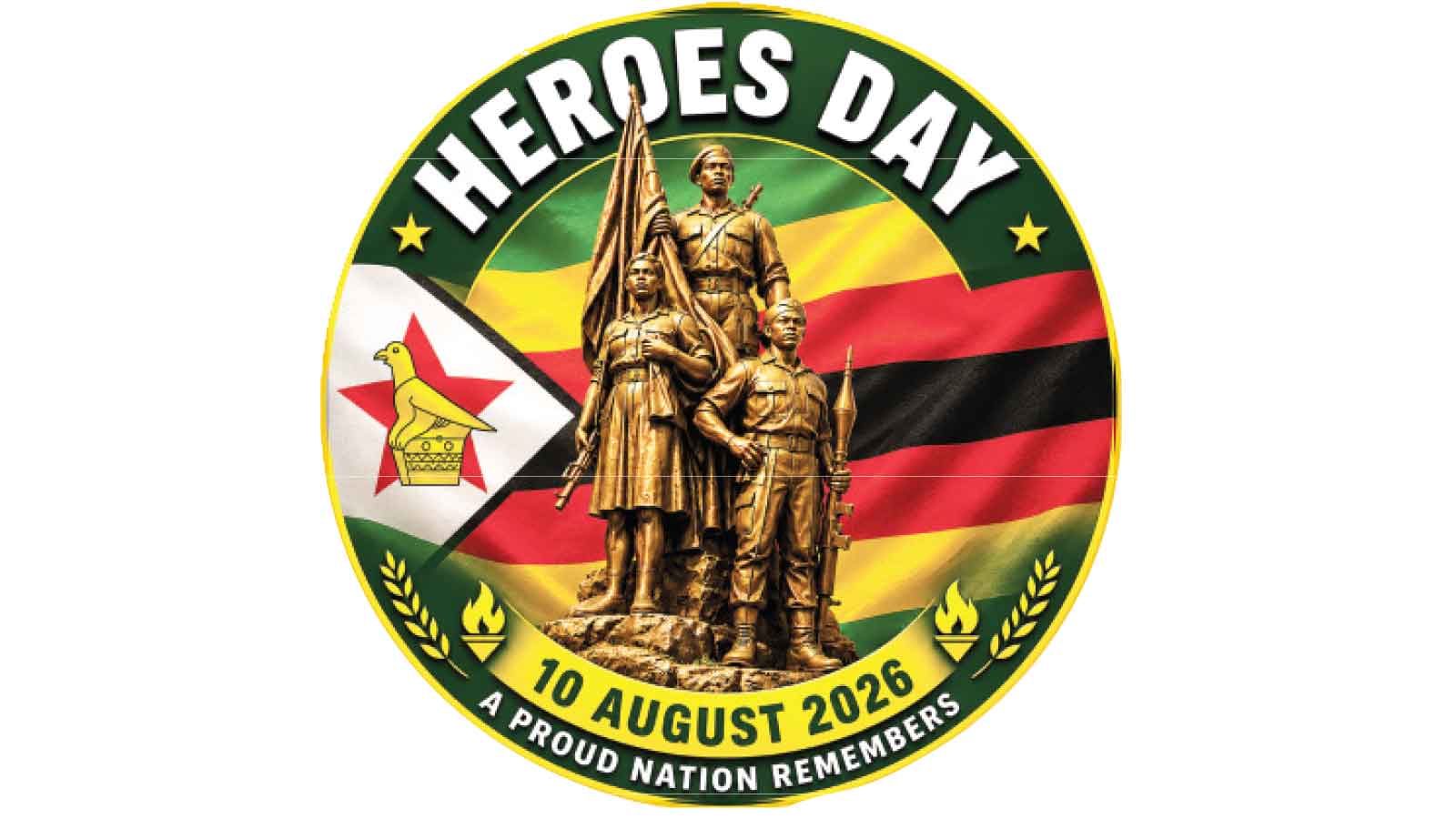
By Gay Mufambi
YESTERDAY, the nation once again gathered at the National Heroes Acre, and at provincial and district shrines from Zvishavane to Zvimba, Plumtree to Mutare, under the theme “Lest We Forget”.
It is a theme that carries an instruction.
“Lest We Forget” is a warning. It presumes that forgetting is possible, that it is even likely, and that the cost of it would be grave.
For too long, our Heroes Day observances risked becoming exactly the kind of ritual the theme warns against: solemn, well-attended, beautifully sung, and disconnected from the living conditions of the people in whose name the struggle was fought. We laid wreaths in the morning and returned in the afternoon to potholed roads, dry boreholes, empty silos and a veteran of the Second Chimurenga collecting a pension that could not buy a bag of mealie-meal. The gap between the granite of the Acre and the gravel of the village was, for many years, the most eloquent commentary on the state of the national covenant.
This article argues that under the leadership of President Mnangagwa, the covenant sealed in the bush has been lifted out of the realm of commemorative speech and re-embedded into national policy, budget lines, statutes and construction contracts.
What was that covenant? It was a threefold promise made under fire: that the land and the resources beneath it would return to the people who bled for them; that those who carried the weapons, the messages, the food and the wounded would be cared for in old age; and that the rural masses who fed the guerrillas at night and were beaten for it by morning would not be abandoned once the flag was raised. Self-determination, dignity, and material transformation. Nothing less.
From Land Reform to Food Security
Land was the first cause and the final grievance. Every strand of the nationalist movement, from the 1890s uprisings through to the guerrilla columns of the 1970s, returned to the same wound: a people dispossessed of the soil in their own country. The Land Apportionment Act and its successors were not incidental colonial cruelties; they were the architecture of the entire settler economy. The struggle was, at its root, a war for the land.
The Third Chimurenga returned that land. But land returned is not yet land redeemed. For nearly two decades the country lived with an uncomfortable truth that the enemies of the revolution exploited relentlessly: we had won the land back and had not yet made it fully productive. Every tonne of imported grain was rhetorical ammunition for those who argued that the dispossessed could not farm.
That argument has now been settled by yield figures rather than by debate.
In 2019, Zimbabwe harvested 94 685 tonnes of wheat. In the 2025 winter season, the country harvested 639 942 tonnes the largest wheat crop since commercial production began in this country in 1966, drawn from more than 122 000 hectares. That represents an increase in the order of 511 percent in six seasons. Against a domestic requirement estimated at 360 000 tonnes, Zimbabwe declare itself self-sufficient in the crop. For the 2026 season, the target has been raised again, to more than 662 000 tonnes.
These are not accidental numbers. They are the output of deliberate policy architecture: the Presidential Input Programme placing seed, fertiliser and credit directly into the hands of smallholders; the aggressive expansion of irrigation so that production is no longer hostage to a single rainy season; mechanisation schemes that put tractors and combines within reach of A1 and A2 farmers alike; and the Pfumvudza/Intwasa conservation agriculture model that turned the smallest plot into a unit of national food security.
Consider what that means in the language of the struggle. The comrades who died at Chimoio and Nyadzonia did not die for a flag alone. They died so that an African family in Gokwe, Buhera or Mberengwa could farm land held in its own name and eat bread milled from wheat grown in this country. That is what Nyika inovakwa nevene vayo, ilizwe lakhiwa ngabanikazi balo actually means when it stops being a slogan on a banner and becomes a harvest returns table. A nation is built by its owners and the owners are now building.
The point extends beyond wheat. Tobacco has surged past historic output records with an increasingly indigenous grower base. Gold deliveries have climbed to levels unseen in the country’s history, driven substantially by artisanal and small-scale miners precisely the ordinary Zimbabweans who were locked out of the mineral economy for a century. Under National Development Strategy 2, which His Excellency launched in November 2025 to run from 2026 to 2030, food and nutrition security is explicitly ring-fenced through improved productivity, modern storage infrastructure and climate-proofed irrigation.
The liberation promise was economic ownership. Ownership without productivity is a hollow title deed. What the Second Republic has done is complete the transaction: it has converted possession into production, and production into sovereignty. A country that feeds itself cannot be starved into political submission. That, in the end, is what the illegal sanctions regime was designed to achieve, and it is on the wheat fields of Mashonaland and the irrigation schemes of the Midlands that it has been most decisively defeated.
Restoring Dignity to the Vanguard
There is a particular kind of national shame in a country that reveres its dead heroes more than it cares for the living. For many years, that was our condition. The veterans of the Second Chimurenga, survivors of the ambushes, the strafing runs, the camps and the long walk home found themselves in a peculiar exile: honoured on the second Monday of August, forgotten for the remaining 364 days.
Worse, the legal framework itself was fractured. For decades the law recognised the trained combatant while leaving in ambiguity the chimbwido, who carried food through the night, the mujibha who ran intelligence between villages, the ex-detainee who lost years in Gonakudzingwa or Wha Wha, and the restrictee confined without trial. These were not peripheral figures. Without the war collaborators, the guerrilla columns would have starved, been surrounded and annihilated. Mao’s dictum about the fish and the water was not a metaphor in Zimbabwe; it was an operational reality.
Section 84 of our Constitution is unambiguous on the point: veterans of the liberation struggle are entitled to due recognition and to suitable welfare, including pensions and access to basic health care, and Parliament is enjoined to give effect to those entitlements.
The Second Republic has risen to the occasion. The Veterans of the Liberation Struggle Act [Chapter 17:12] dissolved the artificial hierarchy that had divided the vanguard against itself, bringing war veterans, war collaborators, ex-political prisoners, detainees and restrictees into a single, coherent legal family with recognised entitlements. Government undertook a national vetting exercise that processed applications from more than 200 000 claimants and verified over 160 000, the first serious attempt in a generation to establish, definitively, who is owed what. Pension structures were reviewed and benchmarked against the uniformed forces and the wider public service rather than left to erode in isolation. Provision was made for medical support, funeral assistance, and educational assistance for veterans’ dependants.
This is what it looks like when gratitude is institutionalised rather than merely performed. A statute does not applaud, and it does not go home after the ceremony. It creates a claim enforceable in the courts of this country. That is a different order of respect from a wreath.
The mark of a serious Republic is not that it has no outstanding obligations to its veterans, but that it has built the institutional machinery through which those obligations can be raised, adjudicated and progressively met. That machinery now exists where it did not before.
And there is a further dimension: economic inclusion. Veterans and their families have been deliberately incorporated into land allocation, agricultural input schemes, mining claims and empowerment programmes not as charity cases but as economic actors.
Infrastructure: Leaving No One and No Place Behind
If you want to know what a government genuinely believes, do not read its speeches. Read its capital budget and drive its roads.
The liberation struggle drew its manpower and its moral authority overwhelmingly from the rural areas, and the colonial state’s deepest structural violence was spatial: tarred roads, electricity, clinics and clean water for one geography, and deliberate neglect for another. Rural underdevelopment in Zimbabwe was not an accident of terrain. It was policy. Any government that permits that spatial hierarchy to persist has, whatever its rhetoric, kept faith with Rhodesia rather than with Chimoio.
The Second Republic’s answer has been the principle now written into national planning documents: leaving no one and no place behind.
Take the North–South Corridor. The Harare–Masvingo-Beitbridge highway 582 kilometres, the busiest road in the country and the artery through which the bulk of our imports, exports and regional transit traffic moves was for years a byword for national decline. As of mid-July 2026, 550.1 kilometres have been completed and opened to traffic, with only 31.9 kilometres remaining.
The Masvingo Trumpet Interchange is rising as part of the final phase, following the completion of the Trabablas Interchange in Harare.
The detail that matters most in that project is not the kilometre count. It is the contractor list. Bitumen World, Fossil Contracting, Masimba Holdings, Exodus & Company and Tensor Systems are five Zimbabwean firms, between them responsible for the entire rehabilitation after an initial arrangement with a foreign contractor failed to materialise. Local companies, local engineers, local plant operators, local jobs. There is no purer expression of nyika inovakwa nevene vayo than a Zimbabwean firm rebuilding the country’s principal highway with local hands.
Rehabilitation is advancing on the Harare–Chirundu highway toward the northern SADC markets; the Harare–Kanyemba corridor is progressing under a public-private partnership with the newly dualised Harare–Mazowe section already carrying traffic; and Government has set out a road rehabilitation and upgrading programme valued at around US$3 billion covering key national highways between 2026 and 2030, including the Beitbridge–Bulawayo–Victoria Falls road and the Gweru–Zvishavane–Rutenga–Boli–Sango route. Border posts at Beitbridge, Chirundu, Forbes and Nyamapanda are being modernised in step.
Then there is water, the quietest revolution of them all. The Presidential Rural Development Programme, launched in earnest from December 2022, is drilling solar-powered boreholes with the intention to reach every one of the country’s 35 000 mapped villages, each anchoring a Village Business Unit: a one-hectare drip-irrigated horticultural garden, water storage tanks, fishponds and communal water points. Thousands of boreholes are already sunk; village, school and youth business units are operating. The Lake Gwayi-Shangani project, the anchor of the National Matabeleland Zambezi Water Project, has passed the 90 percent construction mark and is targeted for commissioning, with the President having directed monthly Treasury disbursements to keep the works moving.
Pause on that last one. Gwayi-Shangani was first proposed in 1912 by the colonial administration, which then declined to build it.
It sat unbuilt through the entire Rhodesian period and for four decades after independence. That a dam conceived under settler rule. A project abandoned for 114 years is finally rising. It is a statement about which government has actually taken Matabeleland’s water security seriously.
Add to this the expansion of generation capacity at Hwange, rural electrification reaching schools and clinics, devolution funds placing resources in the hands of local authorities to build clinics and classrooms, and the steady construction of health and education infrastructure in districts that had waited since 1980.
A tarred road to a rural service centre. A solar borehole in a village that walked six kilometres for water.
A clinic where a woman no longer delivers her child by candlelight. These are not modest consolation prizes offered in place of liberation. They are liberation, the specific, concrete content of what the fighters said they were fighting for when they explained themselves to villagers around a fire in 1977.
Memory as Infrastructure
There is one more form of construction worth naming on a day themed “Lest We Forget,” because it addresses the theme directly.
At Liberation City on the outskirts of Harare, the Museum of African Liberation is rising on a site that was, until recently, one of the capital’s largest dumpsites.
It is a continental project, a permanent institutional home for the story of Africa’s long march to self-determination, including a heritage village, the SADC Liberation Square, the Samora Machel Monument and the Zimbabwe Defence Forces Exhibition Park. Its collections already hold artefacts of extraordinary resonance, including the uniform worn by Cde Josiah Magama Tongogara on the day he died.
The significance is strategic, not sentimental. The liberation struggle is currently the subject of a determined campaign of historical revisionism in foreign academies, in foreign media, and increasingly among young Zimbabweans who have been taught to regard their own history as an embarrassment. A nation that loses control of its own narrative will eventually lose control of everything else. Building a permanent, professionally curated, continental-scale institution for that narrative is defensive infrastructure of the highest order. Alongside the rehabilitation of liberation war sites and shrines across the provinces, it is the Second Republic answering the theme of this Heroes Day in brick, steel and archive.
Defending the Heritage, Building the Future
The Second Republic has done the one thing that a liberation legacy most urgently required and had long been denied: it has converted the covenant from rhetoric into structure. Land into wheat. Recognition into statute. Sympathy for veterans into vetted entitlement. “Development” into 550 kilometres of open highway and thousands of solar boreholes in villages the colonial map barely acknowledged. Memory into a museum. Vision into a costed five-year blueprint with 10 national priorities running to 2030.
Structures can be audited. Structures can be criticised, accelerated, and held to account. That is precisely their virtue over rhetoric, which can only be applauded. The Second Republic has taken the harder path of making the covenant measurable and, in doing so, has accepted that it can be measured.
Which brings us to the citizen’s side of the ledger.
A covenant binds two parties. The heroes discharged their obligation completely and irrevocably; they have nothing further to give. The State is discharging its own obligations through policy, statute and capital investment. The third party, the ordinary living Zimbabwean, has an obligation too, and it is not satisfied by attendance at the Heroes Acre.
It is satisfied by planting the Pfumvudza plots properly. By maintaining the village borehole rather than waiting for ZINWA. By running the Village Business Unit as a real enterprise instead of a grant. By paying tolls and taxes that fund the next 31.9 kilometres.
By teaching our children the struggle history accurately, in full, without either embarrassment or invention. By choosing to build in this country rather than to build in someone else’s.
By rejecting the seduction of those who would have us believe that our own history is a burden to be set down rather than an inheritance to be defended.
Lest We Forget
The instruction is addressed to us.
The fallen cannot be repaid in wreaths. They can only be repaid in wheat harvested, roads opened, water drawn, veterans honoured in law, and a country that steadily, verifiably, becomes what they said it would be. August 10, wreaths were laid. And today, let the work continue because the covenant does not commemorate the heroes. It keeps them alive.
Gay Mufambi, is a development commentator, trainer and resource person at the Chitepo School of Ideology. For feedback, he can be contacted on +263 775 662 662 or [email protected]