Debra Matabvu-Herald Reporter
GOVERNMENT has earmarked ZiG45 billion (US$1,73 billion) for infrastructure development nationwide next year as it accelerates efforts towards achieving upper-middle-income economy status by 2030.
According to the 2027 Zimbabwe Infrastructure Investment Programme released on Thursday by the Ministry of Finance, priority sectors include transport, housing, water, health, agriculture, education, energy, and information and communication technology (ICT).
The projects are designed to deliver high economic and social returns in support of the National Development Strategy 2 (NDS2), which runs from 2026 to 2030.
Under the programme, transport receives the largest allocation at ZiG21 billion, followed by housing at ZiG7 billion, water and sanitation at ZiG4,9 billion, and health at ZiG4 billion. Agriculture has been allocated ZiG2,4 billion, education ZiG2 billion, energy ZiG1,6 billion, and ICT ZiG1,1 billion.
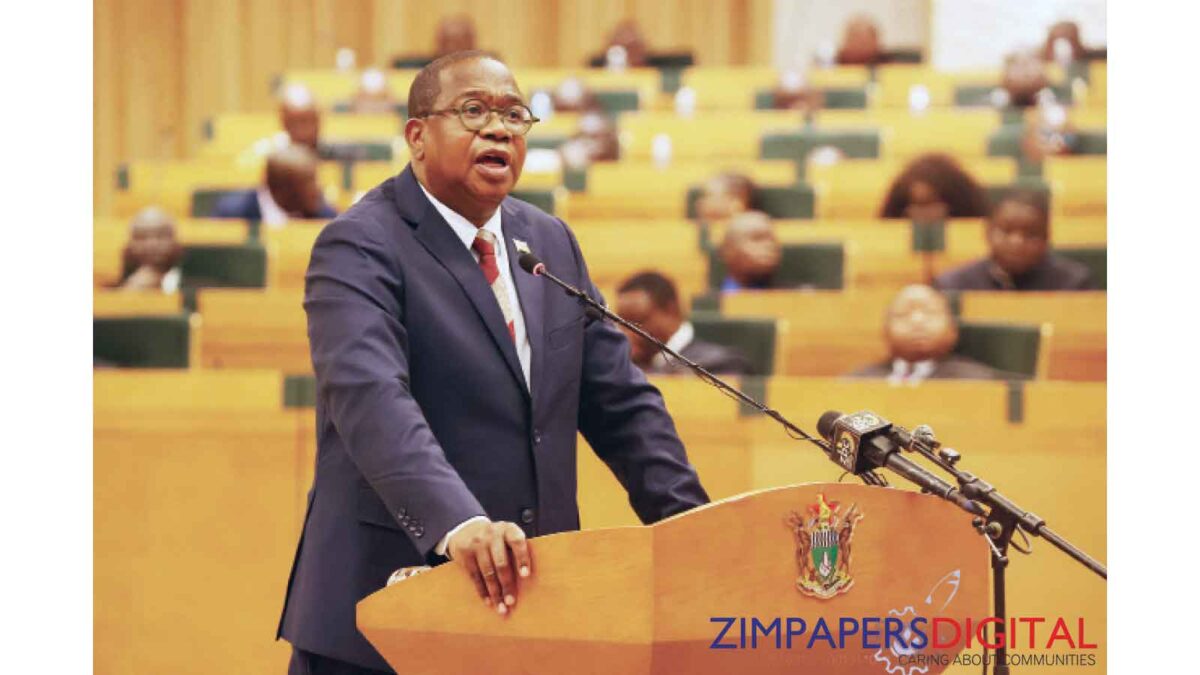
Finance Minister Professor Mthuli Ncube said the plan prioritises completing advanced and stalled projects to ensure citizens derive maximum value from public funds.
“Noting the huge infrastructure gap that currently exists, the choice and selection of projects underpinning this investment plan has focused on high impact projects with economic and social returns that should be able to catalyse economic development and transformation objectives under the NDS2,” he said.
“Additionally, renewed focus has also been placed on enhancing value for money, efficiencies in procurement and implementation, including attention to maintenance programmes that preserve existing assets and ensure sustainability of infrastructure investments.
“Noting the large stock of stalled and ongoing projects, the investment programme prioritises completing and accelerating projects that are at an advanced stage of implementation, as well as those with the greatest catalytic effect on economic growth and social transformation.
“Priority is also accorded to projects of an integrated nature, so that citizens derive maximum benefits from public investments.”
In the transport sector, Government will prioritise upgrading major highways—including the Harare-Chirundu, Beitbridge-Bulawayo-Victoria Falls, and Harare-Kanyemba roads—alongside constructing the Kwekwe-Nkayi-Lupane Road, Mutare-Christmas Pass Bypass, and Joshua Mqabuko Nkomo Expressway. Works will also focus on completing the Mabvuku and Msasa interchanges, Delport Road, and roads under the Emergency Road Rehabilitation Programme 2 (ERRP2).
Under the energy cluster, Government aims to connect 558 335 new households next year, raising national electricity access from 54 percent in 2026 to 65 percent in 2027. Key initiatives include rehabilitating Hwange Power Station Units 1 to 6 and advancing the Batoka Hydro Power Station project.
In water and sanitation, funding will target dam construction, borehole drilling and rehabilitation, bulk water conveyance systems, and Village Business Units (VBUs) to support agriculture and industry.
Within the ICT cluster, Government plans to establish a computer laboratory in every school, roll out the Presidential Internet Scheme, and develop an AI-compatible data centre.
Meanwhile, health sector allocations will focus on completing outstanding construction, installing essential medical equipment, and developing critical hospital facilities to ensure institutions become fully operational.