Online Reporter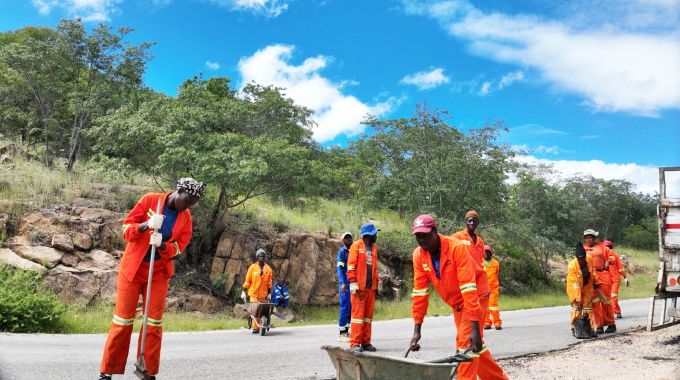
Fairness Moyana, [email protected]
KAMATIVI Mining Company (KMC) has completed the rehabilitation of a 30-kilometre stretch of the Kamativi-Cross Dete road, in a major infrastructure boost expected to transform mobility and economic activity in Hwange District.
The project, undertaken in partnership with the Department of Roads under the Ministry of Transport and Infrastructural Development, was delivered within an accelerated timeframe of just 48 days.
The road, a critical transport artery linking the remote mining town to markets, schools and health facilities, had deteriorated significantly over recent years due to heavy rains, posing serious safety risks and slowing down economic activity.
KMC corporate social responsibility administrator, Mr Stanley Manyuni, said the successful completion of the project reflects strong collaboration between the company, Government and the community.
“We appreciate the support from the community, as well as the Department of Roads for their collaboration in making this project possible,” he said. “The rehabilitation involved pothole patching, reconstruction of road shoulders, cleaning of stormwater channels, engineering repairs on damaged culverts, and the construction of new drainage systems.”
KMC’s Environmental, Social and Governance (ESG) manager, Mr Liu Silong, commended the technical teams for delivering the project under challenging conditions.
“With your help, we have successfully completed the specialised maintenance of this 30-kilometre road section. This achievement reflects your expertise as much as our hard work,” he said.
“This project proves what we can achieve when we work together towards a shared goal.”
A representative from the Department of Roads, Precious Hlapho, applauded KMC for investing in critical public infrastructure.
“We really appreciate the efforts made by KMC. The road is now in excellent condition, and we thank you for the investment you are making in the community,” she said.
Before rehabilitation, the road was plagued by potholes, edge breakages, blocked drainage systems and damaged culverts, particularly around the Gwayi Bridge and Songwa areas.
These conditions, compounded by outdated designs dating back to the 1950s-1970s, had rendered the road unsafe for modern traffic volumes.
Through a combination of gravel and tar patching methods, drainage upgrades, shoulder reconstruction and structural repairs, the project has significantly improved road safety and durability.
The intervention is already yielding benefits, including reduced travel time, improved access to essential services and enhanced connectivity for communities.
Kamativi Residents Association chairperson, Mr Timothy Mvula, welcomed the development.
“We thank the management of KMC for responding to the needs of the people of Kamativi. The 30-kilometre stretch has become much more accessible and convenient for motorists using this route,” he said.
The road rehabilitation project forms part of KMC’s broader Corporate Social Responsibility (CSR) programme aimed at improving infrastructure and livelihoods in communities surrounding its operations.
This is not the first time the company has assisted in the road rehabilitation, having started the maintenance since 2024.
Beyond physical upgrades, the project also incorporated environmental and social safeguards, with daily implementation of management plans covering waste management, biodiversity protection, occupational safety, gender inclusion and community engagement.
Despite challenges such as heavy rainfall, which affected over 70 percent of tar preparation and logistical constraints, the project was completed successfully through adaptive planning and close co-ordination among stakeholders.
KMC says it will continue carrying out routine maintenance works and has recommended periodic servicing every four months, alongside enforcement of weight limits to preserve the road’s lifespan.
The rehabilitation of the Kamativi-Cross Dete Road stands as a practical example of how private sector investment, when aligned with Government priorities, can deliver tangible development outcomes- improving not just infrastructure, but the quality of life for entire communities.