Online Reporter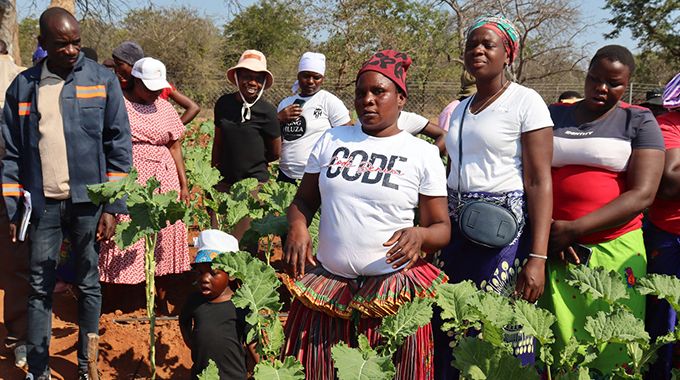
Thupeyo Muleya, [email protected]
Village Business Units (VBUs) are changing the way people live in rural areas in Matabeleland South Province.
More people are taking part. Traditional leaders, men, women, widows, and youth are now embracing the idea.
They are using solar energy and drip irrigation to turn around their lives with modest resources, and they are getting Government support for borehole drilling and inputs.
In Beitbridge District alone, there are 37 VBUs and four school business units.
Agritex district head Mr Orpheus Ndlovu said the use of solar power and drip irrigation is changing lives in the area.
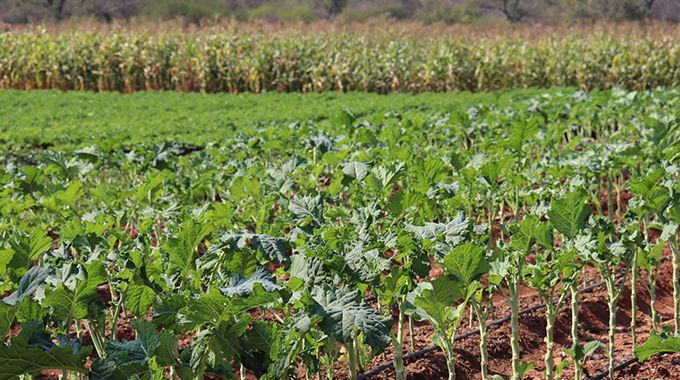
“Farmers can now work all year. They are no longer waiting for rain only,” he said.
“We have been educating communities on this concept across the district, and it’s bearing fruit. The rural economic landscape is changing.
“With a reliable source of water, inputs and support from extension workers, the farmers are turning around their lives. They have a ready market for fresh farm produce in their communities”.
He said they are looking to expand the concept beyond VBUs to a point where the farmers have their own plots where they take farming as a business and shift from the subsistence model.
Beitbridge head of the Ministry of Women Affairs, Community, Small and Medium Enterprises Development, Mr Vusumuzi Sidulu, said women have benefitted the most.
“Women carry the biggest social burden in homes. Now they are getting better returns from these projects,” he said.
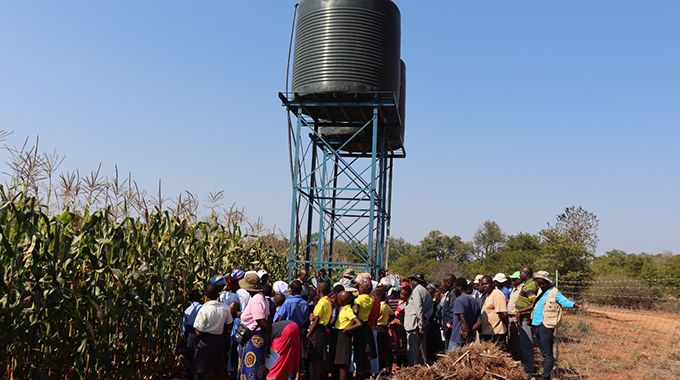
He said the VBUs have also become a good place for networking. Farmers meet, share ideas, and learn from each other.
Farmers say they can now grow cash crops throughout the year because of solar power. They say solar energy is a good substitute compared to the national electricity grid, which has frequent outages.
The Rural Electrification Agency is also helping communities. It is assisting with setting up solar packs to drive piped water schemes and VBUs.
At Tshamalime in Ward 1, Beitbridge East, community members are already seeing the fruits of the VBUs. Crops are growing, and money is coming into homes.
The Government is targeting to set up 3 500 VBUs nationally. The introduction of VBUs nationwide by the Second Republic has become a game-changer.
In Beitbridge, the initiative has spread across 15 rural wards. It has shown remarkable success in addressing food and nutrition challenges. It is also creating significant revenue streams for households.
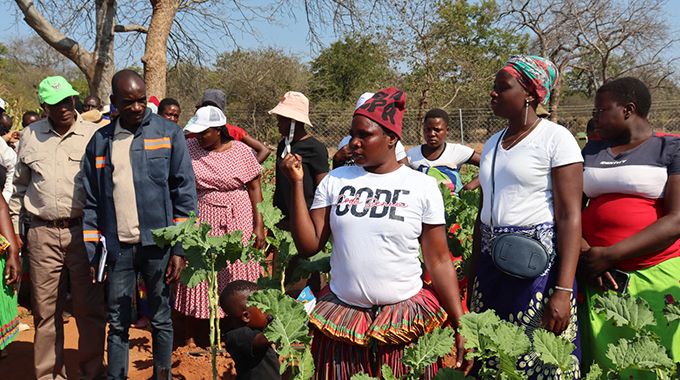
A typical VBU is a community-based, commercially run enterprise. It focuses on agricultural activities. These include horticulture and livestock.
By empowering rural communities through sustainable agriculture and entrepreneurship, VBUs are bridging the economic gap between urban and rural areas.
Since the rollout began, VBUs have improved food availability and accessibility. Households are now able to meet their nutritional needs.
More importantly, villagers have become entrepreneurs. They now supply local markets, schools, and hospitals with fresh produce. They are earning a steady income even during dry seasons.
Beyond food security, VBUs are fostering skills transfer. They are creating employment for youths. They are also keeping families together by reducing migration to urban centres.
“We are now seeing a change in our lifestyle; we appreciate the support from the Government, and most of our members are setting up their own gardens beyond this facility. We have a ready market, and it’s not capital intensive to move the products,” said Mr Isiah Ngwenya, the chairperson of Tshamalime VBU.
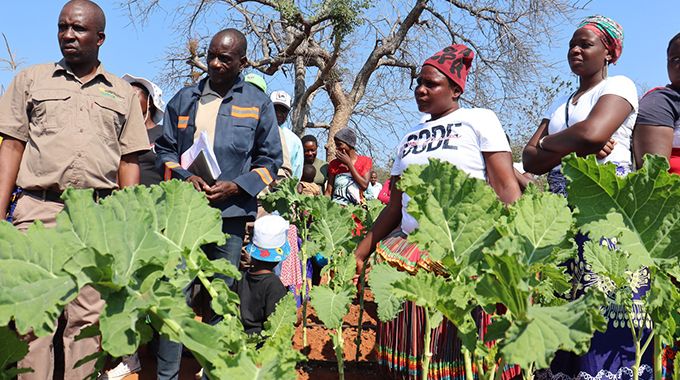
He said they are now getting a lot of enquiries from community members wanting to replicate the model.
“We have also created a piped water scheme in our area that relies on reservoir tanks that can carry up to 20 000 litres of water at any given time. At the same time, we are happy to note that we are getting training and market linkages from Agritex,” said Mr Ngwenya.
A senior citizen in the area, Mrs Martha Chauke, said since joining the VBU in the area, she has been able to improve her way of life with an added revenue stream.
She encouraged more women not to shy away from such community empowerment projects.
“I have been able to take my children to school from the proceeds. I have also managed to build a house,” said another farmer, Mrs Tazviona Pandelani.
She said that since their borehole was solarised and they started using drip irrigation, farmers can produce cash crops throughout the year.
“Before we depended on rain. Now we plant even in winter. We sell tomatoes, onions, and green vegetables,” she said.
Another farmer from the Malabe area, Mr Give Ndou, said households are experiencing improved financial stability.
“This enables them to invest in education, healthcare, and other essential needs,” he said.
He said women are taking a leading role in such initiatives. He encouraged more men to get actively involved.
“Our project has 15 beneficiaries. Most of them are women, and we have been able to apply the knowledge we get here to set up small nutritional gardens at our homesteads,” he said.
“This is a good platform to learn from each other. We are also getting increased agricultural extension services from the Government.”
An agriculture extension services officer in Ward 1, Mr Denford Makodza, said the drip kits help the farmers save water.
“The farmers can now plan and save water, and they make use of solar energy to power the project,” he added.
It is understood that some young people who used to leave for South Africa are staying to work on the VBUs, while elders who depended on grandchildren for support now have their own income.
Government officials say the next step is to add more value. Plans include small processing plants and better market linkages.
For now, in village after village in Matabeleland South, solar panels are turning. Drip pipes are watering crops. And families are counting a new kind of harvest. One measured not just in bags of maize, but in school fees paid, clinics visited, and futures built at home.