admin
admin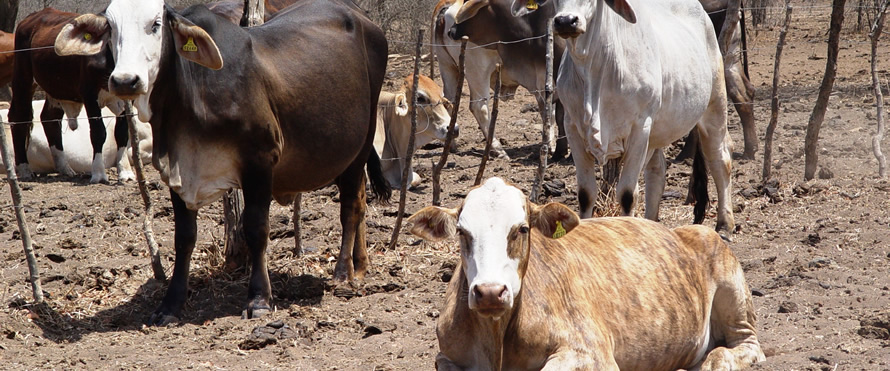
Marvelous Moyo Gwanda Correspondent
MORE than 350 000 cattle in Matabeleland South Province are at risk of succumbing to the effects of drought this year if intervention measures are not put in place as a matter of urgency, with already inadequate grazing land expected to deplete faster due to the continued dry spell.
Presenting a report on the livestock drought situation in a drought relief sub-committee meeting in Gwanda Town, the province’s chief livestock specialist Ms Simangaliphi Ngwabi said a recent crop and livestock assessment revealed that Matabeleland South was likely to lose more than half of its herd if intervention measures are delayed.
As at November last year, the province had a total of 636 441 cattle but due to the prolonged dry spell, grazing is under serious threat as well as the main water sources which are drying up fast due to high temperatures of up 40 Degrees Celsius.
“Drought is imminent in Matabeleland South Province and it could be more severe than the 2012/13 season that led to loss of 9 000 cattle. The prolonged dry spell is threatening the food security of farmers and the department calls for immediate intervention for both humans and livestock.
“Out of the 636 441 cattle in the province, 364 622 cattle are at risk, which means about half of the cattle will require survival feed or whatever intervention people may come up with.
“The situation in the province is critical, especially in Beitbridge, Gwanda, Bulilima and Mangwe districts. Drought mitigation strategies are required to save the livestock,” said Ms Ngwabi.
She said farmers should strive to introduce drought mitigatory measures as early as possible because available grazing was unlikely to last until the next rain season with only 44 percent in good condition.
“If the dry spell continues, the livestock will need immediate survival intervention,” Ms Ngwabi said.
Beitbridge district could lose the highest number of cattle in the province with 77 557 cattle (83 percent) out of the total number of cattle which stands at 90 182 being at risk. The critical wards in Beitbridge are wards four to 12; 14 and 15.
In Gwanda, of the total 99 964 cattle in the district, 66 976 (67 percent) are at risk with wards 11 to 24 being the critical areas.
A total of 51 828 cattle (61 percent) of the 76 218 cattle in Mangwe are also at risk with wards eight to 11 being the critical areas while in Bulilima, 40 921 cattle (55 percent) of the total 74 403 cattle are at risk of succumbing to drought of which wards seven to 17, 19 and 20 are critical areas.
Up to 41 895 cattle (59 percent) of the 71 008 cattle in Matobo could perish due to drought with wards 19 to 22 being the critical wards while 62 617 cattle (36 percent) of the total 173 935 cattle in Insiza are at risk with wards 19 to 23 critical; whereas in Umzingwane, of the total 50 731 cattle, 22 828 cattle (45 percent) are at risk with critical wards being six and nine to 13.
The conditions of animals, particularly cattle would start to deteriorate as early as May 2015.
Ms Ngwabi said 70 percent of the livestock in the province was still in good condition except in Beitbridge, Gwanda, Bulilima and Mangwe districts where some communal wards reported fair and poor condition.
“The condition will remain stable until mid-April when additional grazing area will be provided for by open fields. However, compared to last year the situation has declined, whereby during the same period, 90 percent of the livestock in the province was in good condition,” she said.
Ms Ngwabi said major dams were 60 percent full in all the districts whereas small dams and rivers had dried up while siltation remained a major challenge that would reduce water holding capacity and would result in surface water not lasting up to the next rainy season.
She said if no measures were taken to curb the water situation, the province would experience severe water shortages and animals could die as 58 percent of livestock get water from major dams and boreholes.
Farmers in some parts of Beitbridge have started moving their cattle to areas with better grazing outside the district.
Ms Ngwabi said to avoid cattle losses, measures like cutting of hay should start this month and old and unproductive animals should be culled while still in good condition to reduce pressure on the little available grazing land whereas farmers and private players were also encouraged to engage in joint ventures.
Provincial administrator Mr Midard Khumalo said the statistics were worrying and there was a need for good planning to tackle the problem to avoid a disastrous situation.
“This doesn’t bring any smile on our faces. Losses can be very high if we fail to plan, we have a responsibility to avoid any disasters,” he said.
This year, the province received very low rainfall which has also negatively impacted on the crops, especially the maize crop.


 Online Reporter