Online Reporter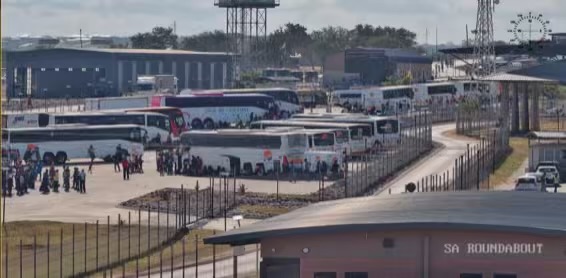
Thupeyo Muleya
Beitbridge Bureau
A total of 35,403 Zimbabweans have returned home independently via the Beitbridge Border Post compared to 4,795 who were assisted by the Government between 28 May and 27 June this year, as violent anti-migrant protests continue in parts of South Africa.
According to the latest Civil Protection Unit report, the surge is linked to growing fear among Zimbabweans in South African townships, where community groups have been pushing for undocumented migrants to leave by end of day on Tuesday (June 30).
Although the South African Government says there is no official deadline, the uncertainty has pushed many families to return voluntarily.
Buses continue to arrive daily at Beitbridge Border Post, mainly from Gauteng, Western Cape and KwaZulu-Natal.
Immigration officials say the numbers have risen from one bus a day in late May to four daily by late June. Most returnees arrive with belongings, children and little advance notice.
“The Government of Zimbabwe is actively monitoring the welfare of its citizens in South Africa amid ongoing anti-migrant tensions and has established coordination mechanisms to facilitate their safe repatriation, reception and reintegration,” reads part of the report.
Between 28 May and 27 June, 4,795 nationals were repatriated by the Government while approximately 35, 403 citizens returned independently through self-repatriation.
“A follow up meeting drawing participants from the district (Beitbridge), province (Matabeleland South) national levels was convened at the Reception Centre to deliberate on the obtaining situation and the need for collective response to the same”.
The increased arrivals have turned reception and transit points into a hive of activity.
The Government Reception and Support Centre at Beitbridge is now processing returnees round the clock.
In addition, partners are scaling up support with food, medical checks, non-food kits, counselling and transport help to onward destinations like Harare, Masvingo and Mashonaland provinces.
The Civil Protection Unit, IOM, UNICEF, the Zimbabwe Red Cross Society, Health, Immigration and ZRP are working together to manage the flow.
The Civil Registry Department is also on site to assist with lost or damaged documents.
The Ministry of Primary and Secondary Education is working to place returning learners into local schools to avoid a lost academic year.
In South Africa, the Embassy has deployed additional manpower to document Zimbabweans and assist those in distress and is also coordinating with Zimbabwean communities in affected areas to share verified information and to connect vulnerable people to consular support among other things.