Online Reporter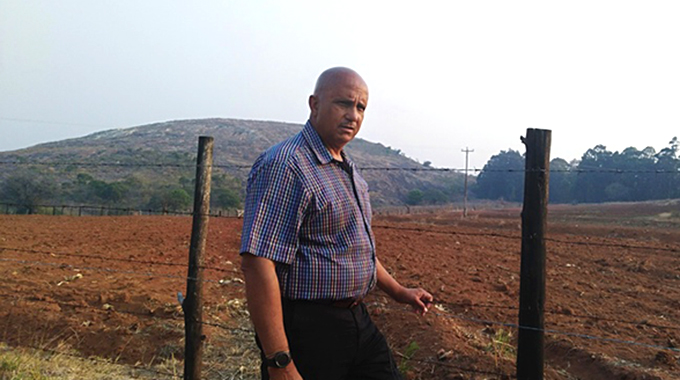
Ray Bande
Senior Reporter
ABOUT 4 000 hectares of maize planted during the 2025/26 season have been declared a complete write-off following an intense mid-season dry spell experienced from December 2025, meaning the affected families in Manicaland will require food assistance to see them through the next harvest, The Manica Post can reveal.
This was contained in the Crops, Livestock, and Fisheries Assessment (CLAFA 1), which also revealed that at least 33 481 hectares of maize have been written off nationwide.
However, the written-off hecterage for Manicaland could even be higher following a mid-season dry in February, whose impact was felt across all the seven district in the province.
CLAFA 2 report, which is expected in the next two weeks, will give a detailed outlook of the mid-season impact as well as the anticipated yield in Manicaland and across the country, respectively.
The 3 782 hectares of maize written off in the province was the fourth highest figure across the country, with Masvingo experiencing the worst effects of the dry spell at 9 392 hectares, Mashonaland East (5 978ha), and Midlands (5 618ha).
The report revealed that Manicaland had 248 253ha under maize, a marginal decrease from the 274 126 hectares planted during the preceding 2024/25 season.
Agricultural and Rural Development Authority (ARDA) board chairperson, Mr Ivan Craig, said season planning by farmers must be based on a correct understanding of their respective ecological regions.
“Basically, you find that not all parts of the country were good, though we had good rainfall with crops looking good in most parts of the country, as we are expecting a bumper harvest. But there were some patchy areas that were affected, like Manicaland, which was not spared. You find that climate change comes with extremes, whereby you have a lot of water, then heat waves, prolonged dry spells, sometimes hail, high temperatures, and so on.
“Farmers must plan with that in mind – those dry spells – even if the season is forecast to be a good, like this season, which was forecast to receive normal-to-above-normal rainfall. The first part of the season was excellent, and the second part is when we experienced a dry spell. As farmers, when you are planning, the first thing is to understand your ecological region. Manicaland has all seven ecological regions 1, 2A, 2B, 3, 4, 5, and 5B, each with different rainfall patterns and length of season. Working closely with your agricultural business advisors, farmers must know the correct crop to plant in a specific region so that, in the event of a dry spell, at least plants do not suffer much. When we say the right crop, we mean a crop that matches the potential rainfall in that particular region, as well as the growing period, which goes hand-in-hand with the length of your season.
“You cannot talk of growing a long-season crop which matures in 140 days in an ecological region with a potential rainfall of 120 days – it means you are going to leave 28 days out, unless you have irrigation to supplement water,” said Mr Craig.
Prominent farmer, Mr Peter Dombpropoulo, said there is more to the considerable amount of write-off maize crop than just the mid-season dry spell.
“It is difficult to make such an assessment, as this year, we have had a great rainy season. As a province, the biggest challenge is good agricultural practices. It all begins with good soil analysis, land preparation, good application of fertiliser, and top dressing of at least three applications, as well as wet ripping the fields when the crop is at knee height to allow for good drainage and root development. Good weed control and pest control are also essential. In the end, good farming practices will give good results. The biggest challenge now is to offer good prices for the crop that is out there and make payments on time. It is not really about the mid-season dry spell, as we had good rains. If land preparation was done properly, fertiliser applied on time and correctly, and wet ripping for root development done, then we would be fine in a season like this,” he said.
The CLAFA 1 report indicates that the national area planted to maize increased from 1 822 904ha in the 2024/25 season to 1 898 528ha in the 2025/26 season – a five percent increase above the target of 1 800 000ha and four percent above last year.
Overall, the area under staple cereals (maize and traditional grains) was 103 percent of the cereal targeted area, being 2 488 449ha against a target of 2 427 000ha, and was marginally lower than last year.
A reduction in the area planted to sorghum led to this reduction in total area.
“The 2025/2026 season started late in mid-November, and was characterised by uniformly distributed precipitation and a delayed onset in Mashonaland West.
‘‘From mid-November to mid-December, most of the country experienced good rainfall, which facilitated the planting of all crops. Rainfall was recorded nationwide during the first three weeks of January. A dry spell followed from January 25 to February 10, after which scattered rainfall was reported across the country. This distribution was analogous to that of the seasons 2010-2011, 2016-2017, and 2021,” reads part of the CLAFA 1 report, which further highlighted the need to expedite irrigation development in view of incessant mid-season dry spells affecting the country.
“The Meteorological Services Department (MSD) forecasts indicated that most parts of the country had received normal to above-normal rainfall to January 2026, and forecasted normal to above-normal rainfall during the latter half of the season, from February to April 2026. Irrigation development at 256 598ha, an increase of 85 000ha since 2019, represents a 32-fold increase in development pace compared to the period 1980-2019, but still lags behind the pace required to achieve 496 000ha by 2030, necessitating further incentives for private sector participation, as 82 percent of the area developed since 2020 was by the private sector. The area planted to maize was 1 898 528ha compared to 1 822 906ha in the 2024/25 season. Of this area, 33 481ha were lost to a dry spell in December 2025,” noted the report.
In terms of livestock production, the report notes that most of the country experienced improved water availability and better grazing conditions because of the widespread rainfall received in November 2025. The livestock condition is fair to good.
“The national beef cattle herd increased marginally by 0,3 percent from 5 741 397 in 2024 to 5 760 678 in 2025. The national dairy herd increased by 7,5 percent from 65 659 in 2024 to 70 584 in 2025. This led to a 6,2 percent increase in commercial raw milk production, from 114 699 440 litres in 2024 to 121 846 916 litres. The production of household milk from beef cattle was estimated at 33 100 927 litres. Cumulatively, 154 947 843 litres of milk was produced in 2025.
‘‘There was a marginal increase in the beef cattle population of 0,3 percent compared to last year. Matabeleland North and South suffered reductions of 0,9 percent and 0,7 percent, respectively, due to increased mortalities,” added the report, which also noted a marginal decrease in cattle mortality.
“Cattle mortality was 3,3 percent compared to 4,5 percent in 2024. Cattle mortality was primarily caused by diseases (81 percent), followed by predators (13 percent). Better disease management, improved drought resilience, and stronger protective measures against predators and injuries can help reduce these deaths. Nationally, livestock condition is generally fair to good, reflecting adequate grazing and water availability in most regions. The majority of the country recorded good cattle body condition, particularly across the central, western, and southern regions,” it further reads.