Zimpapers Reporters
MORE than 4 170 teachers were employed in the country’s primary and secondary schools this year, as the Government continues to strengthen staffing levels while maintaining a strategic reserve of trained educators, with Treasury allocating the largest share of the 2027 National Budget to the education sector.
The Ministry of Primary and Secondary Education received ZiG47,7 billion for basic education, while ZiG1,447 billion was set aside for social protection, placing education and social welfare among the key pillars of Government spending priorities for next year.
The allocations are expected to support the running of schools, procurement of teaching and learning materials, infrastructure development and assistance for disadvantaged learners and vulnerable households.
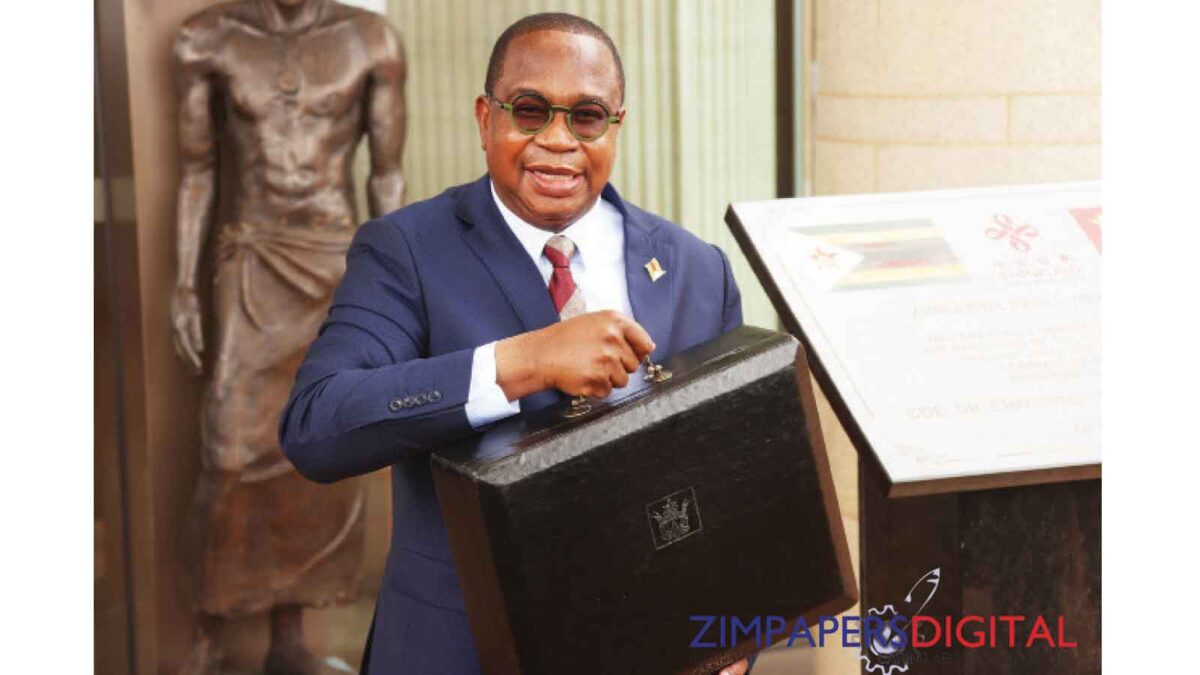
Finance Minister Professor Mthuli Ncube presented the 2027 National Budget in Parliament on Thursday under the theme: “Accelerating Economic Transformation and Building Resilience to Climate and Global Shocks”.
“The 2027 budget has allocated ZiG47,7 billion to the Ministry of Primary and Secondary Education. This will go towards provision of basic education, inclusive of employment costs, teaching and learning materials, examination fee subsidies and infrastructure development,” said Prof Ncube.
The allocation makes the ministry the biggest beneficiary among Government ministries, underscoring the importance attached to education as a foundation for human capital development, economic productivity and the country’s long-term transformation agenda.
Investment in basic education remains central to developing the skills, knowledge and competencies required to drive industrialisation, innovation and entrepreneurship, while building a productive workforce and widening access to learning opportunities across communities.
Meanwhile, Higher and Tertiary Education, Innovation, Science and Technology Development Deputy Minister Simelisizwe Sibanda told the National Assembly that 4 176 educators were employed in 2026 to fill vacancies in public schools across all provinces.
He was responding to a question with notice from Proportional Representation legislator Lynette Karenyi-Kore, who sought annual statistics on teacher graduates, employed educators and unemployed graduate teachers.
Figures presented to the House show that the latest recruitment exercise absorbed 2 885 primary school teachers and 1 291 secondary school teachers.
This follows the employment of 4 848 educators in 2025, comprising 2 763 primary and 2 085 secondary school teachers, bringing the total number employed over the past two years to 9 024.
“The figures that we managed to get from the Ministry of Primary and Secondary Education are that, for primary teachers in 2025, they managed to deploy 2 763 and for secondary 2 085, totalling to 4 848 for 2025,” he said.
“Then, for 2026, the deployment has been for primary with 2 885 and for secondary 1 291 totalling 4 176.”
Deputy Minister Sibanda also told legislators that teacher training colleges under his ministry’s purview had consistently increased their output between 2024 and 2026, graduating an average of approximately 7 110 educators annually.
In 2026, State colleges graduated 8 351 teachers, comprising 1 310 males and 7 041 females, representing an increase from 6 638 graduates in 2025 (1 103 males and 5 535 females) and 6 342 in 2024 (1 076 males and 5 266 females).
Meanwhile, Prof Ncube said the Government’s commitment to education was complemented by targeted social protection interventions, with ZiG1,447 billion allocated to programmes designed to cushion vulnerable citizens against economic hardship and other shocks.
The Basic Education Assistance Module (BEAM), which supports children from financially disadvantaged families through the payment of school fees and related educational costs, received ZiG400 million, the largest allocation under the social protection package.
The programme is designed to ensure that financial constraints do not prevent vulnerable children from accessing education, complementing the broader funding directed towards the sector.
Drugs and substance abuse interventions received ZiG264,5 million, the second-largest allocation, while Food Deficit Mitigation was allocated ZiG212,4 million.
War Veterans Administration received ZiG200 million, while the Harmonised Cash Transfer programme, which supports the poorest households, was allocated ZiG135 million.
Children in Difficult Circumstances received ZiG79 million, while Support to Disabled Persons was allocated ZiG55,5 million and Health Assistance ZiG53,7 million.
Other allocations include ZiG22 million for Sustainable Livelihoods, ZiG13 million for the Children in the Street Fund, ZiG6,9 million for Pauper Burial and ZiG5 million for Support to the Elderly.
BEAM, Food Deficit Mitigation and Harmonised Cash Transfers together account for ZiG747,4 million, representing more than half of the total social protection allocation and highlighting the emphasis on education access and household welfare.
The Ministry of Health and Child Care received the second-largest allocation in the National Budget, with ZiG35,5 billion earmarked to support healthcare delivery, including employment costs, medical consumables and equipment, as well as the rehabilitation and construction of health infrastructure.
“This will go towards employment costs, acquisition of consumables and equipment, as well as the rehabilitation and construction of health infrastructure,” said Prof Ncube.
The Ministry of Public Service, Labour and Social Welfare received ZiG21,453 billion under the 2027 Vote Allocation, covering its broader responsibilities beyond the individual social protection programmes.
“This will go towards social protection interventions, covering education, food security, cash transfers, healthcare, disability support, livelihood programmes and assistance to vulnerable groups,” he said.
Together, the allocations to education, healthcare and social welfare reflect the Government’s broader approach to strengthening public services, investing in human capital and cushioning vulnerable communities against economic and climate-related shocks.