Online Reporter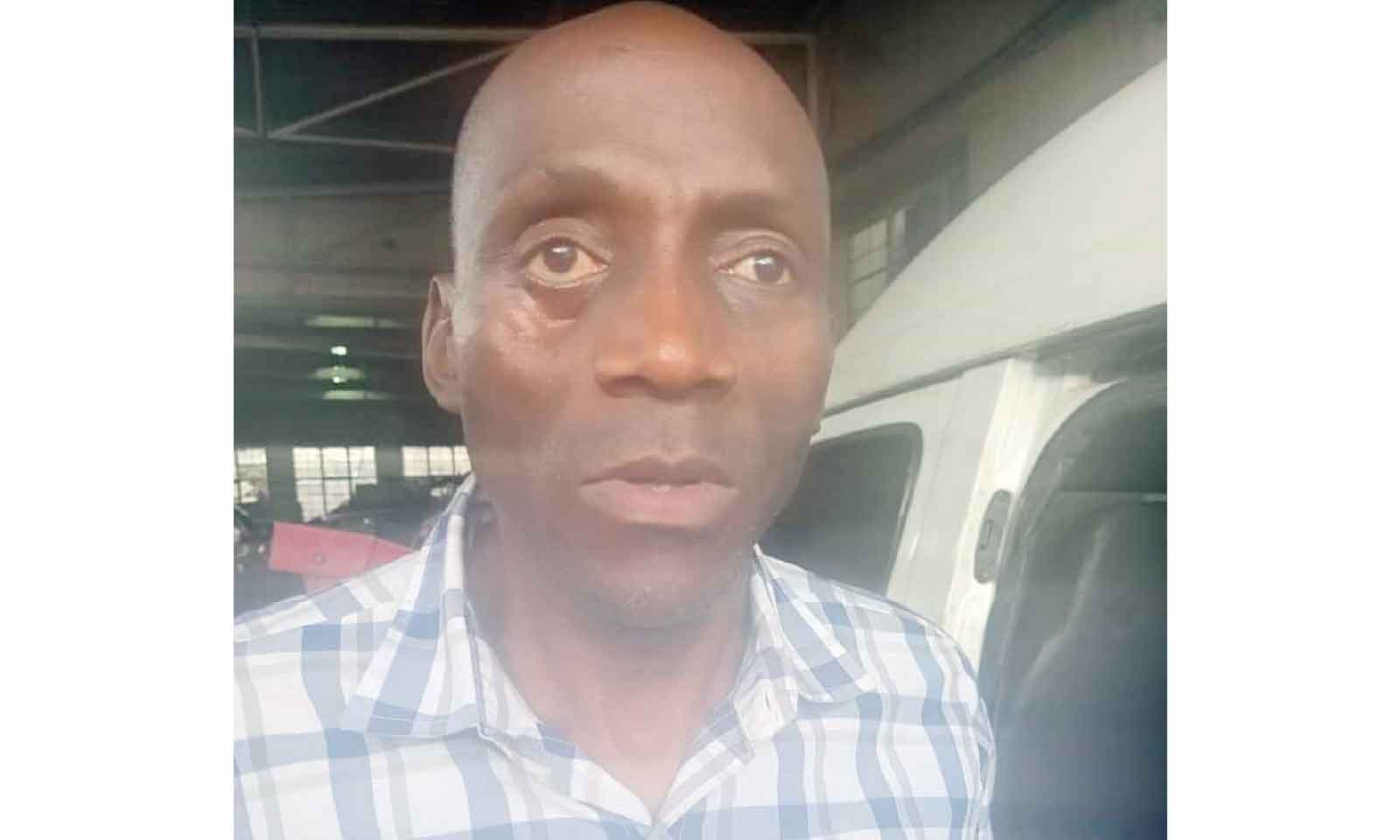
Rumbidzayi Zinyuke
Senior Health Reporter
When Donnance Kangausaru (60) looks back on nearly four decades of living with HIV, he does not see a life defined by illness.
Instead, he sees a journey of resilience, faith, discipline and courage – a journey that transformed him from a frightened patient at the height of Zimbabwe’s AIDS crisis into one of the country’s most recognisable and longest-serving HIV advocates.
Diagnosed in 1990, when HIV was still widely misunderstood and feared, Kangausaru has lived with the virus for almost 40 years, making him one of Zimbabwe’s longest-surviving public figures openly living with HIV.
His story mirrors the country’s own battle with the epidemic – from stigma and despair to treatment, survival and renewed hope.
Many Zimbabweans will remember him from the iconic Population Services International (PSI) advertisements that aired on national radio and television in the early 2000s, in which he declared: “Handina kukrosa red robot; ndiri kurarama nehutachiwana hweHIV” (I did not cross a red robot; I am living positively with HIV).
For Kangausaru, the journey began in tragedy.
“When I fell ill in 1988, I started noticing that the symptoms I had were the same ones my brother and sister had before they died,” he says. “At that time, we did not even know it was HIV. We had lost relatives, but no one understood what was killing them.
“When I tested and found out I was HIV positive in 1990, everything suddenly made sense, but it was also the beginning of the hardest chapter of my life.”
Those early years were brutal.
HIV was viewed as a death sentence, and stigma was widespread, even within families. Kangausaru says the rejection he faced cut deeper than the disease itself.
“People did not want to use the same utensils as me. Even in my own family, life was painful. Some relatives had completely written me off. At some point, I nearly gave up on life because I felt there was nothing left to fight for,” he says.
His personal life soon unravelled.
His wife left for the United Kingdom shortly after his diagnosis and never returned.
His health deteriorated rapidly and he became bedridden, unable to lift a cup of water to his mouth.
His weight dropped from 75kg to under 50kg.
It was his younger brother and sister-in-law who became his lifeline, taking him in and nursing him back from the brink of death.
“I reached a point where my younger brother and his wife saved money for my coffin while I was still alive. I could not eat; I could not swallow and I was wasting away. In short, I had been declared dead,” he said.
Hope finally arrived in 1996 with the introduction of antiretroviral therapy (ART) in Zimbabwe. Kangausaru was among the first patients to access treatment, enduring the harsh side effects of early regimens, but never defaulting.
That discipline has paid off.
Nearly four decades later, he has never suffered opportunistic infections, diabetes or hypertension.
Apart from an episode of eye cancer that was successfully treated, he remains in good health.
“Whenever I think about how I suffered before treatment, it motivates me to take my medication properly,” he says. “I know that defaulting can push you to second or third line treatment, and those may not always work.
“That knowledge keeps me disciplined because I want to live and I want to stay healthy.”
But survival alone was not enough.
In the early 2000s, Kangausaru made a decision that would forever change his life and Zimbabwe’s HIV conversation.
He agreed to publicly disclose his HIV status, becoming the first man in the country to do so.
“I realised that people were completely in the dark about HIV. No one understood what it was, and fear was killing people faster than the virus,” he says.
“ When PSI approached me, I knew it would not be easy, but I felt I had a responsibility. I agreed to go public because I believed that if one person could speak openly, others might find courage to get tested and seek help.”
The advert, which ran from 2002 to 2005, thrust him into the national spotlight.
“The day that advert came out, my world temporarily stopped. I questioned myself and asked why I had done it because fear suddenly took over,” he says.
“But within hours, journalists started calling, and the next day companies wanted me to speak to their employees. That is when I realised my life had changed for good and I was never the same again.”
The impact was immediate.
Men began testing in greater numbers, workplaces opened up conversations about HIV and Kangausaru became a familiar face in national awareness campaigns.
Support poured in, far outweighing the rejection he had once faced.
Zimbabwe’s HIV response has since evolved dramatically.
About 1,3 million Zimbabweans are living with HIV, with adult prevalence at around 12 to 13 percent.
The country has surpassed the UNAIDS 95-95-95 targets, with about 98 percent of adults knowing their status, 97 percent on treatment and 96 percent virally suppressed.
However, challenges remain in ensuring children receive equal care, with only 61 percent knowing their status, with 100 percent of those knowing their status on ART and 90 percent achieving viral suppression.
Kangausaru acknowledges the progress, but warns against complacency.
“A lot has been done, and treatment is now readily available, which was not the case when I tested positive,” he says.
“But people are still dying, some are defaulting, and young people are getting infected. Awareness has gone down, and that worries me because HIV did not disappear.”
“Men have too much pride and convince themselves they are strong and cannot fall ill, so they delay seeking medical care. Young people, on the other hand, do not have enough information. We need strong awareness campaigns again so that prevention, testing and treatment remain priorities.”
Now a grandfather of six, Kangausaru says every day feels like borrowed time and a blessing.
“I always prayed that I would live to see my grandchildren, and God granted me that opportunity. I truly believe I was kept alive for a purpose. I served Zimbabwe before, and I still want to serve my country. I would appreciate an opportunity to continue this fight,” Kangausaru says.
As Zimbabwe scales up newer prevention tools such as pre-exposure prophylaxis (PrEP), Kangausaru believes education must go hand in hand with access.
“If we strengthen awareness and then link people to treatment and prevention, we will see fewer new infections.
“ It is better for those who are positive to remain positive and healthy, and for those who are negative to remain HIV-free,” he says.