admin
admin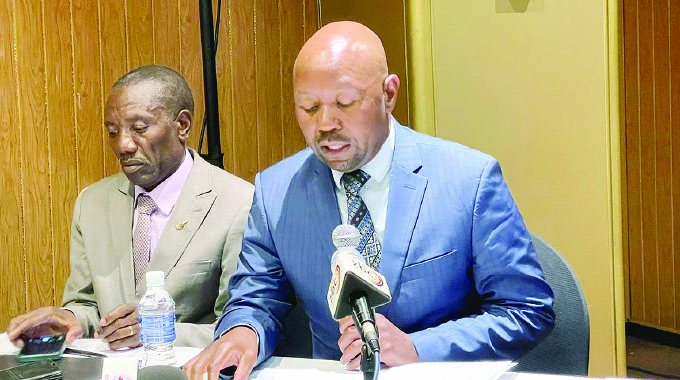
Rumbidzayi Zinyuke Senior Health Reporter
So far 447 boreholes have been drilled by Government at clinics and district hospitals across Zimbabwe to ensure that clean water is available for staff and patients as the country faces one of the worst cholera outbreaks since 2008.
The current outbreak has been attributed to lack of clean water and proper sanitation in most areas, hence the Government has been accelerating measures to address this.
Health and Child Care Secretary Dr Aspect Maunganidze said access to clean water was key to ending the cholera epidemic.
In October, the Ministry of Health initially drilled eight boreholes at clinics in cholera hotspots in Buhera after an upsurge of cholera in the district.
“The eight boreholes in Buhera were part of 447 boreholes that have been drilled at clinics and district hospitals countrywide,” he said.
The initiative is complementing the boreholes steadily being drilled under the Presidential Borehole Scheme which is targeting 35 000 boreholes across the country, one for every village, and the programme to bring a borehole to every school.
The country continues to face a surge in the number of new cholera cases in both rural and urban areas.
On Tuesday, a total of 263 new suspected cholera cases and four suspected deaths were reported.
According to the Ministry of Health and Child Care daily situation report, the cases were reported from Chitungwiza City (34), Beatrice Road Infectious Diseases Hospital in Harare (22), Chiredzi (21), Kuwadzana in Harare (20), Buhera (17), Glen View in Harare (16), Seke (11), Budiriro in Harare (11), Mazowe (11), Mbire (10), Mutare (9), Chipinge (9), Beitbridge (8), Highfield in Harare (7), Rutsanana (7), Masvingo (6), Makonde (6), Mwenezi (5), Bindura (4), Chivi (4), Western Triangle in Harare (4), Centenary (3), Chegutu (2), Gutu (2) Kariba (2), Mt Darwin (2), Gwanda (2), Bikita (1), Goromonzi (1), Chikomba (1), Hurungwe (1) Mutare City (1), Zvimba (1), Chimanimani (1) and Rushinga (1).
To date, 60 districts in the country have reported cases of cholera since February last year when the first case was detected. Harare Metropolitan remained the worse area with 114 of the new cases from all clinics and hospitals reporting in, or more than 43 percent of the total.
A total of 396 cholera patients are hospitalised at treatment centres across the country.
Zimbabwe has recorded 18 623 suspected cholera cases and 333 suspected deaths of which 2 193 cases and 71 deaths have been confirmed as cholera.
The unavailability of safe water supply has been one of the major drivers of the cholera outbreak along with poor sanitation.
The World Health Organisation recommends improving access to safe drinking water and sanitation infrastructure, as well as improving infection prevention and control in healthcare facilities.
These measures along with the promotion of preventive hygiene practices and food safety in affected communities are the most effective means of controlling cholera.



 Online Reporter