

 malvernmugadzikwa
Business Writer
Government wants to enact law to entrench the dual multicurrency system use in Zimbabwe.
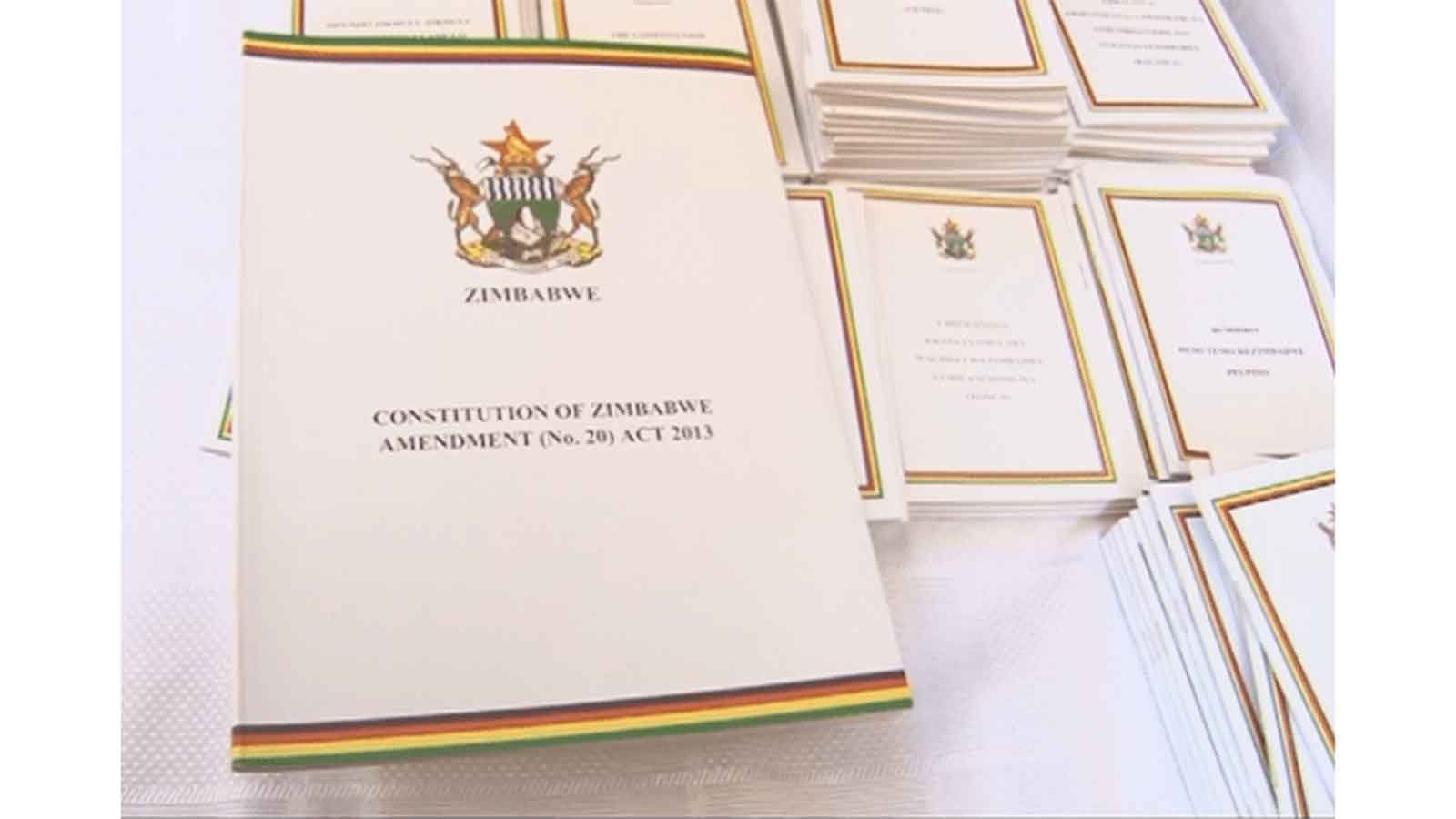
The legislation will make both the US and Zimbabwe dollars legal tender for all local transactions for the duration of the National Development Strategy 1 (NDS1).
The thrust is to bolster confidence in the domestic currency.
Finance and Economic Development Minister, Mthuli Ncube, revealed this yesterday while addressing journalists in Harare.
Mthuli said the Government had recently taken significant steps to stabilise the Zimbabwe dollar exchange rate.
He said lack of confidence and high inflation expectations had incentivised economic agents to engage in parallel market bench-marking of prices and skewed preference of US dollar for commercial transactions and forward exchange rate pricing.
“Based on the above economic facts, the Government is putting in place the following additional measures to build further confidence in the economy. One, entrenching the multicurrency system into law.
“Government has clearly stated its intention of maintaining a multicurrency system based on the dual use of the US dollar and the Zimbabwe dollar in the main.
“However, the market’s lack of confidence in the multi-currency system is causing us challenges and l want to assure you that this multicurrency system is here to stay into the foreseeable future,” he said.
“And to eliminate any speculation and arbitrage-based activities, Government has decided to embed the multicurrency system and continue to use it or to make sure that the US dollar is used as a transaction currency in law for a period that includes the five years that covers the NDS 1 (National Development Strategy 1) period, so this will be in place for the entire NDS1 period.”
Mthuli said the interbank market exchange rate is now going to be determined by banks on a willing buyer-willing seller basis and the utilisation in all economic transactions of this formal rate is now made mandatory by law.
While economic agents are free to price their goods in US or Zimbabwe dollars, he said the equivalence of the US dollar prices and Zimbabwe dollar prices of commodities should be strictly based on the current exchange rate as determined by the willing buyer-willing seller rate.
In relation to the price of fuel, Mthuli said over the past few months following significant pressure on global fuel prices due to global tensions, the Government has been intervening in the fuel sector in order to stabilise fuel prices.
“The actions have included the downward review of Government levies of fuel, and number two the release of fuel from the strategic fuel reserve.
“This week the Government completely removed the levy on diesel or rather brought it to 0 cents and significantly dropped the levy on petrol, it’s now down to 4,7 cents. This action prevented the price of fuel from breaching the US$2 per litre mark.”
The interventions comes as the Reserve Bank of Zimbabwe (RBZ) also announced new measures to rein in inflation and stabilise the Zimbabwe dollar. The new monetary policy measures entail raising the bank policy rate, which determines the level of bank interest rate, to 200 percent from 80 percent previously.
RBZ Governor Dr John Mangudya yesterday confirmed that the new interest rate benchmark will apply to both new and existing bank loans under the apex bank’s hawkish monetary policy stance, which seeks to end speculative borrowing.


 Online Reporter