

 Chronicle Editor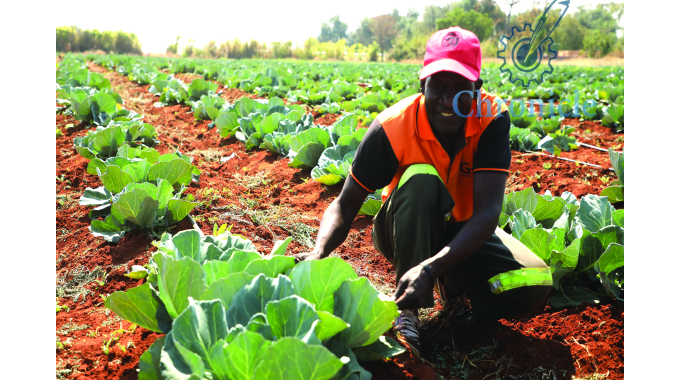
Flora Fadzai Sibanda, Chronicle Reporter
HARNESSING valuable agricultural knowledge attained during his school days at Mzilikazi High School in Bulawayo, Mr Patrick Chunda (41) has turned a rented piece of land in Umguza district in Matabeleland North, into a green oasis.
Mr Chunda, a beneficiary of the Presidential Inputs Scheme, is next month expecting to harvest at least 15 tonnes of wheat from three-hectares that he planted.
Farmers under the Presidential Inputs Scheme receive seed, fertilisers and chemicals on credit against delivery of the crop but are expected to pay for electricity and labour.
Winter wheat in Zimbabwe is grown under irrigation and the production period is from May to October
Zimbabwe is aiming to harvest 383 500 tonnes of wheat from 75 000 hectares to ensure self-sufficiency. The country needs at least 360 000 tonnes of wheat a year to meet its flour demand.
Mr Chunda said he developed a passion for farming at a tender age and learnt farming basics during agriculture lessons at Mzilikazi High School.
“l learnt the basics of farming through agriculture lessons at Mzilikazi High School. After completing high school, I worked at a farm for 16 years as a manager from where I acquired experience,” he said.
Mr Chunda quit his job in 2019 to concentrate on his own farming business.
“I started leasing 3 hectares of land and last year, I acquired two more hectares. As I was growing up, farming was something that was close to my heart and I would also help my parents who were small scale farmers,” he said.
Mr Chunda has also ventured into horticulture and supplies the local market with his produce.
“From the three-hectares of wheat planted in June, I am expecting to harvest 15 tonnes in September,” he said.
“This is my first time to grow wheat. I have always been a horticulture farmer until a friend of mine told me about the Presidential Inputs Scheme. I then applied and got the inputs.”
Mr Chunda said growing wheat requires patience and good farming practices.
“Being a wheat farmer is not easy. It needs a lot of patience and hard work. There are times when l thought the crop would not come out properly, but I am glad with the way it’s looking there is hope,” said Mr Chunda.
He said relies on an electric engine to pump water from the Umguza Dam.
However, recurrent power cuts are a major challenge.
“I use an electric pump to draw water from the dam to water my wheat. However, due to power outages my fear is that the crop might be affected,” said Mr Chunda.
Through farming, he hopes to contribute significantly to the country’s food security.
Zimbabwe is an agrarian economy with most of the country’s sectors being directly and indirectly linked to the agricultural sub-sector.
Government is targeting transforming both rural and urban economies through enhanced food production, improved nutrition, good marketing of farm produce which in turn creates jobs.
Zimbabwe envisages to be an upper middle- income economy by 2030 and agriculture is critical in the attainment of this vision.— @flora_sibanda



 Bongani Ndlovu
 Online Reporter