Patrick Chitumba [email protected]
PRESIDENT Mnangagwa has donated 43 tablets to the Midlands’ junior parliamentarians to enhance digital literacy, research and access to information as the country pushes towards a technology-driven economy.
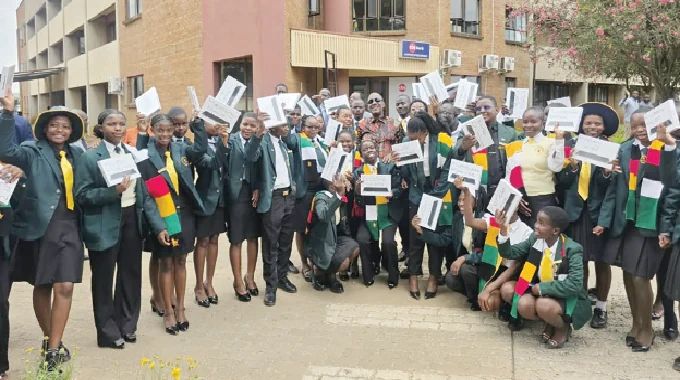
The tablets were handed over by Midlands Minister of State for Provincial Affairs and Devolution Cde Owen Ncube at the Government Complex in Gweru yesterday.
President Mnangagwa donated the devices during the official opening of the 34th Session of Junior Parliament on July 8 this year.
The beneficiaries comprise 28 junior Members of Parliament, six Girls’ Quota junior MPs, six junior senators, two junior senator chiefs and one junior parliamentarian with a disability.
Speaking at the handover ceremony, Minister Ncube said the initiative aligned with the National Development Strategy 2 (NDS2) pillar on Science, Technology, Digital Innovation and Human Capital Development, which prioritises digitalisation, ICT infrastructure and digital literacy.
He said the devices will help young leaders access educational resources, conduct research and strengthen their participation in national development initiatives.
“The handover aligns with the NDS2 pillar on Science, Technology, Digital Innovation and Human Capital Development, which focuses on digitalisation, expansion of ICT infrastructure and digital literacy to drive the transition to a knowledge-based economy as we march towards the attainment of a prosperous and empowered upper-middle-income society by 2030,” said Minister Ncube.
He said the donation also supported efforts to equip young people with digital skills to drive innovation and contribute to the country’s Vision 2030 aspirations.
Minister Ncube said the donation of the tablets was inline with the National Digital Ambassador Programme, launched in Bulawayo on February 21, 2025, which seeks to equip 1,5 million young Zimbabweans with digital, critical-thinking and problem-solving skills.
“The programme bridges the rural-urban digital divide as we seek to entrench the Fourth Industrial Revolution that leverages emerging technologies and Artificial Intelligence to bolster personalised learning,” he said.
Minister Ncube said Midlands Province had benefitted from public and private sector investments aimed at improving access to information and communication technology, particularly in previously underserved communities.
He cited the establishment of mobile network base stations in areas such as Gokwe South, the Artificial Intelligence Digital and Innovation Hub at Nyamuroro Vocational Training Centre, and community information centres across the province.
Minister Ncube also highlighted the 1 500-kilometre National Rail Fibre Optic Project, launched by President Mnangagwa in Somabhula on March 7, 2024, as part of efforts to strengthen the country’s digital infrastructure.
Other initiatives include computer laboratories and innovation hubs at urban and rural schools as well as the Presidential Internet Scheme launched in Nembudziya, Gokwe North during last year’s national Independence celebrations held in the district.
Minister Ncube said improved internet connectivity was expanding opportunities for learners to access educational resources, conduct research and develop practical skills.
“The era of carrying heavy satchels loaded with textbooks is now over as internet connectivity creates opportunities to access platforms that enhance teaching, learning, community service, research and industrialisation as advocated under the Second Republic’s Heritage-Based Education 5.0,” he said.
Minister Ncube urged the junior parliamentarians to use the devices responsibly and guard against cybercrime and other risks associated with online platforms.
He also encouraged them to remain focused on their education, demonstrate exemplary leadership, avoid early marriages and shun drug and substance abuse.
Minister Ncube also urged the young leaders to embrace programmes spearheaded by First Lady Dr Auxillia Mnangagwa that promote career guidance, family values and youth empowerment.
These include career guidance and counselling sessions, the Gota/Nhanga, Nhaka Yedu and Africana Family Humanism initiatives, as well as the She-Tech programme, which partners with technology companies, including Huawei, to provide ICT training to Zimbabwean students.
Minister Ncube also highlighted the First Lady’s anti-drug and substance abuse initiatives, including rehabilitation and reintegration programmes at the Angel of Hope Drug Rehabilitation Centre in Mbare, Harare.
A parent, Mr Paul Machacha, commended President Mnangagwa for the donation, saying it would help improve the beneficiaries’ ICT knowledge.
“The tablets should be viewed not merely as electronic devices, but as tools that could help young leaders acquire knowledge, strengthen their leadership capabilities and contribute meaningfully to the country’s development agenda,” he said.
Zanu-PF Central Committee member Mr Wellington Magura said the initiative reinforced Government efforts to expand digital access and promote inclusive education, particularly among young people from previously marginalised communities.
He said access to technology will help prepare young Zimbabweans to participate in building a modern, digitally driven economy in line with Vision 2030.