peter
peter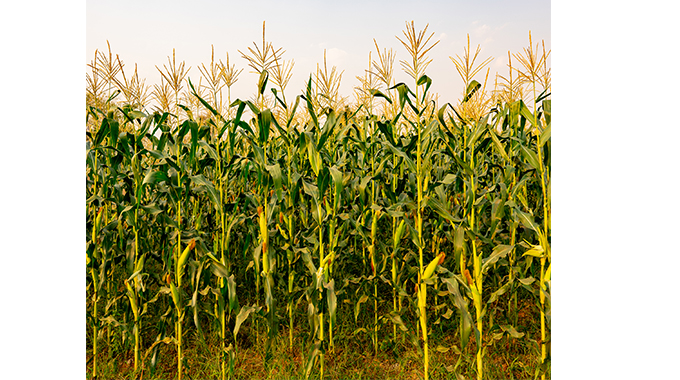
Judith Phiri, Business Reporter
FARMERS in Matabeleland North and South have now planted 47 924 hectares of maize which is more than double the 15 029ha planted by this time last year.
For the 2022/23 season, the Government is targeting 115 969ha of maize area planted in Matabeleland North, while 120 000ha is being targeted for Matabeleland South.
The Government programmes such as Pfumvudza/Intwasa, the National Enhanced Agriculture Productivity Scheme (NEAPS) and interventions by the private sector and the Agriculture and Rural Development Authority (Arda), are set to enhance production of all crops this season, ensuring greater food production.

Communication from Lands, Agriculture, Fisheries, Water and Rural Development chief director for Agriculture Advisory Services Professor Obert Jiri indicated that as the 2022/23 cropping season continus to gain momentum, maize planted in Matabeleland North stands at 19 915ha and Matabeleland South at 28 009ha.
“As at 12 December 2022, maize area planted in Matabeleland North stands at 19 915ha of maize an increase from 11 713ha that had been planted same time last year, while the target for the 2022/23 season is 115 969ha.
“Matabeleland South has seen 28 009ha maize area planted against a target of 120 000 for the 2022/23 season, while same time last year only 3 316ha had been planted,” revealed Prof Jiri.
In Matabeleland North of the 19 915ha, Presidential Inputs Programme (PIP) contributed 2 550ha and self-financed 17 365.
While for Matabeleland South, under PIP maize area planted was 4 063ha and self-financed accounted for 23 946ha from the 28 009ha.
Nationwide, he said 465 707ha of maize has been planted more than double the 215 481ha planted by this time last year.
Prof Jiri added: “As at 12 December 2022, maize area planted under Project Implementation Plan (PIP) was 92 689ha, AFC 580ha, Arda 5 948ha, Self-financed 372 438ha with the total being 465 707ha against the target of 1 940 969ha for the 2022/21 season. Same time last year about 215 481ha had been planted.”
As planting accelerates across the country, the Government is targeting about 3 049 761 hectares (ha) to be planted.
He said: “Area contribution by programme hectares shows that the targeted area for the 2022/23 cropping season is 3 049 761ha. Under maize the national target is 1 940 969ha with Pfumvudza/Intwasa contributing 367 924 ha, NEAPS 250 000ha, private sector 32 175ha, ARDA 17 278ha.”

“The national target for soya beans is 71 627ha, while NEAPS contributes 25 000ha and private sector 36 542ha. Sunflower national target is 153 710ha and Pfumvudza/Intwasa contributes 124 615ha, NEAPS 5 000ha and ARDA 5 880ha.”
While the national target for sorghum is 402 569ha, with Pfumvudza/Intwasa contributing 191 806ha, NEAPS 2 000ha, private sector 10 650ha and Arda 1 880ha.
Pearl millet and groundnuts national targets are 251 321ha and 347 134ha respectively, the contribution of pearl millet under Pfumvudza/Intwasa will be 126 577ha and groundnuts 83 053ha.
Prof Jiri revealed that for cotton the national target was 285 000ha with Pfumvudza contributing 223 000ha, private sector 56 000ha and Arda 1 000ha.
Meanwhile, in terms of the migratory pests control, Prof Jiri said the African Fall armyworm update as at 9 December showed that reports received indicated low moth catches below threshold level for outbreak.
“The maize crop is still at its vulnerable vegetative stage hence frequent scouting is advised. Quelea bird breeding sites under monitoring for any huge population that may warrant control, while there is termite control in Mashonaland Central Gwese Agritex office.”
Prof Jiri said there was a meeting with the International Institute of Tropical Agriculture (IITA) representative for a Fall armyworm training as a follow up to previous trainings done with the Department.
Zimbabwe’s agriculture sector is forecast to register strong positive performance during the 2022/23 cropping season, backed by an anticipated above-average.

The country’s agriculture sector accounts for around 17 percent of the overall Gross Domestic Product (GDP).
It also provides 60 percent of the raw materials required by the industrial sector for its manufacturing operations while it employs between 60 and 70 percent of the country’s population.
The Second Republic has made food and nutrition security a top priority and is working towards attaining a US$8,2 billion agriculture industry by 2023, underpinned by the country’s National Development Strategy 1 (NDS1), the key driver towards the Vision 2030 objective of making Zimbabwe a prosperous and empowered upper-middle income society.



 Online Reporter