Joseph Madzimure and Wallace Ruzvidzo, Zimpapers Reporters
ZIMBABWE is undergoing the Fourth Chimurenga/Umvukela, which aims to secure total control over the country’s national wealth and economic development, President Mnangagwa has said.
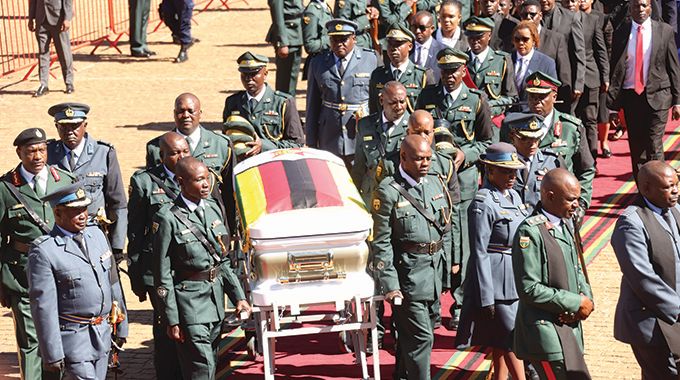
Addressing mourners at the burial of national hero Air Commodore (Retired) Simon Bere at the National Heroes’ Acre in Harare yesterday, the President traced the evolution of Zimbabwe’s liberation struggle.
He said the First Chimurenga was waged against colonial occupation and subjugation, the Second secured political independence, while the Third focused on land reform.
Under the Fourth Chimurenga/Umvukela, President Mnangagwa said, the Second Republic has a responsibility to deliver transformative socio-economic outcomes in honour of the sacrifices made by liberation heroes such as Air Commodore (Rtd) Bere, who fought for independence, freedom and democracy.
“The late national hero, Air Commodore (Rtd) Bere was in that mould of these yesteryear cadres. He ran his race and fought his fight. He has finished well.
“To you, our departed comrade, Air Commodore, I say; your critical mission is accomplished. Us, who remain behind, will stay true to the ideals of the revolution. We shall continue the march, flying high the sacred flag of our motherland, Zimbabwe and forever safeguard the rich legacy bequeathed to us, by our many revolutionary forebears,” said the President.
He said the drive to attain upper-middle-income economic status by 2030 was a key milestone towards broader prosperity, industrialisation and modernisation.
“As we inter this gallant son of the soil, at this national shrine, let us remember that the people’s revolution and the struggle continues, albeit in a changed terrain. Nyika inovakwa, inotongwa, inonamatigwa nevene vayo/ilizwe lakhiwa, libuswe, likhulekelwe ngabanikazi balo. All of us have the weighty obligation to consolidate national unity and work with vision and focus to drive Zimbabwe to a higher economic status,” said President Mnangagwa.
He urged citizens to reflect on their contributions to national development, adding, “Iwe neni, tose tine basa” (you and me, all have a role to play).
“The question before all of us today is; what is it that we can contribute to consolidate the gains of our hard-won independence? What is our individual and collective sacrifice for the attainment of our national development aspirations and Vision 2030?
“Ngatizvibvunzei kuti tingaiteyi kuti nyika yedu isimuke, uye ibudirire iyende mberi. Iwe neni, tose tine basa. Ndangariro dzedu ngadzive dzekuvaka nyika yedu, kwete kuputsa. Unity, peace and development remain our national guiding principle and moral compass,” he said.

The President also assigned responsibilities to various sectors, including the youth, women, war veterans and civil servants.
“To the youth, he said they are the cadres of the contemporary Chimurenga, with their battleground now in sectors such as the digital economy, mining, tourism and manufacturing.
“You are reminded that you are the vanguard of our independence, freedom and democracy. I urge you to occupy the domains of artificial intelligence, robotics and other modern fields of human endeavours.
Never shy away from the challenges and opportunities before you. Embrace innovation, be the employers and entrepreneurs that drive our nation forward,” said the President.
He commended women for their historic role in sustaining the liberation struggle and urged them to continue supporting economic growth through small and medium enterprises.
“By and large, you bear the brunt of climate change and the effects of economic sanctions imposed on our country, by some Western countries,” said President Mnangagwa.
Addressing liberation war veterans, he said their new frontline was within communities, where they should mentor younger generations using their experience, discipline and patriotism.
“Equally, I challenge the civil servants, officers, men and women across the security sector, to continue wholeheartedly serving our nation with patriotism, urgency, humility and focus,” he said.
President Mnangagwa said while the conditions of the liberation struggle had changed, patriotism today should manifest through productivity, economic growth and national development.
“It must also mean buying Zimbabwean products and services, building Zimbabwe, defending and speaking good over our nation as well as proclaiming and declaring the blessings of Almighty God over Zimbabwe. As we implement National Development Strategy 2, therefore, our farmers are urged to be aware that our land, plots, agriculture business units and horticulture fields, are the present-day trenches. In good and lean seasons, we must feed the nation and guarantee national food self-sufficiency as a critical component of national security and sovereignty,” he said.
The President extended condolences to the Bere family, describing the late Air Commodore as “an asset to us all”.
“Air Commodore (Rtd) Bere passed on, on April 24, 2026, after serving our great motherland, Zimbabwe as a young freedom fighter, professional air officer and civil servant. In all these areas, he always exhibited unparalleled patriotism, loyalty, discipline and unflinching dedication to our country, never seeking personal glory.
“The late gallant son of the soil, was an asset to us all. Befittingly, therefore, we lay our departed national hero, whose war-time name was ‘Brian Garanewako Chimurenga’: here, at the National Heroes Acre, along-side other illustrious sons and daughters of our beloved motherland, Zimbabwe,” he said.
The President placed Cde Bere’s life within the historical context of the liberation war.
“By 1978, Rhodesia was burning, as the war to liberate Zimbabwe had reached every corner of the country. The racist colonial regime had made education, the economy and wealth, privileges of a few settlers. Land and livestock expropriation, coupled with oppression and marginalisation, were a reality for the black majority.
“Born on September 19, 1959, the late Air Commodore (Rtd) Simon Brian Bere, faced a choice, either to submit to a life of being a second-class citizen or to fight for a new free, independent and sovereign Zimbabwe,” he said.
President Mnangagwa said Cde Bere chose to fight for self-determination, national identity and dignity. In December 1978, Cde Bere crossed into Mozambique and joined the Zimbabwe African National Liberation Army at Samacuesa Base, part of a broader wave of young recruits entering neighbouring countries for military training.
“I call upon all our people, young and old alike, to never take for granted or trivialise that sacrifice. It took supreme bravery, courage and determination to leave home, to face enemy fire, disease and possible death, in a struggle where victory was certain, but the timelines, unknown. Zvaida vakatsunga moyo, uye vakazvipira kuti ropa ravo raizowanikwa pamureza weZimbabwe,” said President Mnangagwa.
After completing training, the late Air Commodore Bere was appointed Detachment Political Commissar in the Education Department, reflecting the importance of ideological mobilisation during the war.“Our national hero thus, taught, politicised and prepared minds of our people for both the protracted struggle as well as for freedom and independence. As the liberation war intensified, the Rhodesians were forced to pursue peace, resulting in the Lancaster House Conference of 1979,” said the President.
Following the ceasefire, Cde Chimurenga reported to Tongogara Assembly Point, awaiting independence.
“To the young people and the entire nation, let us always recognise that our freedom was not donated and never came on a silver plate. It was fought for by your grandfathers and grandmothers, uncles and aunts, underwritten by the blood, scars and wounds of many of our forebears. The late national hero, Cde Bere, never wavered from this beacon. He was persistent, consistent and a reliable and dependable cadre, right up to his demise,” said President Mnangagwa.
In 1981, he joined the Air Force of Zimbabwe as an aircraftsman and trained at Field Air Force Base, now Jason Ziyaphapha Moyo Air Base.
He later specialised in Explosive Ordnance Disposal, deploying his skills during operations in Mozambique and the Democratic Republic of Congo. Over the years, he rose through the ranks from Air Lieutenant in 1993 to retire as Air Commodore in 2024.
“Today, we sadly mourn him, but also celebrate a life of merit, hard-work, loyalty, patriotism, discipline, exemplary leadership and results,” said President Mnangagwa.
Air Commodore Bere also attained university qualifications in Political Science, Security and Strategic Studies, and National Defence.
He was seconded to the Ministry of War Veterans in 2016 and, following his appointment as Director of War Veterans Affairs in 2020, played a key role in advancing programmes to improve the welfare of liberation war veterans.
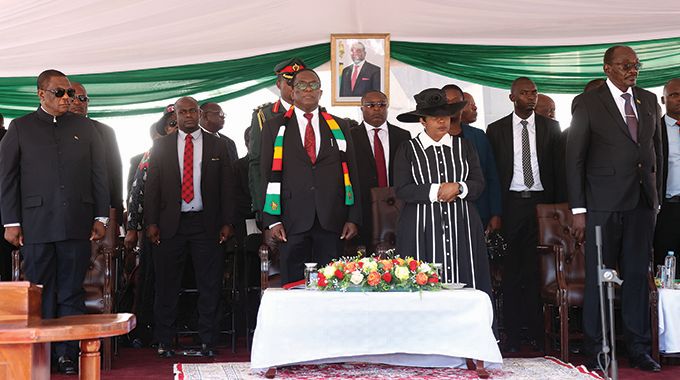
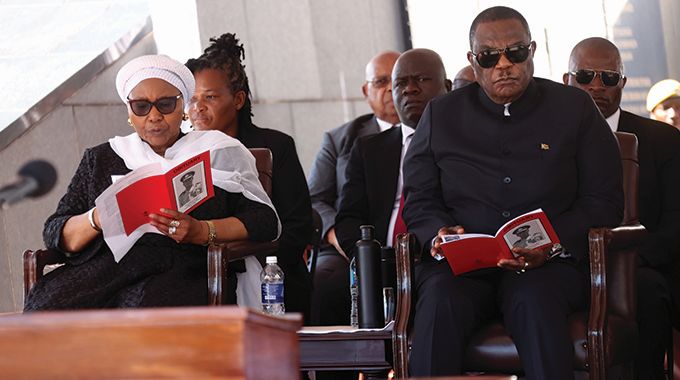
The President was accompanied by First Lady Dr Auxillia Mnangagwa. Vice Presidents Dr Constantino Chiwenga and Dr Kembo Mohadi were also in attendance, along with Chief Secretary to the President and Cabinet Dr Martin Rushwaya, Cabinet ministers, deputy ministers, senior Zanu-PF officials, service chiefs and other senior Government officials.