


 malvernmugadzikwa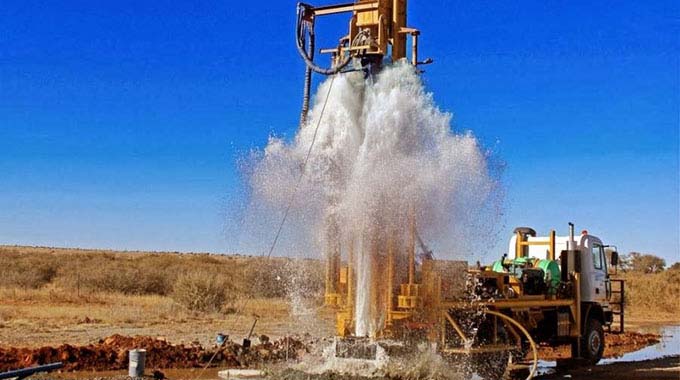
Nokutenda Tobve
Close to 50 000 boreholes are set to be drilled countrywide by next year under the expanded Presidential Rural Development Programme, which will now account for an additional 14 000 boreholes for schools and youths.
Under the scheme, the Government was initially set to drill and equip a borehole in each of the country’s 35 000 villages. Authorities have now expanded the programme to include 9 600 boreholes at public schools countrywide and an additional 4 500 for Youth Business Units (YBUs) located in rural areas.
Expansion of the programme aims to improve access to clean water, not only for households but also for education and youth empowerment initiatives. The plan will also see the establishment of nutrition gardens alongside each borehole, promoting food security, reducing poverty and creating employment opportunities.
Zimbabwe National Water Authority (Zinwa) spokesperson Mrs Marjorie Munyonga said a total of 2 815 boreholes had been drilled so far under the programme.
“Zinwa is currently implementing the Presidential Rural Development Programme, where a total of 35 000 boreholes are set to be drilled and equipped as the anchor component for the establishment of Village Business Units,” she said.
“The authority will also drill and equip 9 600 boreholes for the establishment of School Business Units.
“A further 4 500 boreholes are set to be drilled and equipped for youth centres and will pave the way for the establishment of Youth Business Units.”
The programme, she said, is being implemented using the Whole-of-Government approach.
“Zinwa is working with other Government agencies such as the Agricultural and Rural Development Authority (ARDA), the Agricultural Marketing Authority (AMA), the Department of Fisheries and the Agriculture Finance Corporation (AFC).
“Upon the establishment of each Village Business Unit (VBU), which typically comprises a solar-powered borehole, water storage tanks, one-hectare drip technology garden and fishponds, community members become both shareholders and employees of the VBU and with the assistance of ARDA take responsibility of the management of the units, including security.
“AMA comes in with market linkages helping with the sense of collective ownership helps in the protection of the infrastructure,” said Munyonga. She said beneficiaries of the programme were recording brisk business.
“The programme is running smoothly and communities have been very supportive of the initiative with beneficiary communities now realising benefits of the programme where they are earning an average monthly income of US$50, while some VBUs have declared dividends of up to US$3 000,” she added.
Overall, the programme is expected to benefit 2,3 million households, while increasing rural household incomes by an average of US$2 000 a year.



 Bongani Ndlovu
 Online Reporter