Chronicle Editor
Yoliswa Dube-Moyo, Matabeleland South Bureau Chief
ABOUT 500 000 urban households across the country will benefit from the Presidential Input Scheme as Government moves to support transient urban cultivation.
Urban and peri-urban agriculture is considered a strategy that can bring multiple benefits and help to build resilient urban food systems at the city region level.
Cities have an important role to play in climate change mitigation and adaptation, disaster risk management and in enhancing the climate resilience of their vulnerable residents.
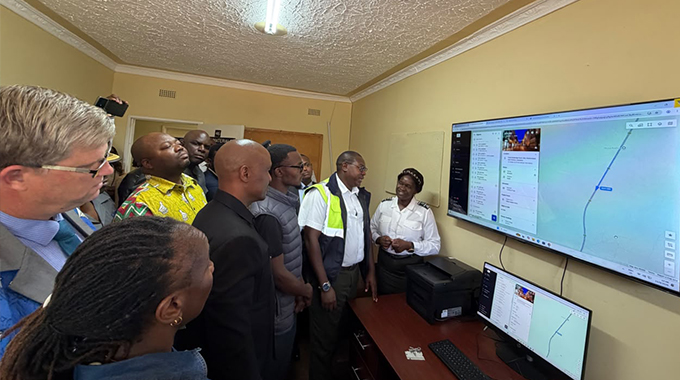
Officiating at the handover of the management of water systems to the Municipality of Gwanda in the mining town last week, Minister of Lands, Agriculture, Fisheries, Water and Rural Development Dr Anxious Masuka said transient urban cultivation is a cushioning mechanism for many households.

“Government is issuing a policy to guide local authorities on transient urban cultivation.
In the interim, Government is aware of the difficulties that urbanites face so in the forthcoming summer season, 400 000 to 500 000 families, including those that are in Gwanda will benefit from the Presidential Input Scheme Intwasa/Pfumvudza,” said Dr Masuka.
He said urbanites do not have to be on agricultural land to benefit from the programme.
“You don’t have to be on agricultural land to benefit from the Presidential Input Scheme.
Through the Provincial Minister’s office, deserving households will be able to benefit from the programme and utilise those inputs for transient urban cultivation as a cushioning mechanism,” said Dr Masuka.
Inputs to be received under the Intwasa/Pfumvudza farming concept, that is popularly known as gatshompo in the Matabeleland region, include maize seed, cow peas, groundnuts, cotton seeds as well as fertiliser and chemicals to help farmers yield enough produce to tackle food insecurity.
Under the programme, each household stands to benefit from a standardised input package of 5kg seed, 50kg basal and 50kg top dressing fertiliser.
Government adopted Intwasa/Pfumvudza to address the problem of low production and productivity which continued to negatively affect food security in Zimbabwe.
The concept promotes climate proofing agriculture by adopting conservation farming techniques and it involves the utilisation of small pieces of land and application of the correct agronomic practices for higher returns.
Statistics show that more than 8,6 million Zimbabweans are food insecure and the situation has been worsened by the Covid-19 pandemic whose impact disrupted many economic activities.
Matabeleland South provincial agricultural officer Mr Mkhunjulelwa Ndlovu said his department was ready to support transient urban farmers in the province.
“In Gwanda, a lot of people focus on gold mining but we also have many that are into agriculture which we’re ready to support.
However, there are a lot of cattle that graze in people’s gardens unless they are fenced and council has to address the issue of cattle that roam around the town,” said Mr Ndlovu.
He said there were a number of gardens that needed support through inputs.
“We will support these but we will also first vet the recipients of the inputs and make sure that they don’t put up the inputs for sale at the market,” said Mr Ndlovu.
Meanwhile, the Municipality of Gwanda is working on modalities to re-introduce the cattle impounding system for stray cattle which have become a menace in the mining town.
Cattle, goats and donkeys roam the busy streets of the town centre and residential areas.
Gwanda Mayor, Councillor Njabulo Siziba said the municipality will re-introduce the cattle impounding system as council was fighting a losing battle with farmers who let their livestock wander into the town centre and residential areas.
“We’re struggling with this problem and I believe the answer lies in returning to the old system where we would impound cattle.
Council has resolved to start impounding cattle. We’re still working on the penalties.
They’re actually not stray animals but they have owners whom we’ve tried to engage with no luck,” said Clr Siziba.
— @Yolisswa


 Online Reporter