

 admin
admin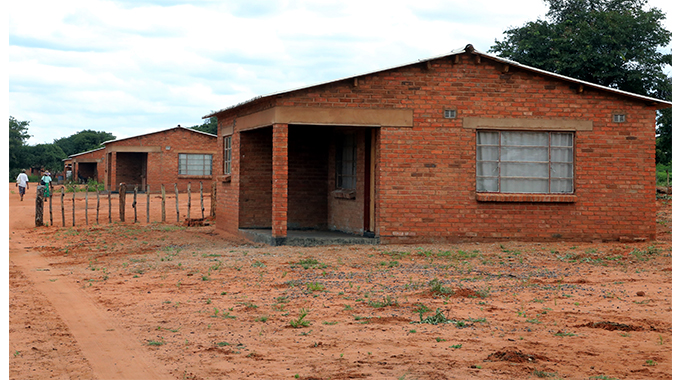
Leonard Ncube, [email protected]
GOVERNMENT has built over 500 houses for people affected by disasters, particularly floods countrywide as the Second Republic continues to score positives in delivering on its promises.
Since its inception in 2017, the Second Republic identified housing provision as one of the key result areas in the National Development Strategy 1, in an effort to provide decent housing while also reducing the 1,2 million housing backlog and contributing towards an upper middle income society by 2030.
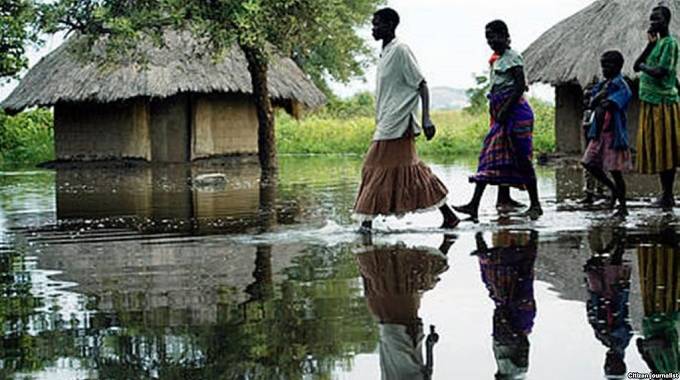
Tsholotsho was hit by floods in 2017 and Government undertook to relocate 319 families from the low lying areas on the banks of Gwayi River to Tshino and Sawudweni villages in ward six where the construction of permanent houses on higher ground is underway.
A similar tragedy hit Binga’s Nsungwale area in 2020 and Government is constructing 37 houses for the flood victims.
Similar projects are happening in Chimanimani, Manicaland where houses are being built in Runyararo for victims of the 2019 Cyclone Idai.
Government has invested in geospatial planning technology to map all disaster prone parts of the country in a bid to prevent calamities.
Speaking at a disaster preparedness workshop organised by the International Organisation for Migration (IOM) for disaster risk management practitioners from the Sadc region in Victoria Falls recently, Local Government and Public Works Minister July Moyo said Government targets zero risk.
“With our geospatial mapping we now know where these low lying areas are. We have had to do something about Tsholotsho for instance and Binga where people were living in low lying areas. We have built over 550 houses for people who were actually living in low lying areas and we will continue until we enhance our disaster risk reduction,” he said.
The IOM, a United Nations (UN) migration agency, funded the workshop through the Africa
Regional Migration Programme in partnership with Government to provide relevant stakeholders in the Sadc region with knowledge and skills to strengthen disaster risk management, climate change adaptation and mitigation in communities for sustainable development.
Department of Civil Protection Unit (CPU) director Mr Nathan Nkomo said outstanding houses in Tsholotsho and Binga will be completed this year once resources are availed.
“We have been constructing houses for people affected by floods in several parts of this country including Binga and Tsholotsho. For Tsholotsho we have managed to construct 298 and we now need seven more to complete the project,” said Mr Nkomo.
He said in Binga there are 37 houses, of which 17 are complete while 20 are at various stages of completion.
“We are using a two-pronged approach using in-house Government capacity through Public Works which did 17 houses in Binga while the Ministry of National Housing and Social Amenities constructed the other 20, and they are now doing final touches,” said Mr Nkomo.
He said the geospatial technology is helping in mapping all disaster prone areas including mining areas such as Kwekwe which is affected by illegal mining.
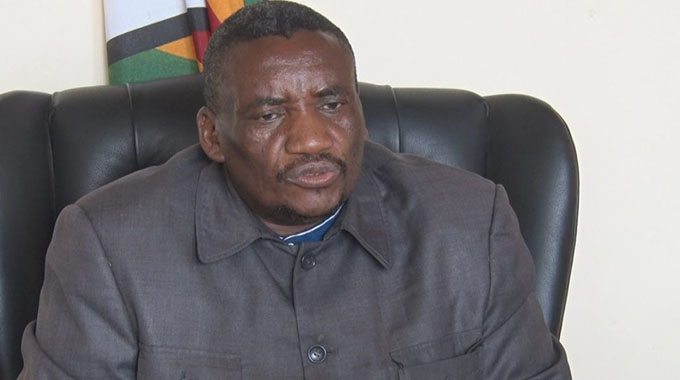
Mr Nkomo said perfecting preparedness was a continuous process.
“The delay might be in the allocation of resources but for Tsholotsho we have procured all the materials for the seven remaining houses and once we get money for labour, work to complete the houses starts and this should be before the end of the year,” he said.
Mr Nkomo said for Runyararo in Chimanimani, the procurement of material was underway.
“We have identified evacuation centres in all disaster prone wards where we have established local structures to assess risk,” he said.
IOM Zimbabwe protection specialist Mr Leonard Kamwendo said disasters have been increasing every year since 2013 which is a sign of changing weather patterns.
He said this is causing internal displacements and IOM is assisting Government with resources such as tents for temporary accommodation of displaced families. — @ncubeleon



 Online Reporter