Online Reporter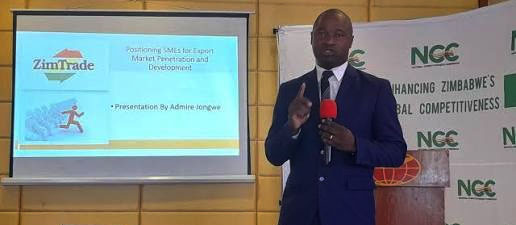
Lovemore Kadzura
Post Reporter
AS Zimbabwe prepares to assume the chairmanship of the Common Market for Eastern and Southern Africa (COMESA) this month, businesses in Manicaland have been urged to seize the opportunity to expand their footprint in regional markets and boost export earnings.
The 2026 COMESA Heads of State and Government Summit will be held in Harare from October 19 to 22, with President Mnangagwa set to take over the rotating chairmanship of the 21-member regional bloc.
ZimTrade Eastern Region manager, Mr Admire Jongwe, said the chairmanship presents a strategic opportunity for local companies to penetrate regional markets and position their products on a larger platform.
He said Manicaland possesses significant export potential, particularly in agriculture, horticulture and value-added timber products, which are in demand across the COMESA market of more than 640 million people.
“COMESA is one of Africa’s largest trading blocs, with a combined Gross Domestic Product of approximately US$1 trillion and merchandise trade exceeding US$383 billion. Zimbabwe exported goods worth US$222 million to COMESA member states last year, representing a 10,4 percent increase from US$201 million recorded in 2024.
“Despite this growth, intra-COMESA trade remains relatively low, which means there is still considerable room for Zimbabwean businesses to increase their market share. Through the COMESA Free Trade Area, exporters benefit from reduced tariffs and fewer trade barriers, making Zimbabwean products more competitive,” said Mr Jongwe.
He identified a number of sectors in which Manicaland enjoys a comparative advantage.
“Our trade analysis shows strong prospects in agriculture and horticulture, particularly tea, coffee, tobacco and cotton, as well as fresh produce such as oranges, grapes and berries.
“There are also opportunities in manufacturing, including furniture, textiles and clothing, footwear, fertilisers, pesticides, sugar and pharmaceuticals. Zimbabwe already enjoys a reputation for producing quality agricultural products and Manicaland’s producers should capitalise on that goodwill to penetrate new markets,” he said.
Mr Jongwe said the province’s strategic location gives businesses an added advantage.
“Zimbabwe serves as a gateway linking Mozambique, Zambia, Malawi, Tanzania and the Democratic Republic of Congo through the North-South Corridor. This connectivity positions Manicaland-based companies to efficiently access both COMESA and SADC markets,” he said.

To help businesses take advantage of these opportunities, Mr Jongwe said ZimTrade continues to roll out various export development programmes aimed at enhancing competitiveness and market access.
“We support companies through every stage of the export journey, from preparing them for international markets to facilitating linkages with potential buyers. For COMESA markets, we organise participation in regional trade fairs, trade missions and business forums, including the COMESA Business Forum that will run alongside the summit.
“The forum provides a valuable platform for exporters to showcase products, build relationships with buyers, understand regional standards and explore financing opportunities available for intra-COMESA trade,” he said.
Mr Jongwe added that provincial export clusters have become an important tool for helping small and medium enterprises enter export markets.
“Exporting as a collective often reduces costs and improves market access, especially for SMEs that may not have the capacity to enter foreign markets individually.
“In Manicaland, we continue to conduct capacity-building programmes targeting youth-led enterprises, women-owned businesses and smallholder farmers. These cover key areas such as export standards, quality assurance, market intelligence, branding and packaging,” he said.
He urged businesses to conduct thorough market research before entering foreign markets and to focus on value addition.
“Companies must prioritise quality, branding and attractive packaging if they are to compete successfully. More importantly, there is a need to shift from exporting raw materials to value-added products, which command higher prices and generate greater returns,” said Mr Jongwe.
Zimbabwe National Chamber of Commerce (ZNCC) Manicaland chairperson, Ms Rumbidzai Masara, said Zimbabwe’s assumption of the COMESA chairmanship aligns well with efforts to drive export-led growth, industrialisation and regional integration.
She said Manicaland stands to emerge as a key gateway for trade and investment within the region.
“The incoming chairmanship presents immense opportunities for Manicaland to establish itself as a permanent industrial, investment and export hub linking the province’s productive sectors to the wider COMESA market.
“This comes at a time when Manicaland is rapidly transforming into one of Zimbabwe’s major growth centres, driven by infrastructure development, increased investment and improved connectivity. These developments create a platform to convert national trade ambitions into tangible opportunities for local industry, agriculture, tourism and commerce,” said Ms Masara.
She added that the province’s growth trajectory dovetails with the Second Republic’s Vision 2030 agenda, positioning Manicaland to play a bigger role in regional and international trade as Zimbabwe deepens economic integration within COMESA.