Online Reporter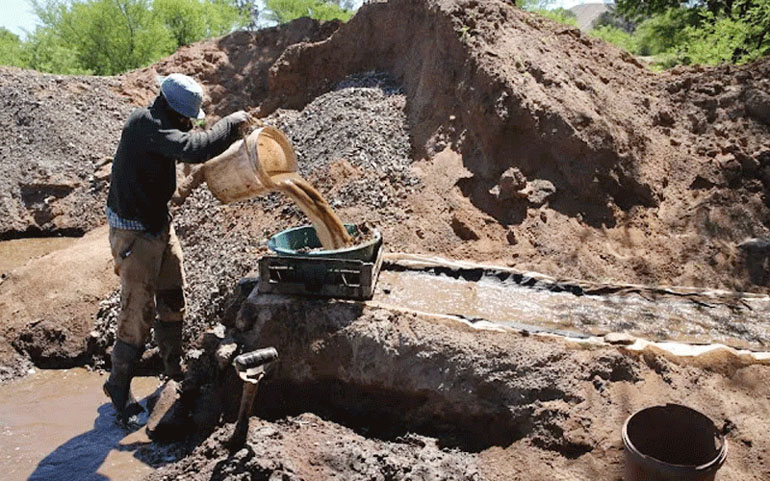
Tendai Gukutikwa
Health Reporter
VICTORIA Chitepo Provincial Hospital (VCPH) is recording a worrying surge in silicosis cases, with health experts identifying artisanal mining as the leading driver of the debilitating occupational lung disease across Manicaland.
Although consolidated statistics were not immediately available, senior physician and chest diseases specialist, Dr Stern Chisiyiwa, said the provincial referral hospital has witnessed a steady increase in the number of patients diagnosed with the condition in recent years.
Many of the cases are being referred from mining districts such as Chimanimani, Chipinge, Mutare, Mutasa and Nyanga, where artisanal and small-scale mining activities have become widespread.
Dr Chisiyiwa said the hospital is also receiving an increasing number of Zimbabwean artisanal miners working in South Africa, commonly known as mazamazama, who return home seeking treatment after developing respiratory complications.
“We have a significant problem and a rising trend of silicosis cases being treated at Victoria Chitepo Provincial Hospital. The major driver is artisanal mining.
“We have many artisanal miners in the province and beyond, and we are also experiencing a growing trend of South Africa-based artisanal miners, popularly known as mazamazama, who hail from Chimanimani and Chipinge.
“They come back home when they get ill and we diagnose them with silicosis.
“Most of them would have spent many days underground without proper personal protective equipment (PPE), exposing themselves to high levels of silica dust,” he said.
Silicosis develops after prolonged inhalation of respirable crystalline silica, a fine dust generated during mining, drilling, stone crushing and other activities involving rock and mineral extraction.
The dust penetrates deep into the lungs, where it causes inflammation and permanent scarring of lung tissue, gradually reducing a person’s ability to breathe.
Dr Chisiyiwa said artisanal miners are among the most vulnerable workers because many operate in unsafe conditions, often without adequate protective equipment and for extended periods underground.
“Most of the cases we are seeing are from artisanal miners, and I can confirm that the numbers are growing compared to previous years because with each year a person’s exposure to silica becomes longer.
“The chronic condition can take years to develop, sometimes 10 to 20 years, which is why we continue to record the cases.
“The damage accumulates over time and translates into more cases being diagnosed every year,” he said.
Health officials fear the true burden of the disease could be much higher than the number of cases reaching hospitals, as some miners may die at home or remain undiagnosed due to limited access to specialist medical services.
Silicosis is an irreversible and lifelong occupational disease that progressively damages the lungs and significantly impairs respiratory function.
Dr Chisiyiwa said the disease also increases the risk of developing tuberculosis, making prevention and early detection critical among workers exposed to silica dust.
“There is no cure for silicosis once the damage has occurred.
“It is a permanent, lifelong condition, and it is also a risk factor for tuberculosis. We make a clinical diagnosis based on the symptoms and history of exposure, and in some patients you can see the lesions on the lungs when they undergo a CT scan,” he said.
The condition can occur in different forms. Chronic silicosis develops gradually after years of exposure, while acute silicosis may occur after intense exposure to very high concentrations of silica dust over a relatively short period. Dr Chisiyiwa warned that the absence of symptoms does not mean workers are safe, as the disease often remains undetected for years before manifesting as serious respiratory illness.
“The danger with chronic silicosis is that people may continue working and accumulating exposure without realising the damage that is taking place in their lungs.
“By the time symptoms become severe enough to seek medical attention, permanent lung damage may already have occurred,” he said.
He urged miners and other workers exposed to silica dust to prioritise prevention by using appropriate PPE, undergoing regular medical screening and seeking medical attention as soon as respiratory symptoms emerge.
“Miners and other workers exposed to silica should undergo regular health screening and should not continue working in environments where they are exposed once symptoms or signs of the disease emerge.
“Prevention remains the most effective way of dealing with silicosis, particularly among artisanal miners who often operate outside the formal mining sector,” he said.
Dr Chisiyiwa added that the risk extends beyond mining, with stone crushers, borehole drillers and workers involved in cutting granite and other silica-containing materials also vulnerable to the disease.
Common symptoms include persistent coughing, shortness of breath, wheezing and progressive breathing difficulties, with many patients reporting worsening symptoms during cold weather.
Most of the silicosis cases being treated at VCPH involve men, reflecting the male-dominated nature of the artisanal mining sector.
Health experts are now calling for greater awareness, stronger workplace safety measures and improved access to screening services to curb the growing burden of the preventable disease among mining communities.