Chronicle Editor
Leonard Ncube, [email protected]
A TOTAL of 69 predator-proof bomas have been built in communities around Hwange National Park by Zimbabwe Parks and Wildlife Management Authority (ZimParks) in partnership with the International Fund for Animal Welfare (Ifaw) as part of efforts to tackle human-wildlife conflict in hotspot areas.
Human-wildlife conflict is prevalent in areas adjacent to game parks, especially in Hwange, Lupane and Tsholotsho districts that border Hwange National Park. Predators such as lions, hyenas and jackals are in the habit of killing livestock during the day. They sometimes follow the livestock to the cattle pens at night.
Some organisations have therefore come up with various interventions to mitigate the conflict. Human-wildlife conflict is any interaction between humans and wildlife that results in a negative impact on humans.
About 28 percent of Zimbabwean land is reserved for wildlife. Illegal settlements and infringement of these spaces by humans, competition for scarce resources, human encroachment into protected areas, illegal fishing, subsistence hunting, vandalism of perimeter fence, increase in human and animal population, climate change, change in land use patterns and poor livestock husbandry practices characterised by unprotected pens are some of the major causes of the conflict.
It has also been discovered by conservationists that a predator-proof boma made of a simple opaque plastic sheet supported by posts can protect livestock from predators.
Ifaw in partnership with ZimParks and other partners, came up with the predator-proof boma concept and some villagers in Mabale, Matetsi, Lupane and Tsholotsho have benefited.
The two partners also got a boost through a grant from Direct Aid Programme (DAP) from the Australian Embassy.
About US$30 000 has been invested in the boma project, which is being introduced across all hotspots.
In an interview, Ifaw community development officer, Mr Simbarashe Chiseva said recently that 40 bomas have been built under DAP.
The predator-proof boma is a simple yet innovative conservation initiative that uses thick plastic sheeting to help curb human-lion conflicts.
It is made of 25-metre-long and two-metre-high opaque canvas sheeting supported by poles around the perimeter of cattle pens.
The canvas material blocks predators’ visual access to penned livestock and this is a departure from the traditional kraals made of poles and acacia thorny branches.
In some communities, collective bomas have been set up where all villagers pen their cattle and goats. They periodically shift the position of the boma, which is mostly situated in fields to fertilise the Kalahari soils thereby boosting food security.
Predators, particularly lions, visualise and select their prey before launching an attack and the canvas material blocks their sight.
Villagers can now peacefully sleep at night knowing their livestock is safe from attack. Mr Chiseva said due to perennial droughts, villagers cannot afford to continue losing their cattle, goats, sheep and donkeys to predators.
“Faced with constrained crop production, rearing of cattle, goats and chicken is the complementary livelihoods strategy. However, the rebounding predators’ populations in Hwange National Park are imposing high costs on local communities, with 298 cases of cattle predation recorded between 2019 and May last year,” he said.
“To help curb losses and enhance the security of livestock at night, Ifaw is promoting the predator-proof bomas as a preventive physical barrier method. To date, 69 bomas have been installed in conflict hotspots in Ward 24 of Lupane, Wards 1, and 17 in Hwange and Ward 1 in Tsholotsho.”
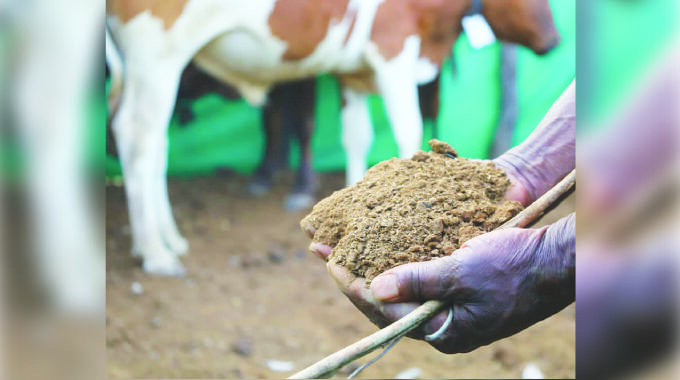
Mr Chiseva said the boma concept has helped secure approximately 700 cattle worth US$245 000 as livelihood assets for 69 households with about 400 people.
Mr Chiseva said the success of the project has inspired the co-operating partners to expand it to cover more communities affected by the human-wildlife conflict.
“From our humble beginnings with just 18 bomas, we have now installed an additional 51. This significant growth clearly demonstrates the Ifaw-ZimParks partnership’s unwavering commitment to promoting the peaceful co-existence of people and wildlife,” he said.
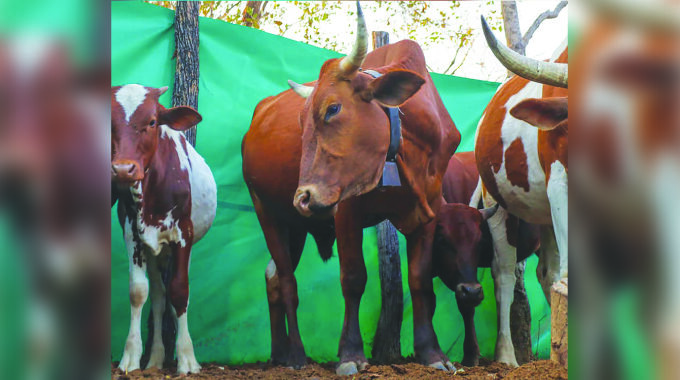
“Our efforts have yielded promising results where livestock predation has significantly decreased in all the villages where predator-proof bomas have been installed.”
Mr Chiseva said by training community guardians, the threat of livestock predation during daylight can be effectively reduced.
Ifaw and ZimParks recently trained 14 community guardians from the three districts.
Recently, Ifaw and ZimParks collared eight elephants and the data obtained will be used for mitigation purposes.
Mr Chiseva said over the past five years, Ifaw has supported ZimParks with rangers’ welfare, uniforms, patrol vehicles, equipment, training, food rations and other incentives.
Ifaw also supported the construction of the Makona Ranger on the Tsholotsho side of the national park, which has also resulted in zero poaching in the park.
According to ZimParks, close to 300 people were killed by wild animals and 308 were injured while 697 cattle, 1 113 goats and 118 donkeys were killed countrywide between 2019 and last year.
—@ncubeleon



 Online Reporter