Online Reporter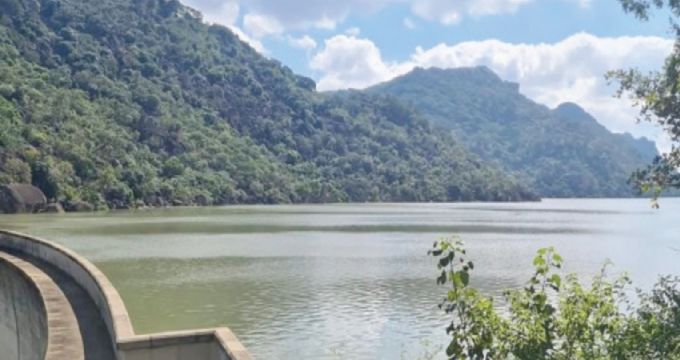
Sukulwenkosi Dube-Matutu [email protected]
MTSHABEZI Dam in Gwanda District is emerging as a key pillar in the Government’s rural industrialisation and climate-proofing agenda, with seven village business units established along its pipeline system to support food production, income generation and community livelihoods.
The dam, which also supplies water to Bulawayo, is supporting several economic activities, including irrigation farming, livestock production and horticulture projects in drought-prone Matabeleland South Province.
The projects form part of the Government’s “dam economy” concept, which seeks to ensure that every major water body contributes directly to local economic development through irrigation, fisheries, water reticulation and power generation.
Under the initiative, dams are no longer viewed simply as water reservoirs but as economic hubs capable of transforming rural communities through the productive use of water resources.
Mtshabezi Dam supports three irrigation schemes, including the 200-hectare Mtshabezi Irrigation Scheme, while seven village business units have been established along the pipeline supplying water from the dam.
One of the projects, Ntshene Village Business Unit in Umzingwane District, is already transforming livelihoods for families that previously depended solely on unreliable rain-fed agriculture in a region frequently affected by droughts and erratic rainfall.
Farmers at the business unit are producing a range of horticultural crops, including covo, onions and sugar beans for both household consumption and commercial sale.
Community members said the project has significantly improved household incomes, food security and nutrition.
“In the past, the only farming we knew was the one supported by rain-fed agriculture. This was limiting the amount of produce that we could record. It was also difficult for us to produce cash crops and general horticulture crops,” said Ms Nokuthula Ndlovu, a farmer at the scheme.
“The water was there in the dam, but we didn’t know that it could become a source of livelihood for us.”
She said Government support in establishing the village business unit had changed the lives of many families in the area.
“We have seen the Government come in and support us to establish a village business unit where we are growing a variety of crops. We sell these crops and reserve the rest for our families to eat,” she said.
“Our families now have access to a balanced diet and we are also able to fend for our families using the money we get from selling our produce.”
Another farmer, Mr Solomon Moyo, said the project has also improved water access for livestock, which is central to livelihoods in Matabeleland South.
He said before the project, cattle travelled long distances in search of water.
“Our cattle used to walk close to 10 kilometres to access water, but now we have water closer to our communities,” he said.
Matabeleland South Agritex deputy director Mr Mkhunjulelwa Ndlovu said maximising the use of water bodies was critical to strengthening the province’s agricultural economy and building resilience against climate change.
“Matabeleland South’s economy is mainly anchored on agriculture, both crop and livestock production. The province is located in natural regions four and five, which are characterised by low rainfall, meaning farmers rely heavily on irrigation farming,” he said.
“We are seeing water bodies like Mtshabezi Dam play a crucial role in supporting economic activities.”
Mr Ndlovu said apart from supporting irrigation schemes such as Mtshabezi, Zidlabusiku and Mzinyathini, the dam was also stimulating tourism and related economic activities.
Government has, in recent years, intensified efforts to climate-proof agriculture through irrigation development, dam construction and rehabilitation of existing water infrastructure as part of the National Development Strategy 2 (NDS2) and Vision 2030.
The strategy has become increasingly important as the country continues to experience the effects of climate change, including prolonged dry spells, recurrent droughts and shifting rainfall patterns that threaten food production.
Permanent Secretary in the Ministry of Agriculture, Mechanisation and Water Resources Professor Obert Jiri recently said Government’s objective is to ensure that every dam contributes meaningfully to local economic activity.
“Under our climate-proofing agenda, we have the notion that a dam must be an economy. We are rehabilitating dams and capacitating them into an economy for the surrounding communities,” he said.
“Government, working with partners, continues to climate-proof the agricultural sector through investing in irrigation infrastructure, with construction of dams remaining key.”
Prof Jiri said every major dam should support irrigated agriculture, fisheries and water supply systems for nearby communities and institutions.
“Every dam should have irrigated land for the economy of the dam to be complete. The irrigation schemes have to further operate as business units. Each dam is also expected to have a fisheries project,” he said.
Prof Jiri added that communities living near dams should directly benefit through improved domestic water supply, livestock watering and modernised reticulation systems.
Zimbabwe has more than 10 600 water bodies, many of which remain underutilised despite their huge economic potential.
Prof Jiri said the country’s dams have the capacity to irrigate nearly two million hectares of land, but only about 223 000 hectares are currently under irrigation.
Government has also identified renewable energy generation around dams as another critical pillar of the dam economy model.
For larger dams, hydro-electric generation is being explored, while smaller schemes are expected to support surrounding communities through solar-powered pumping and irrigation systems.
The expansion of irrigation and village business units is also expected to strengthen rural industrialisation, create employment opportunities and reduce migration from rural areas to urban centres.
@DubeMatutu