Patrick Chitumba Midlands Bureau
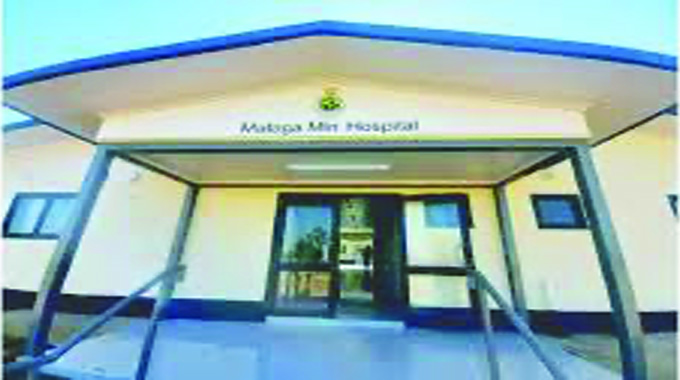
THE Mataga Mini Hospital in Mberengwa District, Midlands Province is significantly easing the burden on villagers who once had to travel up to 67 kilometres to access the nearest health facility.
Commissioned last year, the hospital provides secondary healthcare services and has already reduced the challenges facing local communities by bringing essential care closer to home.
Health officials say the facility is improving health outcomes while also alleviating the financial strain associated with long-distance travel.
Before the mini-hospital opened, residents relied on Musume Mission Hospital, 23km away, or Mnene Mission Hospital, a daunting 67km away.
For many families, the cost and time involved in reaching these facilities meant delayed treatment or going without care.
The new hospital now offers a more accessible option for thousands in the surrounding area, ensuring quicker access to treatment and reducing pressure on the district’s overburdened referral centres.
The opening of Mataga Mini Hospital forms part of ongoing efforts to decentralise healthcare services and improve access in rural areas across Midlands Province.
Today, Mataga boasts a 20-bed facility equipped with maternity, prenatal and postnatal wards, paediatric care, a medical imaging unit with mobile X-ray machines and even a fully equipped theatre, all powered by sustainable solar energy.
The facility stands as testimony to the Second Republic’s commitment to improving access to quality primary healthcare services, in line with the National Development Strategy 2 (NDS2).
Community members have welcomed the development, noting that shorter travel distances are making it easier for expectant mothers, the elderly and those with chronic conditions to seek timely medical attention.
Mr Shadreck Sibanda, a villager, said the hospital is bringing lasting benefits to villagers who now have healthcare services close by.
“Our community is benefiting greatly from the health services as well as the water we are receiving. As a community, we will play our part to ensure that the facility is well maintained and not vandalised. We have suffered for a long time, but now it is over,” he said.
Mr Trymore Nyathi from Mataga Business Centre commended the Second Republic for bringing healthcare services closer.
“For the people of Mataga, this is the first facility to offer secondary healthcare services. Previously, people had to travel long distances to Musume, Mnene or Zvishavane hospitals to access such services. We thank the Second Republic for this initiative,” he said.
Mberengwa East legislator Cde Tasara Hungwe said the mini-hospital speaks to the Second Republic’s philosophy of leaving no one and no place behind in terms of healthcare provision.
“We appreciate this positive development, which is enhancing access to healthcare services. This surely promotes early disease detection, better disease management, improved survival rates and a healthier, more productive population,” he said.
Cde Hungwe noted that even the state-of-the-art equipment at the hospital clearly demonstrates the Second Republic’s commitment to bringing healthcare services closer to the people.
“We now have state-of-the-art machinery that assists in treating diseases which previously forced people to travel to urban centres for medical attention,” he said.
Mberengwa Rural District Council chief executive officer Mr Thompson Maeresera commended the Second Republic for spearheading people-centred projects in the district.
He said that through its focus on devolution, infrastructure development and the implementation of NDS2, the Government continues to address healthcare disparities in rural communities.
“Long gone are the days when our people used to travel long distances to access primary healthcare. Now the service is just a stone’s throw away, and we commend the Government for investing in such a state-of-the-art health facility,” he said.
The hospital was constructed through a US$210 million partnership between the Government and NMS Infrastructure Ltd, a UK-based company specialising in medical infrastructure.
The project aligns with the National Health Strategy, which aims to improve health and wellness for all Zimbabweans through enhanced access, innovation and equity.
Each of the four mini-hospitals, including those in Runyararo (Chimanimani), Cowdray Park (Bulawayo) and Stone Ridge (Harare South), is designed to operate independently with its own water reservoirs, staff accommodation and brick incinerators for medical waste disposal.