

 Chronicle Editor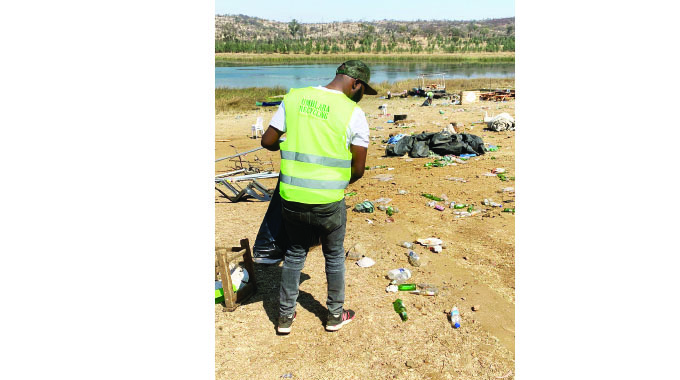
Simba Jemwa, Showbiz Reporter
WASTE is one of the biggest problems plaguing music festivals and events the world over, more so in Africa, but now, people are taking decisive action.
And the partnership between uMhlaba Waste Recycling and Matopos Sailing Club may very well be what the doctor ordered!
It looks like any other valley – rolling green hummocks bordered by woodland and a scenic water body. Dig down through the turf and scrape at the topsoil, however, and another picture emerges. Amid the dirt, you will find aluminum beer can pull tabs, fragments of bottle glass, and plastic.
But this is no ordinary rubbish. On this patch of ground, entertainment history was made last Sunday. This is Matopos Sailing Club, a rustic entertainment venue in the southern foothills of the Matobo Mountains that was the site of the Munch & Sip Food and Music Fest. More than 3 000 music fans and foodie enthusiasts gathered here for what could become a legendary day of music and revelries. But the festival and its audience left another enduring legacy behind when the music ended – mountains of rubbish.
The trash cans provided by the organisers proved woefully inadequate for the huge numbers of people who turned up. Piles of bottles, beer cans, food packaging, plastics, newspapers, and other forms of waste were abandoned and trampled into the dusty quagmire.

“After a day of fun and entertainment, many just walked off and left their litter and other items,” says Qinisani Ndlovu, founder of uMhlaba Waste Recycling who led a cleanup project on the site to clear it of the remnants of the festival.
Surprisingly, little remains of this huge sea of waste, but Ndlovu and his team found a distinctive smear of trash.

Fortunately for this event, Matopos Sailing Club and uMhlaba Waste Recycling recently agreed in principle to work together to safeguard the ecological system within the environs of Fraser Valley. Through the former’s Green Blue conservation initiative, the two entities worked hand in glove to minimise damage by revellers. The two are so steeped in the environmental movement and worked hard to ensure that revellers did not leave an environmental scar that may still be visible 50 years from now. But as one of the first big food and music festivals in the country, Munch & Sip set the tone for many of those that would try to follow in its footsteps.
For Munch & Sip, uMhlaba employed an army of litter pickers to help clean up at the end of the event, and an enormous waste management operation swung into action once the revellers went home.

But Ndlovu says the growing use of disposable plastics at festivals has been behind many of the waste problems large festivals struggle with. Drinks and food are sold in disposable plastic cups, bottles, and food containers, along with enormous amounts of plastic cutlery.
Festivalgoers discard wristbands, fancy dress clothing, glitter, ponchos, toiletries, mats, and sometimes tents all made from polymers that can persist in the environment for decades if not centuries. But uMhlaba not only cleans up after revellers — Ndlovu who founded the company, invented “Zimbabwe’s first” plastic recycling shredder to crush plastic bottles to produce High-Density Polyethylene (HDPE) benches.
Ndlovu has done wonders by making long-lasting HDPE benches out of used plastic. A bench made of HDPE, does not splinter or break and painting or winter storage is needed
And from the 72kgs of plastic waste reclaimed from Matopos Sailing Club, he has plans.
“From the plastic waste recovered from Matopos Sailing Club, we can manufacture three three-seater long-lasting HDPE benches for use by patrons.”
Ndlovu says other festivals must take similar steps to remove single-use plastics from their events. He thinks it’s practical to go as far as to stop the music several times during any event for “dancefloor clean-ups”. The music keeps playing if the ground is kept clean. “Switching to reusable cups, plates, and cutlery will help festivals produce just a fraction of the waste of other festivals,” says Ndlovu.
Matopos Sailing Club is aiming to become the country’s first zero-waste entertainment spot. Company director, Philip Phiri said they are looking at banning plastic cups and bottles in the long term by selling their patrons’ reusable cups or bottles they can bring back to the bar for refills.
Simply replacing disposable plastic cups and bottles with reusable ones may not be the solution, either, but it is the first step toward managing damage to the ecological system. @RealSimbaJemwa



 Blessing Chizhande
 Online Reporter