Nyasha Simbisai-Agriculture Correspondent
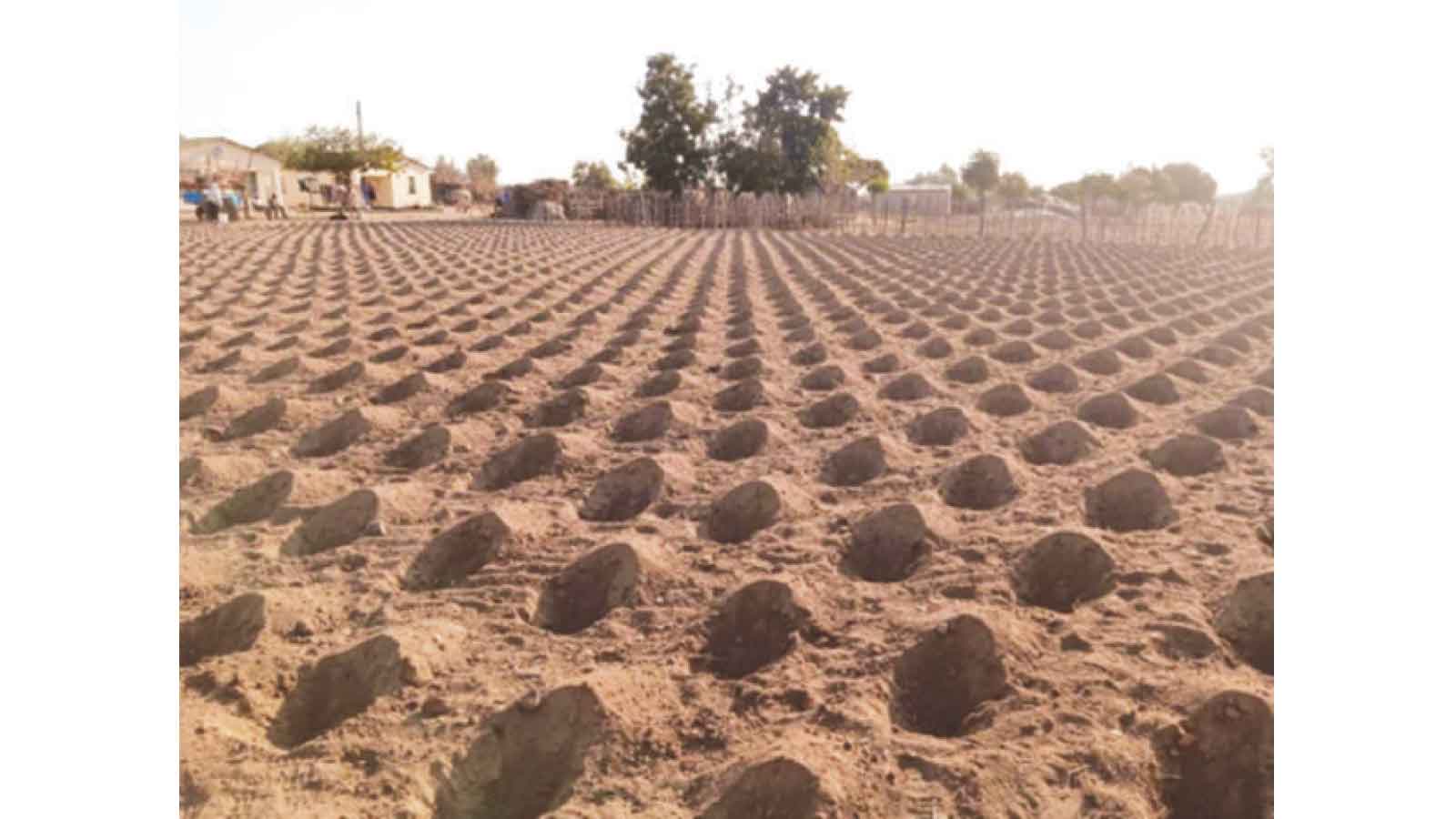
FARMERS have prepared nearly 9.5 million Pfumvudza/Intwasa plots ahead of the 2026/27 summer cropping season, as the Government steps up measures to safeguard food security against an anticipated El Niño-induced drought.
The latest Agricultural and Rural Development Advisory Services (ARDAS) report, released on Friday, shows that 9 477 090 plots had been prepared by the end of the reporting week, representing 59 percent of the national target of 16 million plots.
More than 3.7 million farmers have so far participated in land preparation activities, signalling a strong uptake of the climate-smart farming programme as the Government seeks to build resilience against possible rainfall shortages.
The preparations are being supported by the accelerated delivery of inputs under the Presidential Inputs Programme, with maize seed deliveries already exceeding the national target. According to the ARDAS report, 3 198 tonnes of maize seed had been delivered against a target of 3 000 tonnes, representing a 107 percent achievement.
The progress comes as the Government implements six strategic drought mitigation pillars, with accelerated climate-smart production at the centre of efforts to conserve moisture, improve soil health, and sustain agricultural productivity under potentially difficult weather conditions.
Farmers have prepared 592 318 hectares under conventional Pfumvudza/Intwasa practices, while a further 163 627 hectares have been prepared through mechanised conservation agriculture, bringing the combined area to about 755 945 hectares. Masvingo and Mashonaland West are among the leading provinces, with each having prepared about 1.7 million plots. Mashonaland Central, Matabeleland North, and Manicaland have also surpassed one million prepared plots each.
The drive is also being accompanied by efforts to improve soil health and moisture retention, with 388 229 farmers having collected mulch while 30 976 have applied agricultural lime to improve soil fertility. The Government is promoting minimum tillage, organic manure, compost application, and precision fertiliser management as part of efforts to improve soil structure, conserve moisture, and strengthen crops against weather-related stress.
At the same time, the Ministry of Agriculture, Mechanisation and Water Resources Development is accelerating irrigation development to reduce the agricultural sector’s dependence on rainfall. A total of 14 156 hectares of irrigated maize has already been planted against an initial target of 80 000 hectares, with Masvingo recording notable progress after reaching 72 percent of its provincial target. The irrigation drive is expected to provide an additional buffer for cereal production should rainfall become erratic during the season.
Agricultural extension services are also being intensified to ensure farmers receive timely and location-specific advice. During the reporting week, 56 245 farmers participated in Farmer Field School sessions, while extension officers conducted 17 015 field visits, 2 098 demonstrations, and 6 698 farmer-led experiments.
The Government is also strengthening community-based early warning systems through agricultural extension officers, traditional leaders, and local communication platforms to ensure farmers receive weather information in time to guide critical production decisions.