Online Reporter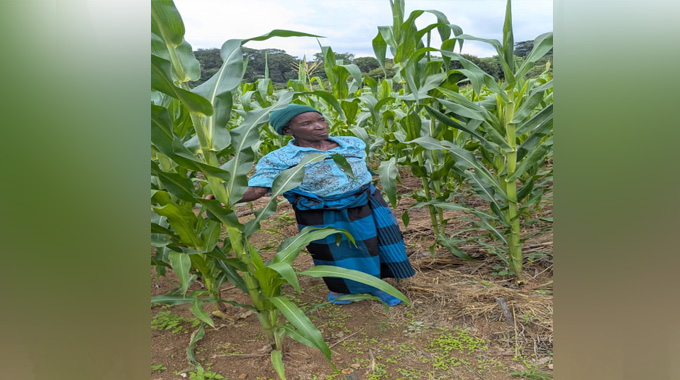
Patrick Chitumba, [email protected]
At 96 years old — an age when most would have long retired — Gogo Celia Siziba still rises with the sun, making her way to her fields in Dhiro Village, under Chief Mapanzure in Zvishavane District.
Bent by age but not by circumstance, she tills the land with silent resolve — proving that innovation, not youth, is the true engine of climate-resilient farming.
Through the Government-led Pfumvudza/Intwasa Programme, Gogo Siziba has emerged as an unlikely but powerful champion of conservation agriculture in the Midlands Province. Her reward: thriving crops, improved household food security, and renewed hope for her family’s future.
Across six Pfumvudza/Intwasa plots covering six hectares, maize, groundnuts and roundnuts stretch confidently across her fields, a living testimony to what climate-smart agriculture can achieve, even in the hands of the elderly.
“I decided to embrace conservation farming because I wanted to secure food for my family,” said Gogo Siziba. She looks after her grandchildren with the help of her younger sister.
“I am expecting at least five tonnes per hectare of maize.”
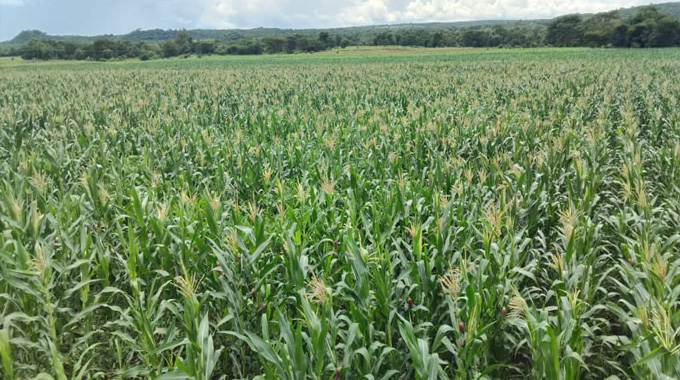
If realised, the harvest will not only feed her household but also generate surplus income — easing the burden of caring for her grandchildren and strengthening her family’s resilience in uncertain climatic times.
Pfumvudza/Intwasa has become a cornerstone of Zimbabwe’s climate adaptation strategy, targeting 1,8 million hectares of maize and supporting more than three million rural farmers and 500,000 peri-urban producers.
Built on conservation agriculture principles such as minimum tillage, mulching and crop rotation, the programme is designed to help farmers withstand erratic rainfall and recurring droughts.
For Gogo Siziba, the programme has been transformative.
“Through the extensive training and ongoing support from Agritex officers, I have perfected conservation agriculture techniques. They have walked with me every step of the way,” she said.
Her success has not gone unnoticed.
Farmers from across Zvishavane District now frequent her homestead, eager to learn practical lessons from a woman old enough to be their grandmother and wise enough to farm for the future.
Beyond Pfumvudza/Intwasa, Gogo Siziba’s success reflects the broader thrust of Government interventions aimed at transforming agriculture under the Second Republic. Programmes such as Command Agriculture, the Presidential Input Scheme, Climate Proofed Agriculture, and the National Development Strategy 2 (NDS2) have prioritised food self-sufficiency, nutrition security and climate resilience at household level.
Through Pfumvudza/Intwasa, farmers receive seed, fertiliser and technical guidance, while complementary initiatives under Command Agriculture support large-scale production to stabilise national grain reserves. Together, the programmes are designed to ensure that Zimbabwe not only feeds itself but also builds buffers against droughts and erratic rainfall patterns driven by climate change.
Agricultural and Rural Development Advisory Services’ officer Mrs Ellinah Makusha said Gogo Siziba’s fields reflect the broader impact of Pfumvudza/Intwasa on national food security.
“As a country, we must produce enough food for our own consumption and create a surplus for export. That is why the Government introduced programmes like Pfumvudza/Intwasa and Command Agriculture,” she said.
Mrs Makusha said women remain central to Zimbabwe’s agricultural transformation, with Gogo Siziba standing as a shining example.
“These two elderly sisters are defying expectations with sheer determination. They work the land together, assisted by three grandchildren, and their output speaks for itself,” she said.
Mrs Makusha noted that one of the programme’s strengths is its timing.
“Preparations begin well before the rains. Farmers dig holes and mulch gradually, without strain, ensuring they never miss the first effective rains,” she said.
The Pfumvudza/Intwasa Programme continues to gain momentum across Zvishavane District as more farmers adopt climate-smart practices to confront climate change head-on.