Online Reporter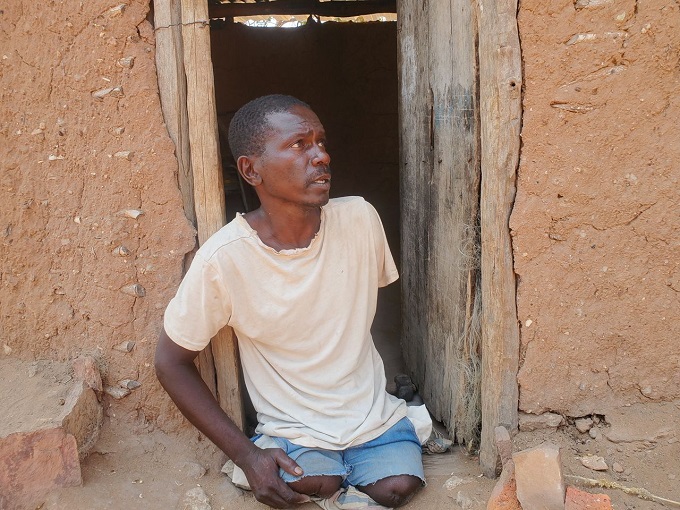
Theseus Shambare recently in BINGA
IN the wild thickets of Binga’s Kavira Forest, near the shimmering waters of the Mlibizi River, life and death often walk side by side.
For Mr Winders Mleya, a humble cattle herder, that fine line blurred one September afternoon in 2022 when he found himself cornered by elephants and dragged by a crocodile in a harrowing encounter that changed his life forever.
It was around 1PM, and Mr Mleya and a friend were herding cattle near the river, taking turns to fetch food and watch over their animals in a landscape increasingly parched by drought and heat.
“On that day, it was my turn to cross the river and set fishing nets, not knowing danger was surrounding me,” he said, the fear still etched in his eyes.
The elephants, desperate for water, blocked his path, leaving him trapped between the river and the forest, heart hammering with panic.
“I thought fast and jumped into the water to escape,” he said, the memory of cold river currents and splashing trunks vivid on his lips.
But as he swam, a crocodile lunged from below, clamping onto his left leg and dragging him under, the river suddenly turning from refuge to battlefield.
“I screamed and fought with everything I had,” he whispered.
“I pushed its eye and somehow it let go. I swam with all my strength and kept praying for my life.”
At the hospital, doctors revealed the full extent of the damage: the crocodile had completely severed his left hand and left leg, leaving him in a critical state.
His remaining leg, though still attached, had suffered severe tissue damage and water retention in the veins, forcing doctors to amputate it as well.
Mr Mleya was left with only one hand, the sole limb with which he would now navigate the world, carry out daily tasks and face the long road to recovery.
“When I woke up, I couldn’t believe what had happened,” Mr Mleya said.
“I thought my life was over, but I also knew I had survived for a reason.”
A home of clay and courage
Today, Mr Mleya lives in a humble home a short distance from the Mlibizi River. Its clay floor smooth and dusty beneath his one hand, its wood and mortar walls rough and uneven, patched with mud and clay and no proper roof to shield him from the harsh sun or rain.
Small, square openings allow shafts of sunlight to illuminate the interior, highlighting the uneven surface of the clay floor, the smell of earth and firewood and the dust that swirls whenever he moves.
With no wheelchair or crutches, Mr Mleya uses one hand to drag himself across the floor, a painstaking process that exposes him to dirt, germs and the risk of infection.
The home lacks modern amenities such as running water or electricity, yet Mr Mleya seems surprisingly content.
“I’m grateful for what I have,” he said, sitting on a low wooden bench.
“It keeps me dry and safe. I don’t ask for more.”
Daily life is a struggle; fetching water, preparing meals and tending his small garden require immense effort and he depends heavily on neighbours’ help for chores that are impossible with one hand.
“I move slowly, but I still work on the field,” he said proudly, gesturing towards a small patch where he grows drought-tolerant crops, a testament to his determination and resilience.
Mr Mleya lives with his aged mother and a niece.
Nature, climate and human survival
Binga’s worsening droughts and shrinking forests have intensified human-wildlife conflict, bringing elephants and crocodiles closer to settlements.
“The elephants are coming closer because the forest is dry,” said Mr Lukeman Kavira, a villager.
“Sometimes they destroy fields or livestock looking for water.”
Mr Mleya’s story illustrates how climate stress transforms once-familiar landscapes into sites of danger and survival.
In response, the Climate Smart Resilience (CSR) Project, implemented in Saba and Siansundu wards by the Zimbabwe Red Cross Society (ZRCS), the Finnish Red Cross (FRC) and Danish Red Cross (DRC), has sought to protect communities while promoting climate adaptation.
The CSR project, running in Binga since 2022, is designed to enhance resilience in communities affected by climate change, helping individuals, families and communities cope with climate-induced disasters, access critical services and build sustainable livelihoods.
Inclusive sanitation for persons with disabilities
“We realised that climate stress affects everyone, including persons with disabilities like Mr Mleya,” explained Ms Spiwe Sibanda, Red Cross district field officer.
“One major challenge was sanitation,” she added, noting that most homes lacked disability-friendly toilets and that open defecation remained widespread.
Through the CSR project, 50 individuals with disabilities in Binga have been supported with improved latrines, promoting dignity, hygiene and health and one is currently being constructed at Mr Mleya’s home.
“It will help me live better,” he said. “I will not have to crawl to the bush anymore. I can now stay healthy and safe.”
According to the 2025 Zimbabwe Livelihoods Assessment Report, Binga District has the highest rate of open defecation in the country at 80.1 percent, despite national declines from 29 percent in 2020 to 24 percent in 2025.
Support through climate-smart agriculture
The CSR project also trains farmers in climate-smart agriculture, introducing drought-tolerant crops like millet, sorghum and cowpeas, and teaching conservation farming techniques to retain soil moisture and improve harvests.
“I now plant small grains that survive even when rains fail,” Mr Mleya said.
“I can feed my family even during drought and I feel proud that I’m still able to contribute.”
These interventions aim to reduce dependence on unstable river resources and minimise human-wildlife conflicts, helping families like Mr Mleya’s adapt to a changing climate.
Water access as a lifeline
A Zinwa piped water extension project has brought clean, safe water to communities near the Mlibizi River, reducing the need for dangerous river trips and improving hygiene and health.
“Before, we fetched water from the river where my son was attacked,” said Mr Mleya’s mother, MaNcube.
“Now the tap is near our home and I no longer fear the river.”
Ms Sibanda emphasised that reliable water access is crucial for climate resilience, enabling households to farm, maintain hygiene and avoid dangerous encounters with wildlife.
“When water is near, people don’t risk their lives fetching it,” she said.
A life of resilience
Despite his disability, lack of mobility aids and humble home, Mr Mleya demonstrates remarkable resilience and agency, dragging himself across the clay floor to tend his crops and assist with chores.
Children gather around him, listening as he recounts surviving both elephant and crocodile encounters and how he learned to live with nature’s whims.
“I tell them not to hate the animals,” he said.
“They were thirsty, just like us.”
His story underscores the urgent need for climate-resilient interventions that protect both people and wildlife while safeguarding vulnerable populations.
A suspenseful reflection
Mr Mleya has become a symbol of courage and adaptation in Binga, where climate stress is unrelenting and resources are scarce.
Programmes like climate-smart agriculture, inclusive sanitation and Zinwa water provision are slowly transforming life along the Mlibizi River.
Even in a home with clay floors, wooden walls and mortar, lacking modern comforts and with only one hand to navigate life, Mr Mleya remains determined.
“I may have lost my legs and my hand, but I haven’t lost my spirit,” he said.
As the sun sets over the Mlibizi River, the same waters that nearly claimed his life glimmer with a quiet menace, reminding him and all who listen that nature always keeps its secrets.
“The river taught me a lesson,” Mr Mleya whispered.
“We must live with nature, not against it… but sometimes, it chooses who survives.”
And with that, he drags himself slowly towards the fading light, leaving behind a story of courage and a lingering question: who will the river choose next?