Online Reporter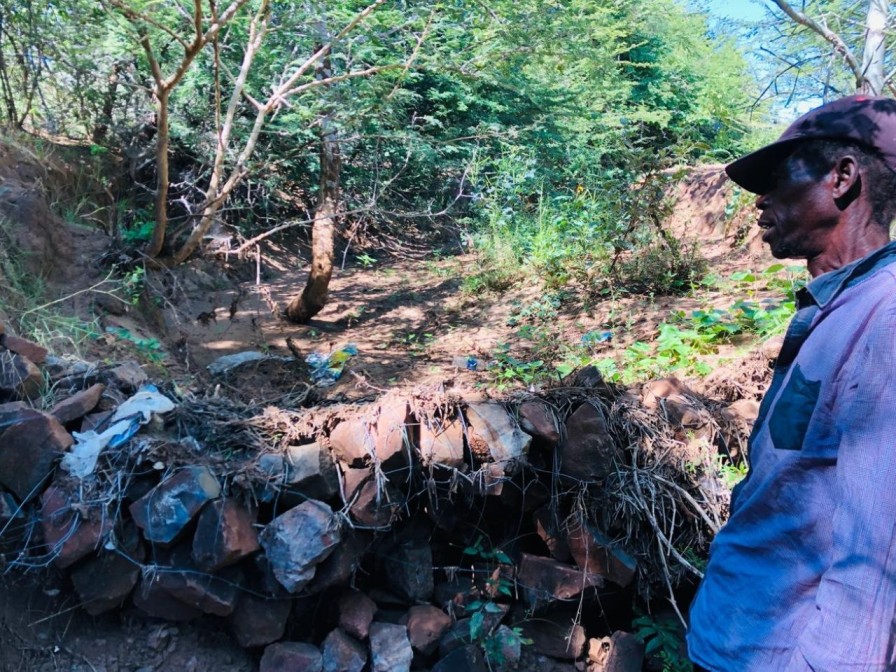
Lungelo Ndhlovu Features Correspondent
IN Mabale, Hwange District, Matabeleland North Province, traditional leadership, volunteer community rangers and locals have spent generations preserving customary “taboos” to protect forests, regulate grazing areas, prevent fires, guide tree harvesting for medicinal use and restore damaged land.
These community-led practices, rooted in ancestral knowledge systems and passed down through generations, continue to shape how local people manage forests that sustain livelihoods and wildlife even today.
Under Chief Dingani Nelukoba’s traditional authority, locals in Mabale have protected a forested watershed stretching approximately 15 kilometres along the Gwayi River from the Gwayi River Hotel area towards Mabale, extending towards the Gwayi to Shangani Dam area along the Bulawayo to Victoria Falls Road.
This locally protected watershed forms part of the wider Gwayi River system, a 463-kilometre-long tributary of the Zambezi River that drains Matabeleland North’s Kalahari sand landscapes and contributes to the broader Zambezi Basin. The Gwayi-Shangani sub-basin covers approximately 54 610 square kilometres, highlighting the wider ecological importance of the river system.
The watershed includes villages such as Somhawini, Godweni, Matsheni Makhulu and Chongwena, where communities have relied on the river landscape for generations. According to Headman Oliver Tshuma, who serves under Chief Nelukoba’s traditional leadership, the area has supported communities since the early 1900s, sustaining livelihoods, cultural practices and local water sources.
“The forests have always been important to us. They provide firewood, poles for our roofing trusses, medicinal herbs, food, fencing poles and shelter for wildlife,” Mr Tshuma said.
He also indicated that forest protection in Mabale has long been guided by cultural values that view nature as a shared resource rather than something to be exhausted.
“Our ancestors understood that forests were not just places where people collected resources. They were part of life and had to be protected so that future generations could also benefit,” he explained.
Building on these traditions, Mr Tshuma said Mabale’s approach to forest conservation is rooted in generations of customary rules that have shaped how communities interact with the environment, indicating that trees like umphafa, isihlangu and mupandapanda, are traditionally protected, with some regarded as “taboo” to bring into homesteads or use for household purposes.
According to Mr Tshuma, what makes Mabale’s conservation model distinctive is the way it combines traditional leadership structures with partnerships that support community-led natural resource management where conservation efforts have been strengthened through collaborations with organisations such as CIRAD and the Campfire Association initiatives, which help communities benefit from wildlife and natural resources.
“We are working together with organisations such as CIRAD and the Campfire Association. For example, under Campfire, when animals are killed through trophy hunting, the whole of Hwange District sits down, all 19 wards, to determine how benefits are shared. A significant percentage is allocated to the community where the animal was killed, with proceeds channelled through Campfire. The responsibility is then left to us as wards to decide how that money should be used. For example, our latest projects included rebuilding a local dam, repairing roads and constructing bridges. Now we will be focusing on building a school block at Sianyanga Primary School,” said Mr Tshuma.
While customary conservation systems exist across parts of Matabeleland North, independent environmental monitoring shows that communities experience different levels of pressure from threats such as veld fires, land-use change and settlement expansion.
In Hwange District, 194 high-confidence VIIRS fire alerts (satellite-detected thermal anomalies or hotspots on Earth’s surface) were recorded between 30 June, 2025 and 29 June, 2026. According to available fire monitoring data, this level is within the range observed in previous years dating back to 2012, with the peak fire season typically beginning in early August and lasting about 13 weeks.
According to the Environmental Management Agency (EMA), Mabale’s Ward 17 has recorded fewer veld fire incidents compared to neighbouring Wards 18 and 19, where fire pressures are influenced by surrounding landscapes, including areas near Hwange National Park and safari zones.
Mrs Chipo Mpofu-Zuze, Environmental Management Agency manager for Matabeleland North Province, said community participation has been central to reducing fire impacts and strengthening local conservation efforts, as forest stewardship directly contributes to fire prevention.
She said communities help reduce fire risks through early detection of outbreaks, maintaining fire breaks and enforcing customary rules that regulate the use of fire for activities such as land clearing. Because residents actively manage and protect woodland areas, she said they are also more likely to monitor ignition risks, control how fire is used, and respond quickly when outbreaks occur, preventing small fires from spreading into larger veld fires.
“Veld fire incidences in Mabale Ward 17 remain low compared to Wards 18 and 19, which cover Hwange National Park and Safari areas. The main causes of veld fires in Hwange include poaching, charcoal making and activities within state forests. As part of our mission, stakeholder participation is central to veld fire management.
“We collaborate with the local authority, Forestry Commission, ARDAS, Zimbabwe Republic Police, Zimparks, traditional leaders and communities in fire prevention and awareness. Communities are regarded as the first line of defence, and their active involvement is crucial in making veld fire prevention a reality,” said Mrs Mpofu-Zuze.
She said EMA works with traditional leaders, local communities, the Forestry Commission, local authorities, police and wildlife authorities to strengthen fire prevention through awareness campaigns, community meetings, radio programmes and the construction of fire guards.
“Traditional leaders, in particular, play a vital role in environmental protection. They are custodians of cultural values and practices that promote respect for the land and its resources. By preserving cultural traditions that emphasise harmony with nature, traditional leaders help instil discipline and responsibility within communities.
Their authority ensures compliance with fire prevention measures, while their cultural influence strengthens community commitment to safeguarding the environment for future generations.
“To educate and empower communities, EMA has conducted fire awareness campaigns in Hwange, working closely with Hwange RDC, Forestry Commission and Zimparks. These efforts have been complemented by radio programmes on community and commercial stations, reaching wider audiences. Additionally, veld fire orders have been issued to enforce compliance with fire guard construction and other pre-suppression activities ahead of the fire season,” Mrs Zuze-Mpofu said.
EMA records show a decline in fire-affected areas in Matabeleland North, from 399 622,79 hectares in 2022 to 81 022,23 hectares in 2025. In Hwange District specifically, affected land decreased from 90 746,89 hectares in 2023 to 47 781,65 hectares in 2025.
For Mabale, the reduction in fire impacts is significant as uncontrolled veld fires remain one of the major drivers of woodland degradation and forest loss in the region. The combination of customary rules, community enforcement, and local participation in fire prevention has helped strengthen protection of the Gwayi River landscape.
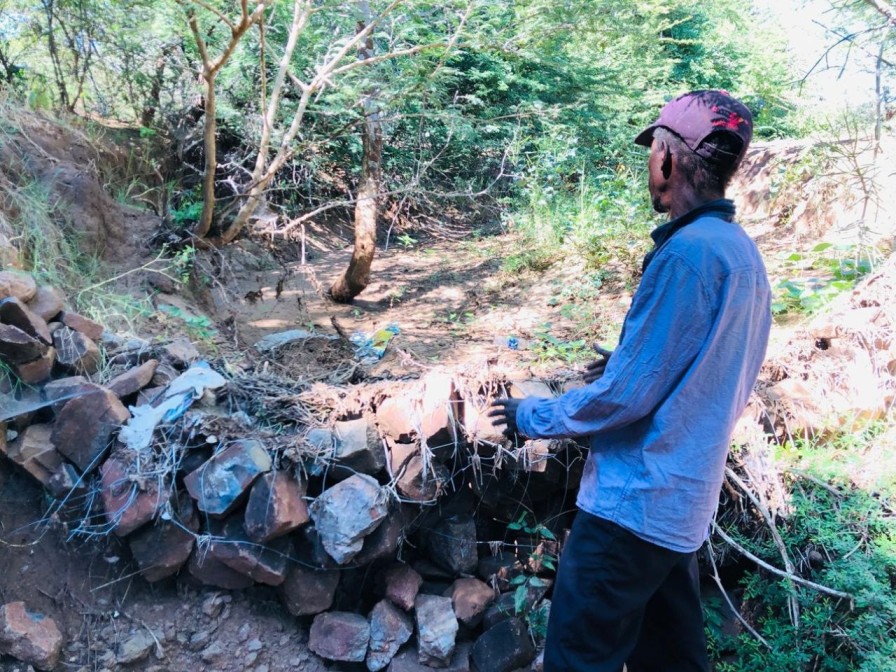
For Mabale locals, however, fire reduction is not only the result of modern interventions. They say it is also linked to cultural expectations that communities have a responsibility to protect forests shared by the whole community. This includes maintaining physical barriers against erosion. The background of this conservation effort involves building gabions to stop soil erosion and gullies that threaten the vital watersheds of the Gwayi River.
Mr Musungwe Sithole from Masikili Village in Mabale’s Ward 2 and a creative facilitator with the Soft Foot Alliance said traditional practices continue to guide how people interact and manage forest resources.
“Our tradition plays a role in protecting the forests. When it comes to certain medicinal trees like khalimela, there are rules around harvesting. People are only allowed to harvest from specific sides, such as the east and west, to avoid destroying the tree and allow it to grow again,” Mr Sithole said.
He said if a tree has been harvested and is regenerating, people are not allowed to interfere with it as it is considered a taboo.
“People understand that if they destroy the forest today, the community will suffer tomorrow.”
Mr Sithole added that Chief Nelukoba’s traditional authority plays an important role in guiding how forests, grazing areas, farmland and other communal resources are used. He said traditional leaders help resolve conflicts, enforce customary rules and mobilise communities around conservation activities. This management includes stopping uncontrolled tree cutting and preventing farmland from spreading into the forest, which is often a point of tension for families needing more space for crops.
Mr Blessing Mathe, a Conservation Officer with the Forestry Commission, said Mabale’s conservation approach is strengthened by the involvement of traditional leadership and community ownership.
“Mabale’s conservation approach stands out because of the strong involvement of traditional leadership, volunteer ranger systems and community ownership of conservation initiatives,” Mr Mathe said.
He said traditional leaders regulate activities such as tree harvesting, grazing, farming and use of communal resources.
“They help establish and enforce local rules governing tree harvesting, grazing, farming activities, and the use of communal resources. They also mobilise communities for conservation activities, resolve resource-use conflicts and promote values that support environmental protection.”
According to Mr Sithole, the volunteer rangers, working alongside these leaders, act as the eyes and ears of the forest.
They promote sustainable use and monitor for illegal activities such as poaching or unauthorised charcoal production. However, even with this strong system, the pressure on forests due to an increasing population and livestock demands remains a significant challenge. Some households, struggling for income, find themselves at odds with the rules when tempted by activities like brick-making, making furniture and sculptures from trees and selling charcoal.
To counter these pressures, the Forestry Commission works to reduce reliance on forest resources through regulation and restoration programmes.
“To reduce deforestation, strict regulations are enforced to prevent unauthorised access to forest areas. Community members are not permitted to enter forest reserves without prior approval from the forester. Anyone found within a forest area without permission is regarded as a poacher and is subject to relevant legal action,” said Mr Mathe.