Keutsepile-mang Ndebele
Zimbabwean football has lost one of its most respected architects. Coach Roy Barreto passed away a few days ago, leaving behind a career that spanned generations, clubs, and borders. From the terraces of Barbourfields to the dugouts of South Africa’s Premier Soccer League, Barreto’s name was synonymous with discipline, results, and an uncompromising love for the game.
A journey across two nations
Barreto’s coaching CV reads like a tour of Southern African football giants. He served as assistant to Reynold Furbish with Zimbabwe’s national “Dream Team”, before taking charge at home and abroad.
He lifted league titles with Zimbabwe Saints, Highlanders FC, and Amazulu FC — three clubs with fiercely different identities, yet all united under his leadership. His reach extended into South Africa, where he coached Free State
Stars and famously led Orlando Pirates to a championship.
To win at that level, in different leagues, with different squads, is the mark of a coach who understood people as much as tactics.
The Barreto method: Discipline first, beauty later
If there was one phrase that followed Barreto to every training ground, it was this: “Win at all costs.”
Players who played under him describe a coach who would accept “ugly” football if it delivered three points. Only after the results came in would he demand the football be played “the right way.” It was pragmatism with a purpose.
He was strict, but fair. Everyone was treated the same, from the star striker to the last reserve. He was thorough: sessions were planned, opponents were analysed, and no detail was too small. Yet he was also a great motivator.
National team players from his era still speak of the rapport he built, the respect he commanded, and the belief he instilled.
Those who watched him on match days will remember another trademark: the cigarette. Under pressure, Barreto would chain-smoke on the touchline — a picture of tension, focus, and total investment in the result.
A teacher of coaches
Barreto’s influence did not end with the final whistle. He was a role model for a generation of Zimbabwean coaches.
With Barry Daka and Cosmas Zulu as his assistants, he mentored men who would go on to shape the game themselves: Bongani Mafu, Charles Mhlauri, Benjamin Moyo, Willard Kumalo, and several former Highlanders players who later took up the whistle.
He believed in passing knowledge on. He was well-travelled and well-read, always learning, always watching, and always willing to share what he knew. That is why so many coaches today still quote “what Coach Roy used to say.”
The legacy
Roy Barreto was more than a trophy collector. He was a builder of character, a tester of mentality, and a believer in accountability.
He respected the jersey, he respected the supporters, and he demanded that his players do the same.
In an era when football can sometimes feel transactional, Barreto reminded us that coaching is also about standards, about preparation, and about leaving a club better than you found it.
To his family, to his former players, and to the clubs he served — Zimbabwe Saints, Highlanders, AmaZulu, Free State Stars, Orlando Pirates, and the Warriors — we say thank you.
Rest in Peace, Coach Roy Barreto.
The game will remember you not just for the silverware, but for the solid foundation you laid for Zimbabwean football.
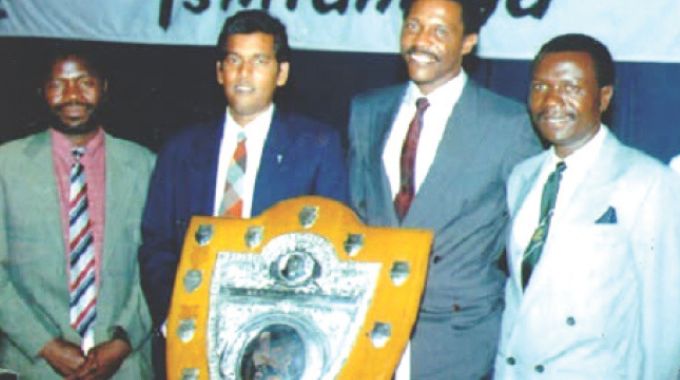
‘A COACH, A MENTOR, A LEGEND’ . . . remembering Roy Barreto