Sundaymail Editor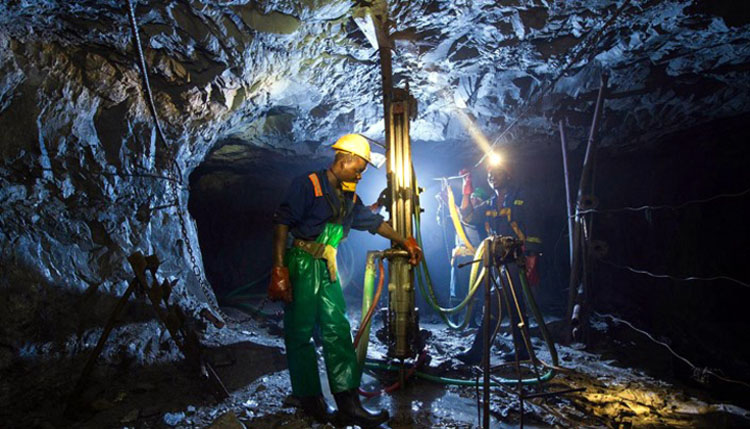
Tendai Chara
ZIMUNYA communal lands, which is surrounded by the Vumba and Fern Valley mountains, is home to beautiful mountain ranges, valleys, perennial rivers and forests.
Located some 15 kilometres south of Mutare, it is also home to the Guta raJehovha shrine, a mystical religious commune that has stood the test of time.
Established by the late famous faith healer, Mai Chaza (real name Theresa Nyamushanga), in 1956, the commune still attracts the attention of religious followers from across the country and beyond.
Amidst this natural beauty is a community that is determined to improve their livelihoods.
The Kadzeta mining project, which the community started from scratch and is run on a voluntary basis, is a shining example of how seemingly disadvantaged communities can come together, pool the little resources they have at their disposal and work very hard for the betterment of their lives.
When The Sunday Mail Society visited Zimunya recently, it discovered one of the country’s most determined communities.
Here is a community that does not want to depend on handouts from Government and non-governmental organisations.
Some members of Zimunya have shown a rare determination to liberate themselves from the shackles of poverty through organised mining.
The majority are old enough to have elected to engage in simple and light work.
However, they have taken upon themselves the onerous task of removing gold ore from a 23-metre mining shaft.
The members, including the elderly, of this mining project are not paid a dime, since they are doing this on a voluntary basis.
Samuel Tsopo (68) explained why he left his home and family to temporarily camp at the mine, offering free labour.
“The problem with most people is that they want instant returns. Since 2020, we have been doing voluntary work. I know that a time will come when we will start to make money and share it among ourselves,” Tsopo said.
Matthias Dzenzi, who is responsible for the day-to-day running of the mine, chronicled how the project began.
“This project came about when one of our elders told us that in the 1950s German used to mine gold in this area. After a thorough search, we found a disused mining shaft and from there on, we were determined to open our own community mine,” Dzenzi said.
After the discovery, a series of meetings were held in which every member present pledged to contribute towards the registration of the mine.
“First, it was money for the prospecting licence. Members sold their goats, cattle — anything — as they pooled together the resources that we needed to kick-start the project,” Dzenzi added.
After getting the licence, members of the project, who were nine by then, started mining.
Noel Tapomwa (68) reflected on the early days.
“We had nothing, virtually nothing. It was very hard and some of us at one time nearly gave up. We did not have enough food and in terms of equipment, we had practically nothing,” Tapomwa said.
The group’s resolve received a major boost when a gold belt was discovered after 11 metres.
“It was the boost that each and every member desperately wanted. Now that we knew that our claim had gold, we were forced by the discovery to work like donkeys,” he reminisced.
A year later, members of the project have now reached 23 metres, with a geological survey indicating that the first major gold belt will be reached about 25 metres.
A lot of odds are, however, staked against the battle-hardened miners.
Without money, they are living at the mercy of well-wishers who regularly chip in as and when they see fit.
With the nearest gold mill some 35 kilometres away at Gondo Village, the miners also lack basic machinery, diesel to run the only water pump they have and money to buy explosives.
Electricity pylons are about 600 metres away from the mine, and the community hopes that one day they will get enough money to connect to the grid.
Among the voluntary workers are specialist drillers and blasters who were trained to handle explosives.
Despite these setbacks, 65-year-old Dadai Dzenzi is adamant the project will not die a natural death.
“I sold my cattle and I cannot turn my back on this project. Failure is not an option. We are going to dig until we cannot dig anymore,” he said.
But some locals are sceptical about the project.
Dzenzi added: “Some of the people that are not part of this project often mock us, saying that we are doing this in vain. However, there are people that have stood by us since this project started. Apart from the money, these people are encouraging us to work hard and realise our goal.”
Alfred Choga is one of the locals that have chipped in, both in cash and in kind.
“At first, I did not want to get involved. However, the zeal, determination, commitment and never-say-die attitude that these people have drove me to think otherwise. They will certainly realise their dream,” he reckons.
Paulus Emias Nyathi, a miner and mining researcher who is also the president of Serious Monitoring All Resources Together (SMART), an organisation that advocates for maximum utilisation of the country’s natural resources, applauded the efforts that are being made by the Zimunya community.
“The Bible says where there is a will, there is a way. Give this community a year and you will see what they would have achieved. We are helping them, for free, with the technical aspects of mining,” Nyathi said.
“From the research that we conducted, the community can actually sink three major shafts at this claim. This area is rich and my advice to the community is that they must soldier on. Basing on my interactions with the community, I am sure that they can make it.”



 Online Reporter