Veronica Gwaze, Zimpapers Sports Hub
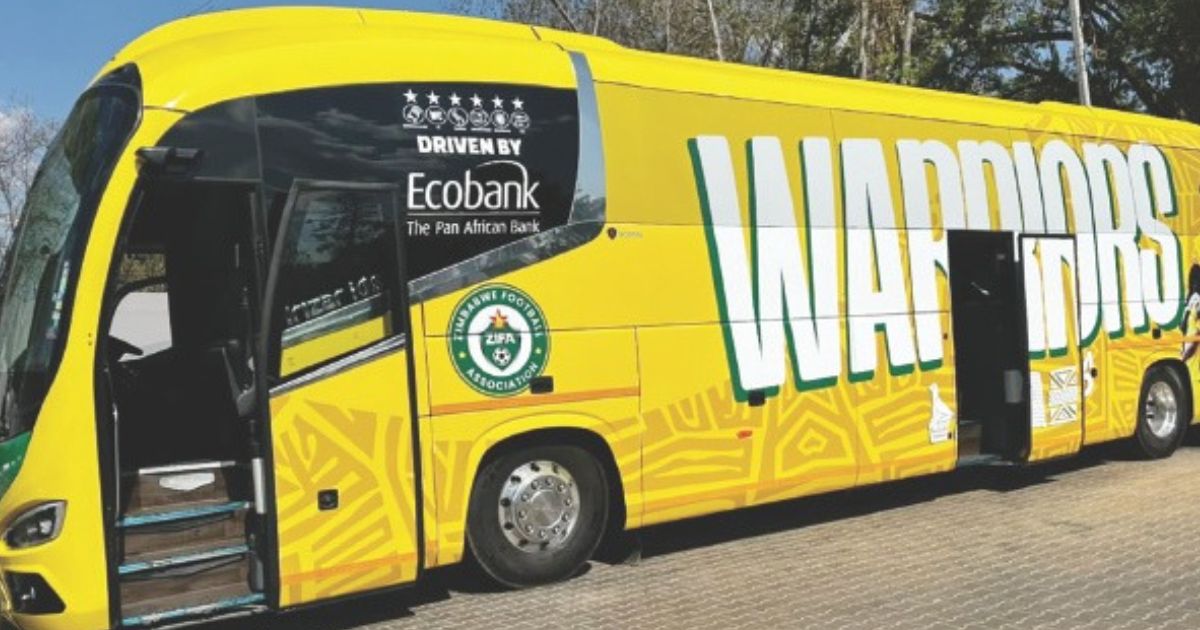
IT will be a day to remember for Zimbabwean football after the Zimbabwe Football Association yesterday got a massive national team bus gift, courtesy of association sponsors Ecobank.
The timely intervention comes in time to curb transport challenges that have long stuck with Zimbabwe’s national sides who had to rely mostly on hired or donated transport.
The handover celebrations were preceded by crucial regional appointments that further spotlight Zimbabwe’s growing influence in Southern African football.
Zifa president Nqobile Magwizi was appointed to the role of chairperson of the Cosafa Commercial and Television Committee.
His appointment puts Zimbabwe at the centre of driving commercial growth, sponsorship and brand visibility for the regional football body.
Premier Soccer League chairperson Isaiah Mupfurutsa was also named a member of the Cosafa Finance Committee.
The appointments signal that Zimbabwe is no longer on the periphery of regional football dynamics, but now have a voice in key discussions in the Southern African game.
Speaking during the bus handover in Harare yesterday, Ecobank finance director James
Shumbanhete emphasised Ecobank’s commitment to capacitate Zifa for Dream 2030 to come alive.
“We appreciate Ecobank and Zifa for the commitment they have put into this transportation asset as they have seen fit to capacitate the nations,” he said.
“We thank the new Zifa for their astute leadership. Most people take for granted sports (football) needs from grassroots up to senior national teams.
“To Ecobank, it is an investment into the future of Zimbabwean football, this is a community sport which touches the privileged and underprivileged communities…it dovetails our value system.”
Magwizi hailed the developments as a significant milestone which marks a positive turnaround in football as Zifa pushes towards Dream 2030.
The ambitious vision seeks to restore the Warriors and Mighty Warriors to continental competitiveness, professionalise domestic football and rebuild trust with partners, sponsors and supporters.
The new bus is a symbol of renewed confidence in Zifa and a practical solution to a problem that has drained resources and morale for long.
“From the donated bus to seats at the Cosafa table, this is beginning to show that the turnaround is not just talk,” Magwizi said.
Magwizi added that Zifa are working towards continued growth and world-class standards for players, citing that player welfare remains their top priority.
“We have made it a point that we charter flights for every game, resources however limit us in some cases but when partners come on board like this, we will be able to continuously improve standards,” he said.
“This is an indication of greater things coming and we thank sponsors, fans, legends and the media for supporting football even in tough times.”
On governance, Magwizi said football belongs to the people and leaders must serve, not pursue personal interests.
“If you become a leader, you become answerable to the stakeholders and your interests must be
secondary to the national interests,” he said.
“There is a lot of sacrifice that comes with that position, it is important to make sure that the whole ecosystem is strengthened through having people who understand the impact of the decisions they make.
“If you lack that understanding, this is where you then have this disconnect where people then start identifying challenges continuously…we are not perfect but we learn as we go.
“We did not see this coming, it is a big statement to the confidence that Ecobank has with Zifa.
“These are early days of our journey and we are grateful for their trust, confidence and sacrifices they are making in our game which speaks to the future that we all want to see for Zimbabwean football.”
Magwizi said Zifa are engaging in capacity building to capacitate their personnel and ensure that the institution has a solid foundation.
“The capacity building sessions will ensure that the whole ecosystem from our provinces to our regions to national, everyone understands best practice,” he said.
“When there is collective understanding, the institution becomes stronger and this is the journey we are on.
“We are still fixing ourselves, we want all stakeholders to help us build a stronger Zifa so that our teams can also do better.”