Online Reporter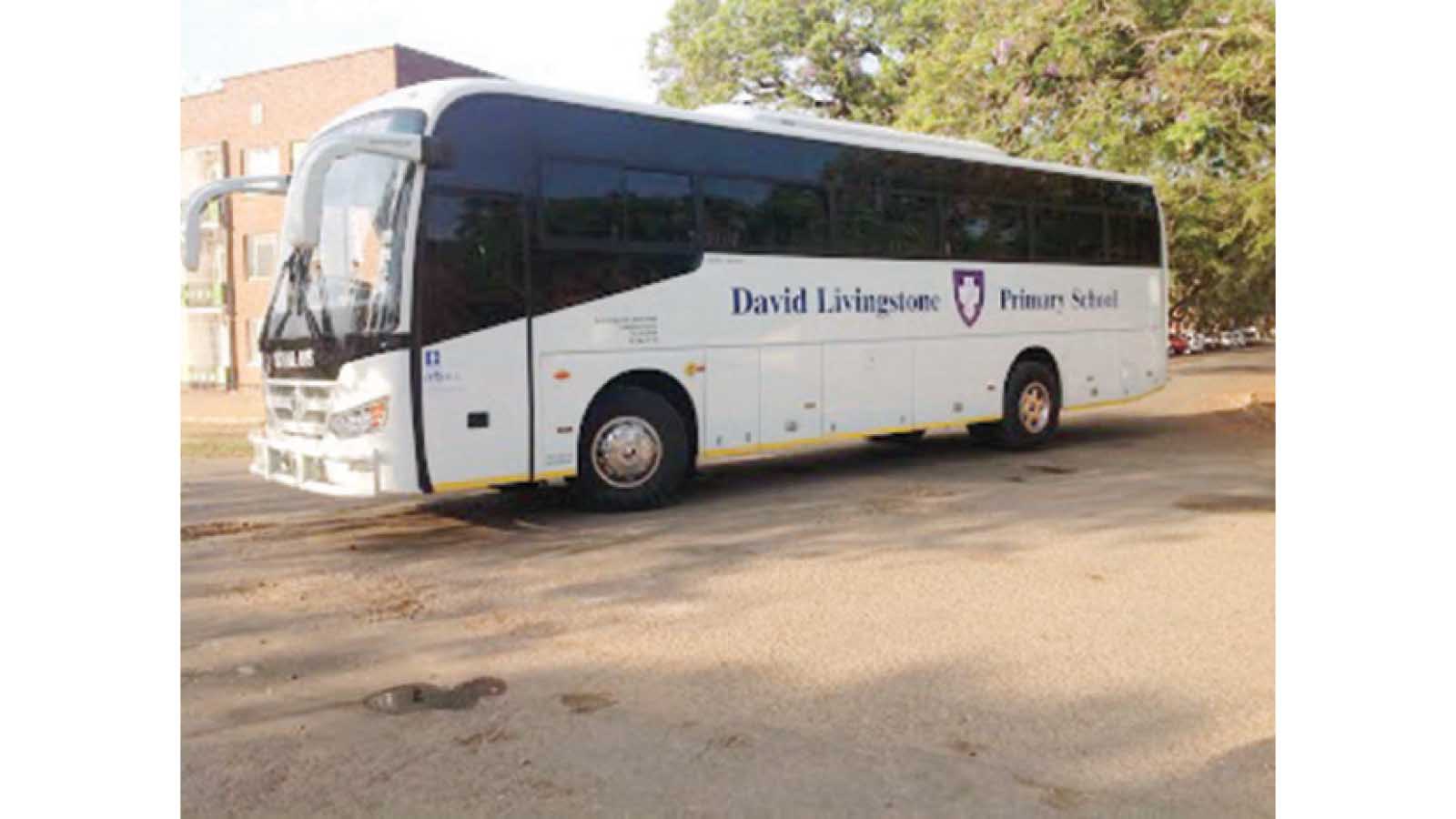
Theseus Mauruki Shambare
EVERY school day, hundreds of learners stream through the gates of Allan Wilson High School in Harare, chatting excitedly as they prepare for another day of learning.
At times some hurry to assembly, others compare homework assignments, while a few linger near the gate, waiting for friends.
Above them hangs a name many wear proudly on sports jerseys, exercise books and school blazers: Allan Wilson.
The school is named after Major Allan Wilson, a British colonial officer who led the Shangani Patrol in 1893 during the First Matabele War, as the British South Africa Company pursued King Lobengula in the violent colonial conquest of present-day Zimbabwe.
Major Allan Wilson and his 34 men (the Shangani Patrol) were eventually killed on December 4, 1893, after being ambushed and surrounded by a massive Ndebele force led by strategist General Mtshana Khumalo.
Name-change debate
Today, as debate around renaming colonial-era schools rekindles, questions once confined to history books are entering classrooms, staffrooms and homes across Zimbabwe.
This is not the first time Zimbabwe has grappled with the question of renaming schools with colonial era names.
The debate first gained national attention in August 2001, when the late Minister of Education, Sports and Culture, Aeneas Chigwedere, announced a directive instructing school heads and the public to begin replacing colonial-era school names with locally rooted and liberation-inspired alternatives.
The policy was later formalised in September 2001, when school development associations (SDAs) were given up to December 31 that year to submit proposed new names drawn from local heritage and national liberation history.
However, the ambitious exercise soon encountered significant resistance and practical difficulties.
Schools were expected to finance the entire rebranding process themselves, including changing uniforms, badges, stationery, signage and official documentation, costs many SDAs and local authorities said were beyond their means.
The policy was also widely criticised for its top-down approach, with limited consultation and tight deadlines that left communities feeling sidelined, while critics argued that urgent challenges such as declining educational standards, shortages of learning materials and deteriorating infrastructure were being overshadowed.
Over time, strong alumni attachment to long-established school identities further complicated implementation, particularly at institutions with deep academic and sporting traditions.
As the initial momentum faded, many of the renamed schools quietly reverted to their original identities, leaving the exercise largely reversed in practice and providing important context to the current debate on school renaming.
But the debate has resurfaced in recent weeks. Across Zimbabwe, numerous schools still bear names inherited from the colonial era — names tied to missionaries, administrators, politicians and military figures whose legacies remain complex and contested.
Among them is George Stark School in Mbare, named after George Stark, who served as director of native education in colonial Southern Rhodesia between 1934 and 1954. During his tenure, education for Black Africans was largely restricted to practical and vocational training under a racially segregated system designed to sustain white minority rule.
Retired educator Miriam Dube shared her views.
“They wanted Africans to become workers, not leaders. When you understand that history, you begin to ask deeper questions about what these names represent today,” she said.
But the conversation is far from simple.
School identity
For some former learners, these names are attached to cherished memories of friendship, achievement and identity rather than colonial politics.
At Allan Wilson High School, generations of alumni still speak fondly of sporting triumphs, academic excellence and lifelong bonds formed at the institution.
Former learner Tawanda Chikukwa noted that renaming schools can trigger emotional reactions because alumni often associate names with personal journeys rather than historical figures.
“When people hear the name Allan Wilson, they think of the school community first,” he said.
“They remember the classrooms, the teachers and the friendships. The historical meaning sometimes comes later.”
Even the school’s motto reflects this quiet evolution. Before independence, Allan Wilson High School carried the phrase “They were Men of Men” — a tribute rooted in colonial memory and the glorification of imperial military ideals.
After independence, it was subtly altered to “We are Men of Men”, shifting the emphasis from honouring figures of the past to defining the identity of present generations of learners.
For some observers, this change symbolises a broader attempt to reclaim inherited institutions while reshaping their meaning for a new era.
This emotional complexity is visible at several schools nationwide.
David Livingstone High School, established in 1965 in Ntabazinduna, Matabeleland North province, carries the name of Scottish missionary and explorer Dr David Livingstone.
He renamed Mosi-oa-Tunya to Victoria Falls in 1855 in honour of Queen Victoria.
Livingstone remains a complicated figure, celebrated by some for anti-slavery advocacy and missionary work, yet also associated with the colonial enterprise that reshaped Africa.
The school, owned by the Uniting Presbyterian Church of Southern Africa, has educated generations of Zimbabweans and built a strong academic reputation.
In Harare, David Livingstone Primary School continues to operate as one of the capital’s prominent Government schools.
Roosevelt Girls High School still bears the name of former United States President Franklin Delano Roosevelt, while its counterpart, Churchill School, honours British wartime Prime Minister Winston Churchill.
To many learners, these names are simply part of school identity.
But historians argue that names can also quietly shape national consciousness.
Cultural historian Dr Rebecca Nyathi says public institutions often reflect the values and power structures of the era in which they were created.
“Names are never neutral,” she explained. “They tell us who society chose to honour, whose stories mattered and whose voices were considered important at that particular moment in history.”
She noted that post-colonial societies across Africa continue to grapple with questions surrounding monuments, street names and institutions inherited from colonial administrations.
“In many ways, this is not just about changing signboards. It is about deciding how a nation remembers itself,” she added.
As public debate around colonial-era school names grows, the Government has clarified that discussions currently taking place at some institutions remain at a preliminary consultative stage rather than an immediate policy shift.
The Ministry of Primary and Secondary Education stated that engagements underway at selected schools, particularly in Bulawayo, form part of a broader research-driven process aimed at gathering public views on identity, heritage and the historical significance of institutional names.
Director of communication and advocacy in the Ministry Mr Taungana Ndoro emphasised that no final decisions have been made regarding the renaming of any school.
“This is a preliminary process. It is research-based consultation,” he said, referring to the consultations taking place.
According to ministry officials, the consultations are designed to allow education stakeholders, alumni, parents, learners, heritage experts and local communities to contribute perspectives before any formal position is adopted.
The clarification follows growing public speculation after several schools in Bulawayo reportedly began internal discussions around possible alternative names for institutions with colonial-era origins.
Among names suggested during Minister Chigwedere’s attempt were Esigodlweni seNkosi for Northlea High School, Flame Lily High School for Townsend High School, Bulawayo Junior School for Baines Junior School and Bulawayo High School for Milton High School.
Other proposals included renaming Allan Wilson High School to Mutapa High School, George Stark School to Charles Mzingeli School, Roosevelt Girls High School to Marumbi Girls High School and Prince Edward School to Murenga Boys School.
While many of the proposed alternatives seek to foreground liberation history, indigenous heritage and national identity, education authorities insist that such names remain part of ongoing consultations and do not yet constitute approved Government policy.
Nevertheless, the developments have triggered broader national conversations around memory, identity and how post-independence Zimbabwe should engage with inherited colonial symbols in public institutions.
Caution
Certain educationists argue that preserving historical names can provide opportunities for critical engagement with the past rather than erasing it.
University student Ashley Moyo believes schools should teach learners the full history behind institutional names instead of ignoring uncomfortable truths.
“If learners know the complete history, they can think critically for themselves. You cannot fully understand Zimbabwe’s story without understanding colonialism, liberation and everything in between,” she said.
For learners, the debate has opened conversations many had never considered before.
The discussion has also spilled onto social media platforms, where Zimbabweans from different generations continue to debate whether colonial-era school names should be retained, contextualised or changed altogether.
On Facebook, some users argued that national attention should focus more on improving school infrastructure and learning conditions rather than renaming institutions.
“Let us put money into the schools, renovate old buildings, pay teachers, buy books, buy proper furniture,” wrote social media user Tendai Chigariro in a discussion that attracted hundreds of reactions.
Others viewed the debate through the lens of historical memory.
“I am not against decolonisation, but I believe those names must remain as they are, so our kids and generations to come will know exactly how far we have come,” wrote another user, Gwenzi T Rakaviga Mambo.
Some responses reflected humour and surprise at the proposed alternatives, while others questioned how post-colonial identity should coexist with inherited colonial institutions in modern Zimbabwe.
Media and social analyst Jubilant Masanzu noted that such online conversations increasingly shape national discourse, particularly among younger Zimbabweans.
“Today’s public square is digital,” he said.
“Social media comments may not represent every citizen, but they provide insight into how ordinary people are processing national questions in real time.”
He explained that debates once confined to universities, newspapers or political meetings are now unfolding daily across WhatsApp groups, Facebook pages and online community forums.
“In many ways, the digital space has become part of Zimbabwe’s collective civic conversation,” he added.
At Domboramwari High School in Harare, Form Four learners recently held a debate on whether colonial-era school names should be retained or changed.
Some argued that keeping such names preserves historical continuity, while others insisted that independent Zimbabwe should celebrate local heroes, languages and identities.
Sixteen-year-old learner Panashe Nyakurerwa said the discussion changed how she viewed her surroundings.
“I realised I had passed that school sign every day without asking who the person was. Now I think names are like history books. They tell stories,” she reflected.
Beyond politics and policy, the conversation has revived broader reflections on African naming traditions themselves.
In many Zimbabwean communities, names carry emotional weight that stretches across generations.
Some commemorate survival during droughts or war, while others reflect family conflict, gratitude, disappointment or spiritual convictions.
Traditional leader Chief Mangwende, born Morgan Taaziva Gatsi, explained that names are often treated as living records of family and community experiences.
“A name can carry pain. A name can carry hope,” he said.
“That is why Africans have always respected the meaning behind names.”
For him, the current debate around schools reflects a deeper search for cultural belonging in post-colonial Zimbabwe.
“When children ask why their school has a certain name, they are really asking who we are as a people,” he observed.
That search for identity is increasingly unfolding among a generation born decades after independence — a generation inheriting both the scars and symbols of history. Back at Allan Wilson High School, the bell rings sharply across the grounds as learners hurry for afternoon lessons. Most continue walking beneath the familiar school sign without stopping.
Yet for some, the questions now linger a little longer. Who was Allan Wilson?
Why was the school named after him?
And if names carry memory, whose memory should Zimbabwe’s schools preserve?
Standing quietly near the assembly area, one learner reflects on the debate that has swept through classrooms and social media alike.
“Maybe a name is more important than we think. Because every name has a story behind it,” he says softly.